11 Outdoor Hydroponic Setup Ideas for Backyards and Patios
No greenhouse required. These 11 outdoor hydroponic setups grow food on fences, pergolas, decks, and shed walls, from $50 Kratky barrels to 80-plant NFT systems.
In this guide
No greenhouse required. These 11 setups grow fresh herbs, greens, and fruiting vegetables outdoors using what you already have: fences, pergolas, patios, shed walls, and backyards, from $50 Kratky barrels to 80-plant NFT greenhouse systems.
Outdoor hydroponics solves the biggest problem with backyard growing: soil. No tilling, no weeding, no drainage problems, and no soil-borne disease. New to soilless growing? Start with the complete hydroponics beginner guide before choosing a setup.
Some links in this article may be affiliate links. We earn a small commission if you purchase through them, at no extra cost to you.
The short version
- 11 setups for every outdoor space: fences, pergolas, patios, decks, shed walls, and full backyards.
- 4 setups require no drilling or permanent installation, ideal for renters with outdoor access.
- Costs range from under $50 (Barrel Kratky) to $500+ (backyard greenhouse).
- The highest plant count per square foot goes to the fence-mounted and shed wall NFT systems.
- The University of Arizona CEA Center documents that recirculating hydroponic systems use up to 90% less water than in-ground beds, which matters outdoors where evaporation runs higher.
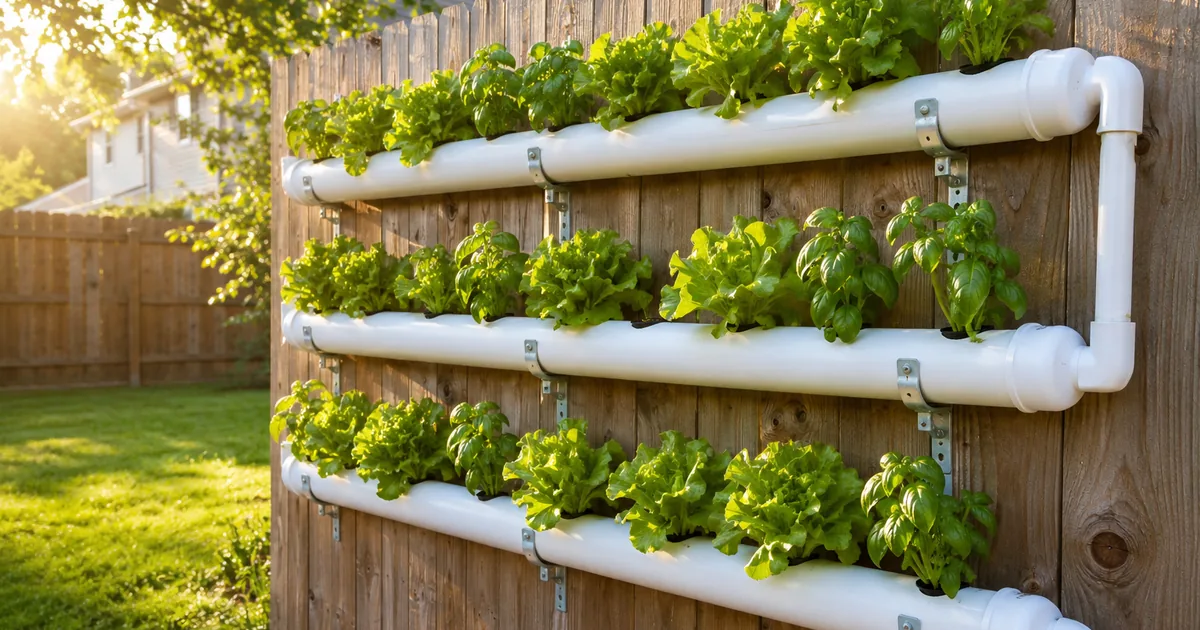
1. Fence-Mounted NFT
NFT pipes mounted horizontally along a backyard fence, growing lettuce, spinach, and herbs in a row. Uses dead fence space with no footprint on the ground. Works on wood or vinyl privacy fences with standard PVC pipe mounting brackets.
Best for: Backyards with long fence runs. Plant count: 20 to 40. Cost: $60 to $120 DIY.
2. Pergola Hanging NFT
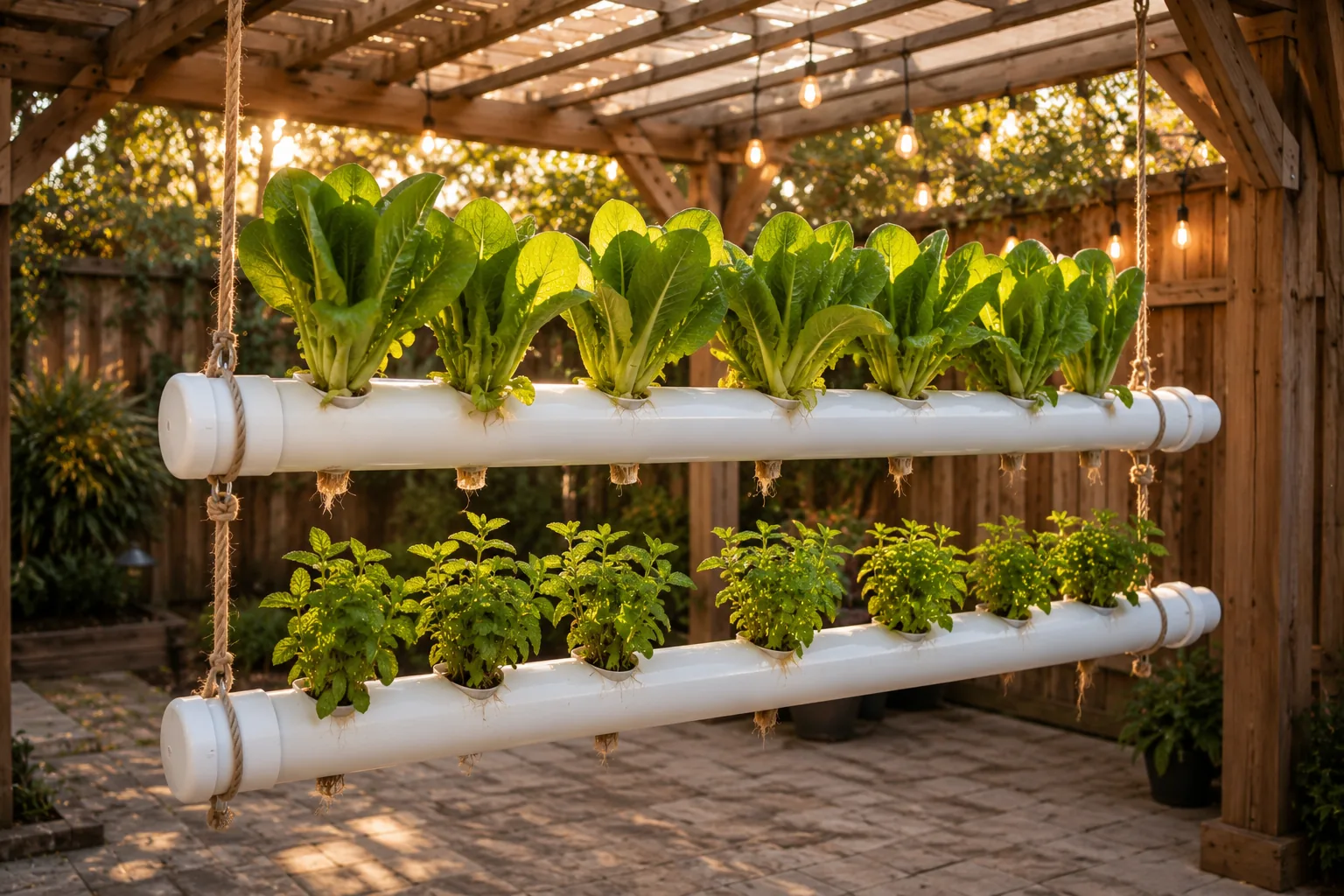
NFT pipes suspended from pergola beams with nutrient solution flowing through each pipe. Plants hang at eye level, leaving patio floor space completely open below. Best overhead system for covered outdoor seating areas.
Best for: Covered patios and pergolas. Plant count: 16 to 24. Cost: $70 to $120 DIY.
3. Backyard A-Frame NFT
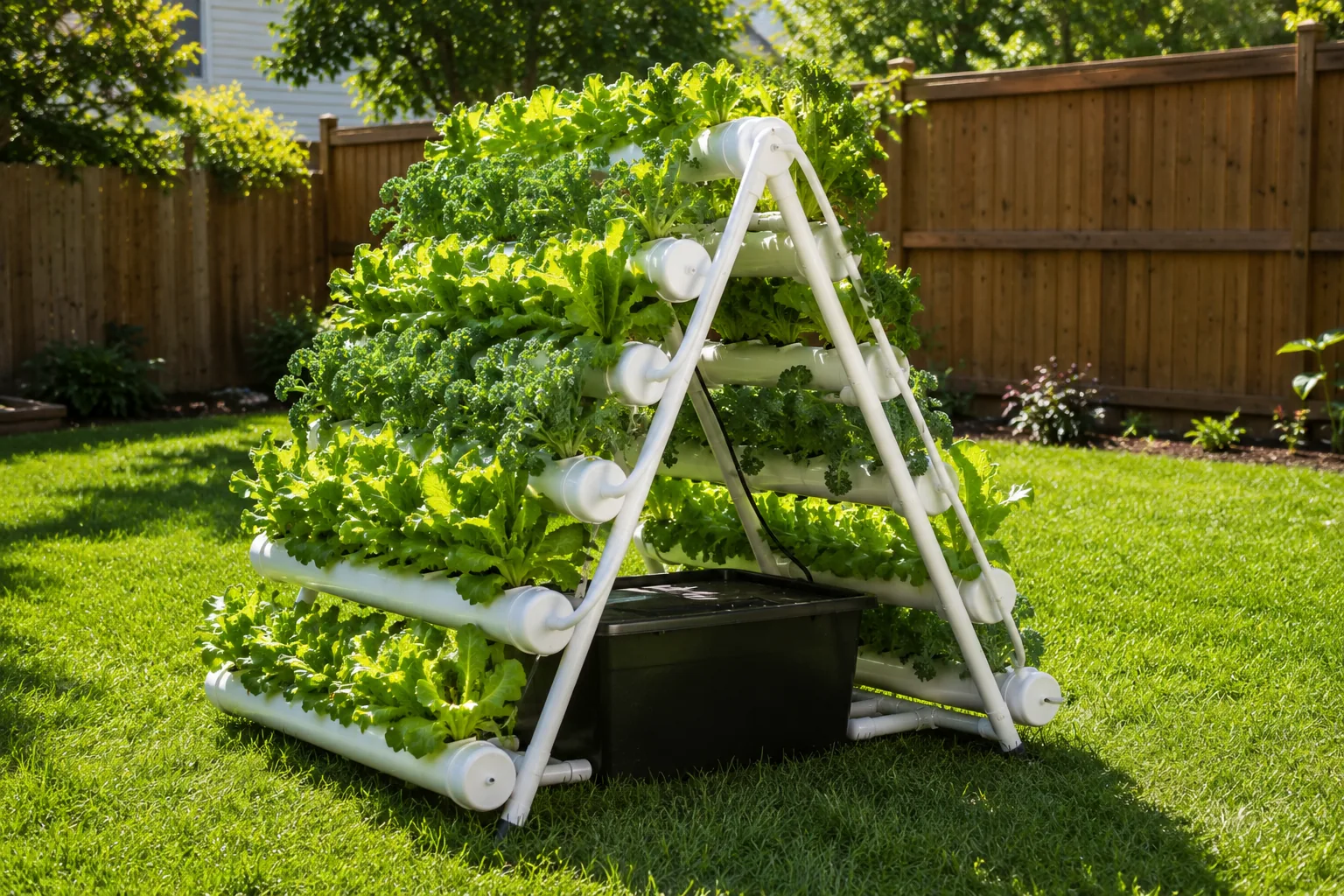
Two rows of NFT pipes lean against each other in an A shape, growing plants on both sides from a single reservoir. Grows 36 to 48 plants in 4 square feet of ground space with no wall mounting required. Collapses flat for off-season storage.
Best for: Backyards with open ground space. Plant count: 36 to 48. Cost: $80 to $120 DIY.
For the full build walkthrough, see how to build an A-Frame hydroponic system at home.
4. Patio DWC Bucket System
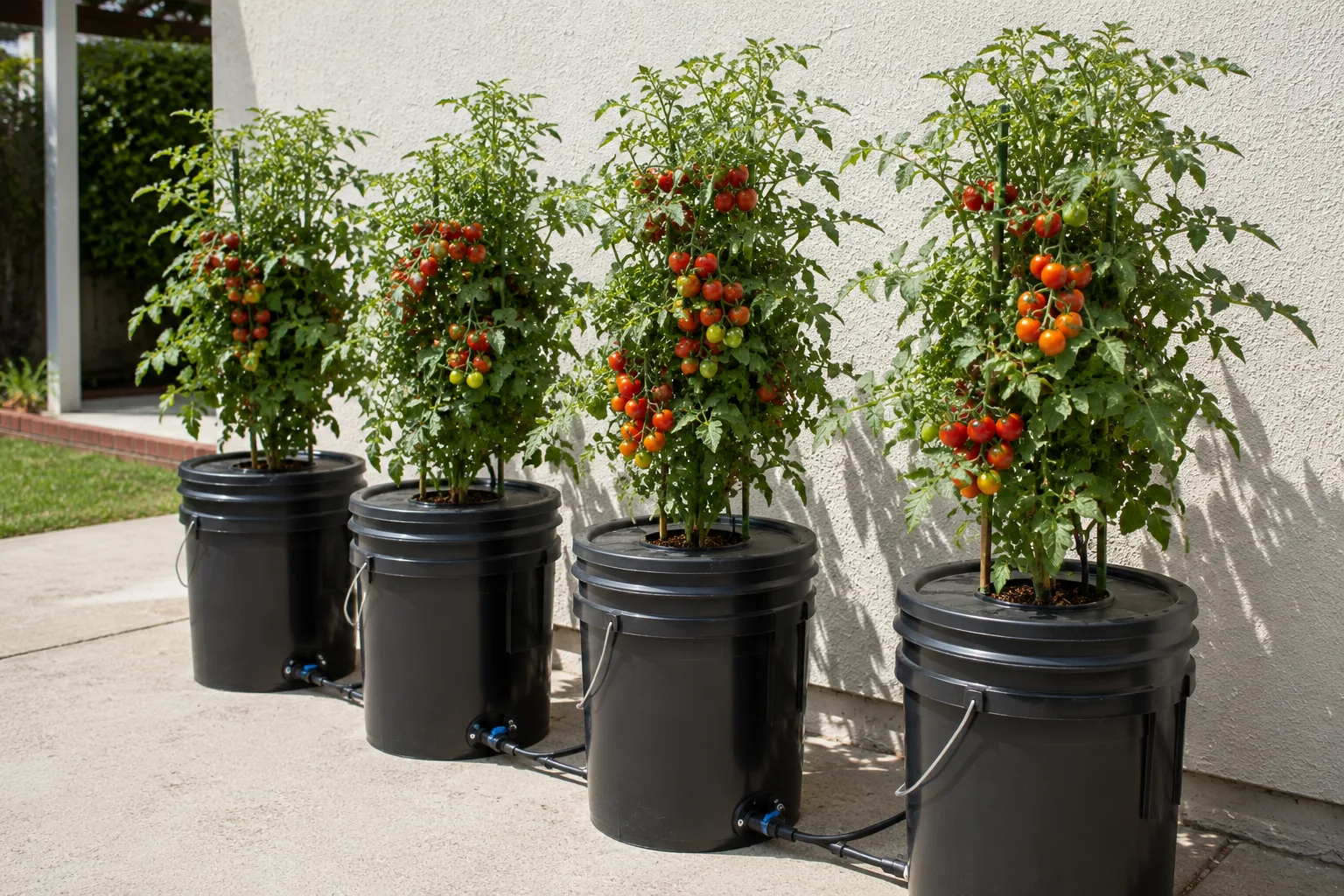
Food-grade buckets connected in a recirculating DWC loop on a patio corner. Each bucket grows one large plant: tomatoes, peppers, cucumbers, or squash. Best fruiting plant system under $80 with parts from any hardware store.
Best for: Patios targeting fruiting vegetables. Plant count: 4 to 8 buckets. Cost: $50 to $80 DIY.
Maintain pH at 5.8 to 6.3 and EC at 2.0 to 3.5 mS/cm for fruiting crops outdoors. For full nutrient targets by crop, see pH and nutrients for beginners.
5. Outdoor Vertical Tower
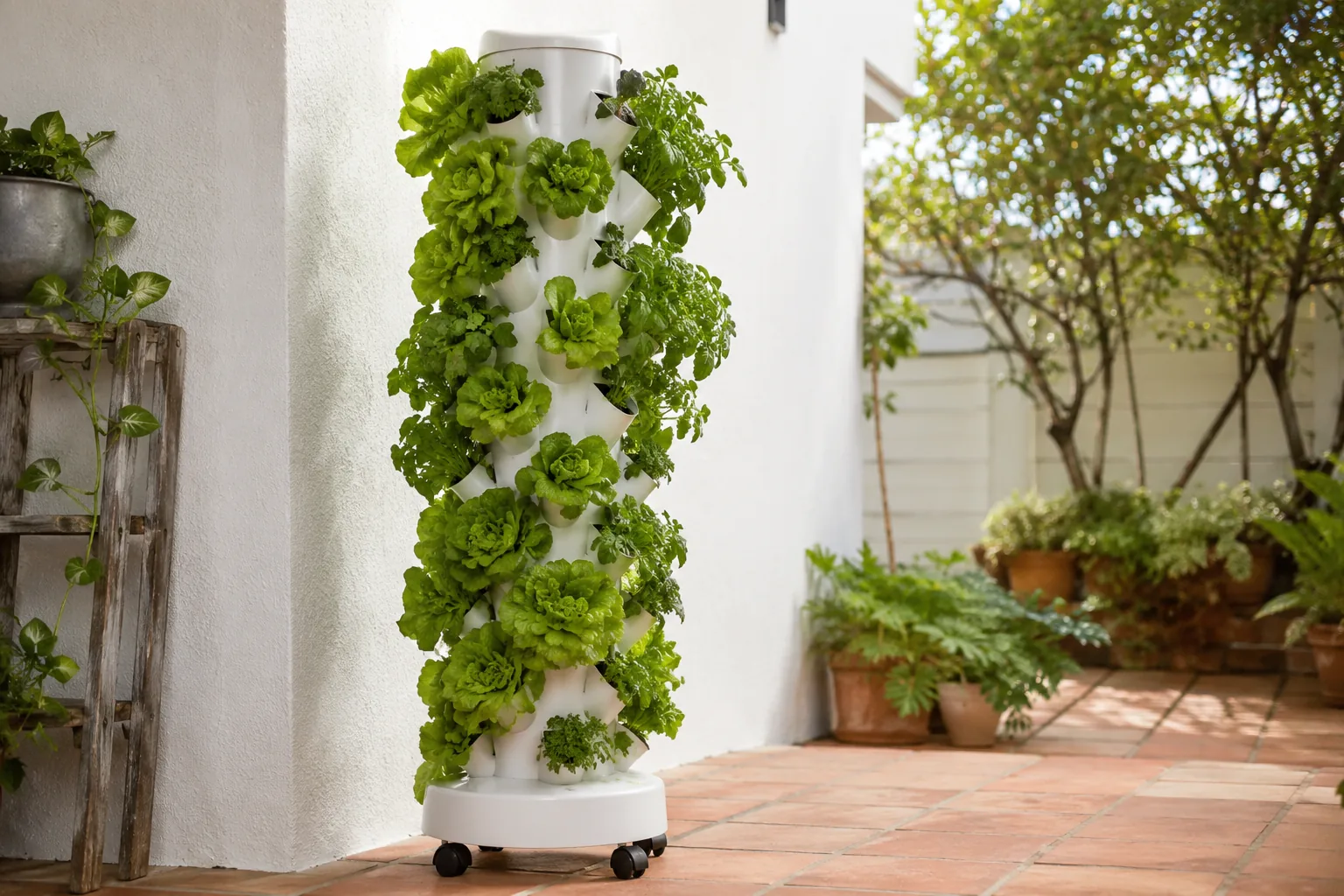
A freestanding PVC tower grows 16 to 20 plants in a single corner of a patio or deck. Moves on locking caster wheels to follow the sun throughout the day. No drilling, no fence access, and no permanent installation needed.
Best for: Patios and decks with no wall access. Plant count: 16 to 20. Cost: $70 to $120 DIY.
For the full build guide, see how to build a DIY vertical hydroponic tower.
6. Raised Deck NFT
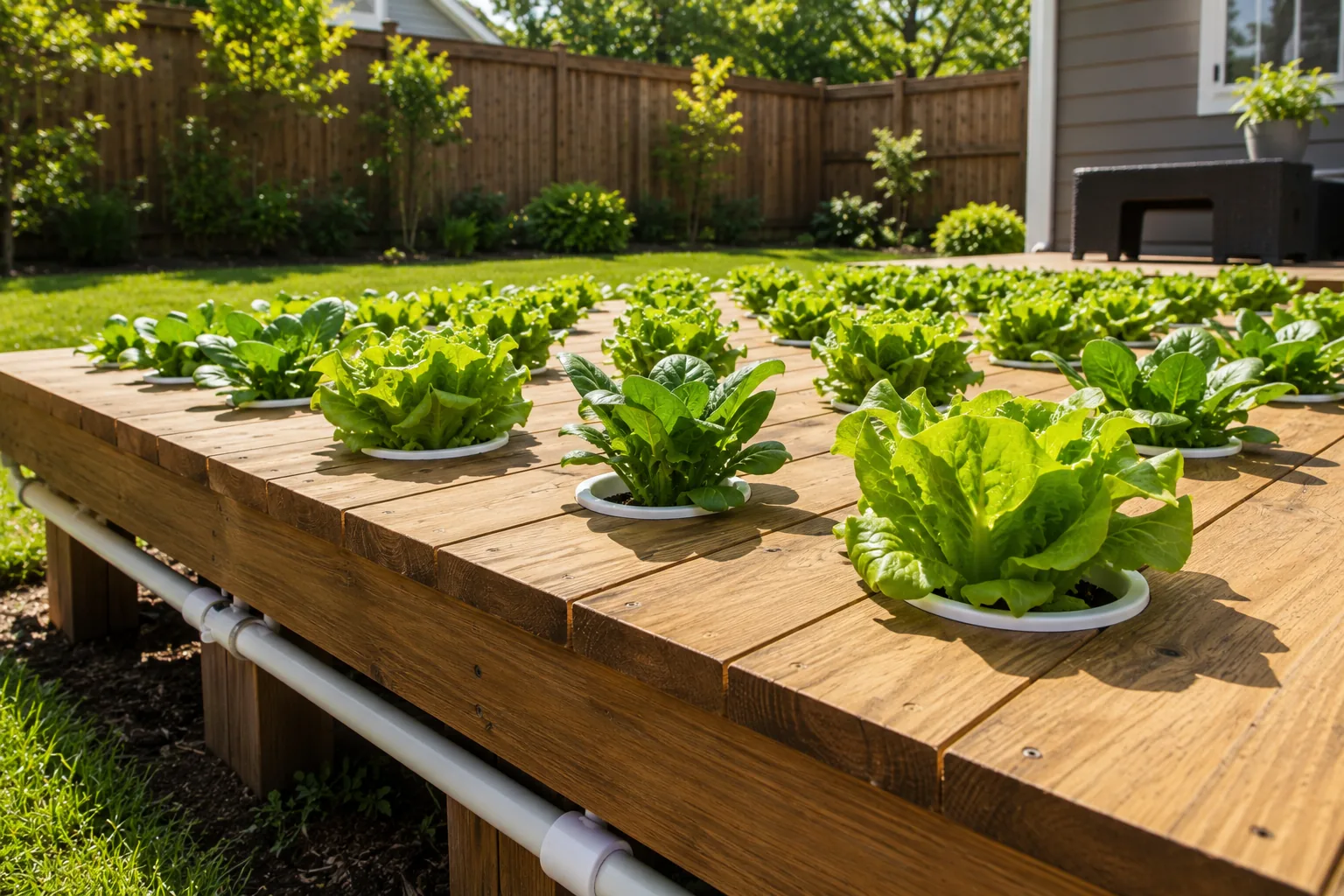
NFT channels built into a raised deck frame, hidden below the walking surface with plants growing up through deck board gaps. The cleanest-looking outdoor hydroponic setup and the least visible from street level.
Best for: Homeowners building or rebuilding a raised deck. Plant count: 12 to 20. Cost: $100 to $180 DIY.
7. Shade Sail NFT
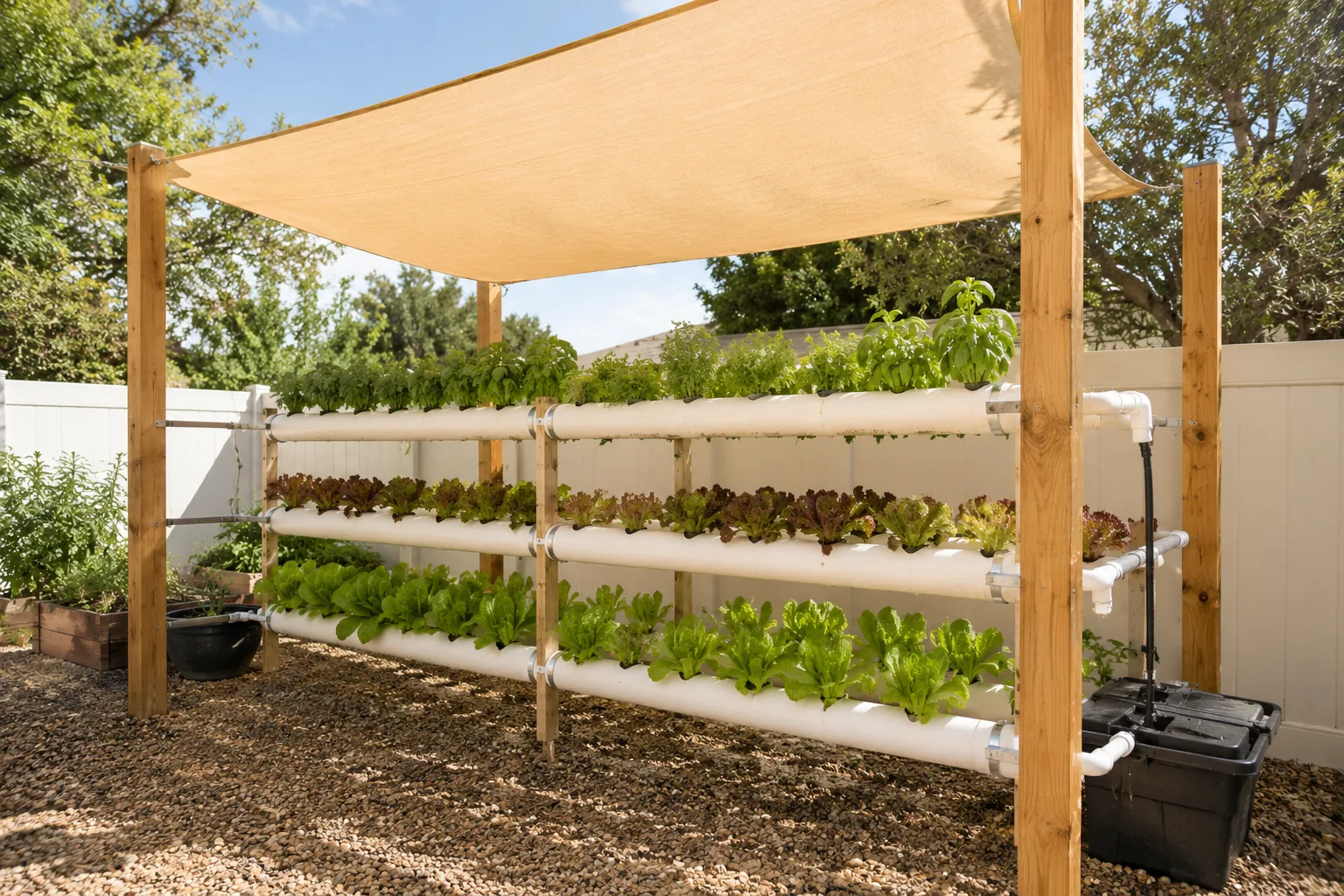
NFT pipes mounted on posts under a backyard shade sail, keeping nutrient solution cool and preventing heat stress in summer. Runs 24 to 36 plants under a single sail panel with one central reservoir and pump.
Best for: Hot climates, summer growing. Plant count: 24 to 36. Cost: $90 to $150 DIY.
High outdoor temperatures push nutrient solution above 68F, which reduces dissolved oxygen and accelerates root disease. A shade sail keeps solution temperature stable by blocking direct sun on exposed pipes and the reservoir.
8. Stock Tank DWC
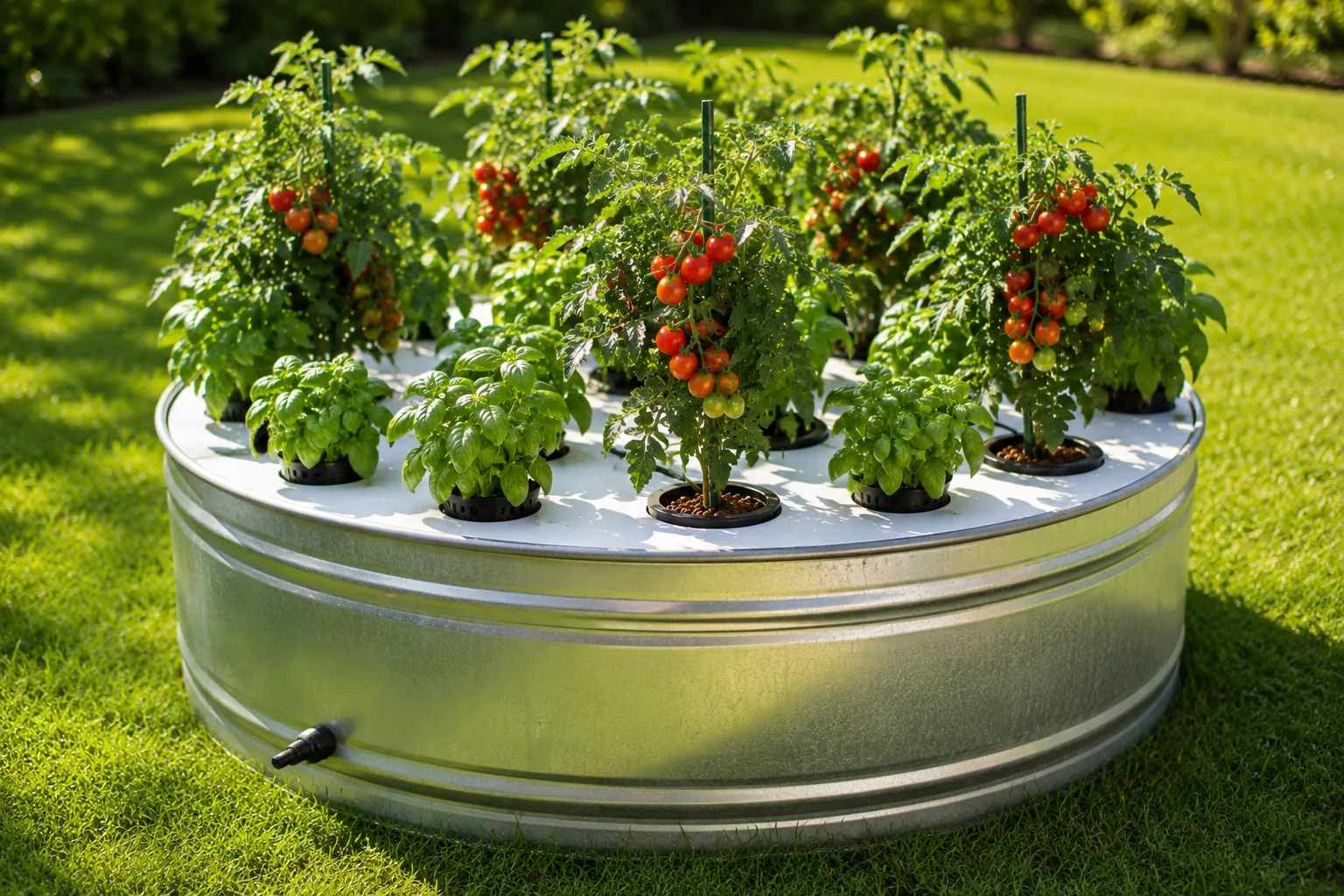
A galvanized stock tank converted to a deep water culture system with net pots, an air pump, and a lid. Grows 9 to 16 plants in a single tank that doubles as a backyard focal point. No plumbing, no drain required.
Best for: Backyards needing an aesthetic statement piece. Plant count: 9 to 16. Cost: $60 to $100.
Line the interior with food-safe epoxy or use a food-grade pond liner before filling. Galvanized metal can leach zinc into nutrient solution at low pH, which affects plant health over time.
9. Shed Wall NFT
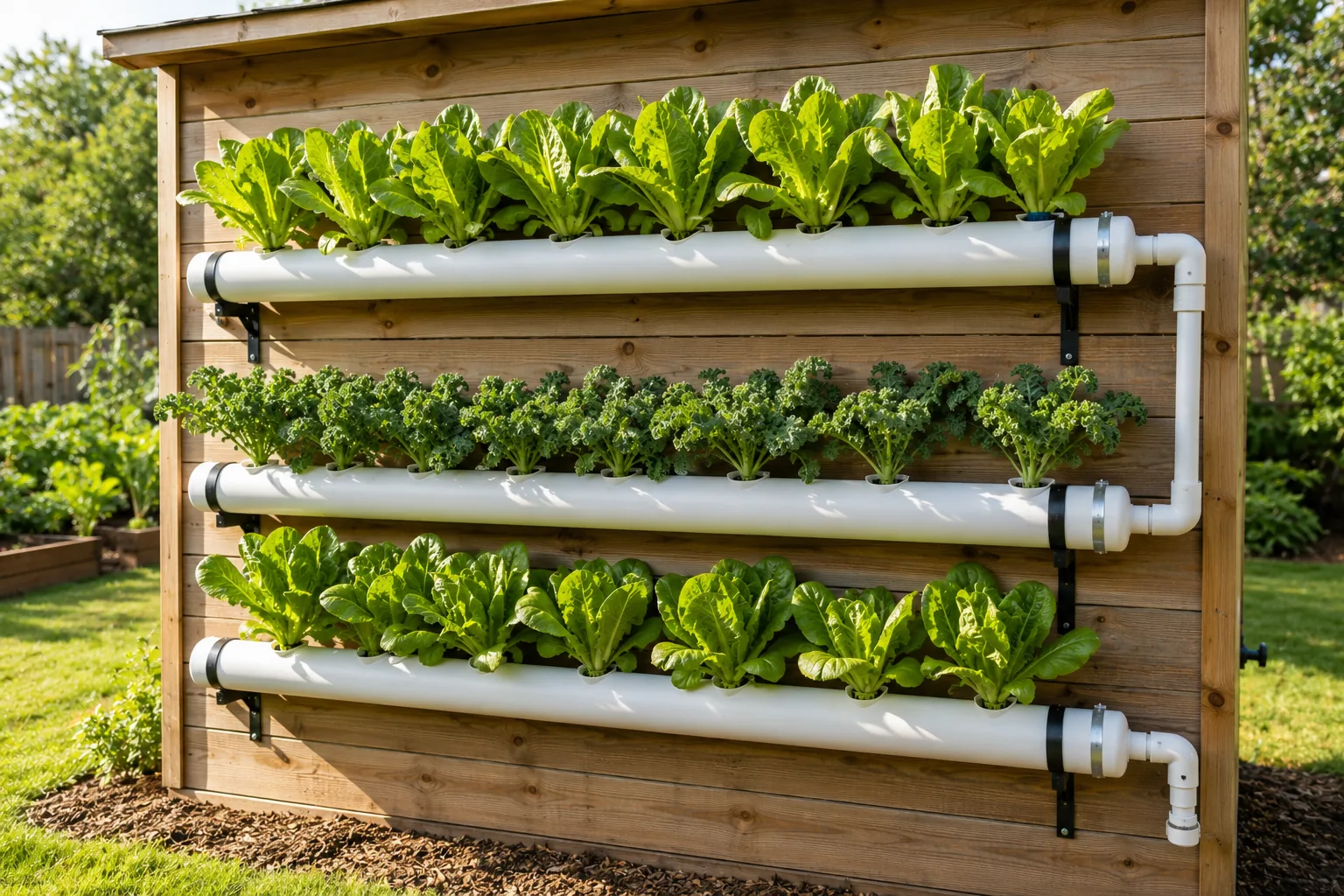
NFT pipes mounted on the side of a garden shed using the wall as a growing surface. No new structure needed. Faces south or east for maximum sunlight. One of the highest plant counts possible without any ground footprint.
Best for: Backyards with an existing shed. Plant count: 24 to 40. Cost: $70 to $130 DIY.
For the wall mounting method, see how to build a wall-mounted NFT system. The same bracket approach works on shed siding as it does on interior walls.
10. Barrel Kratky Garden
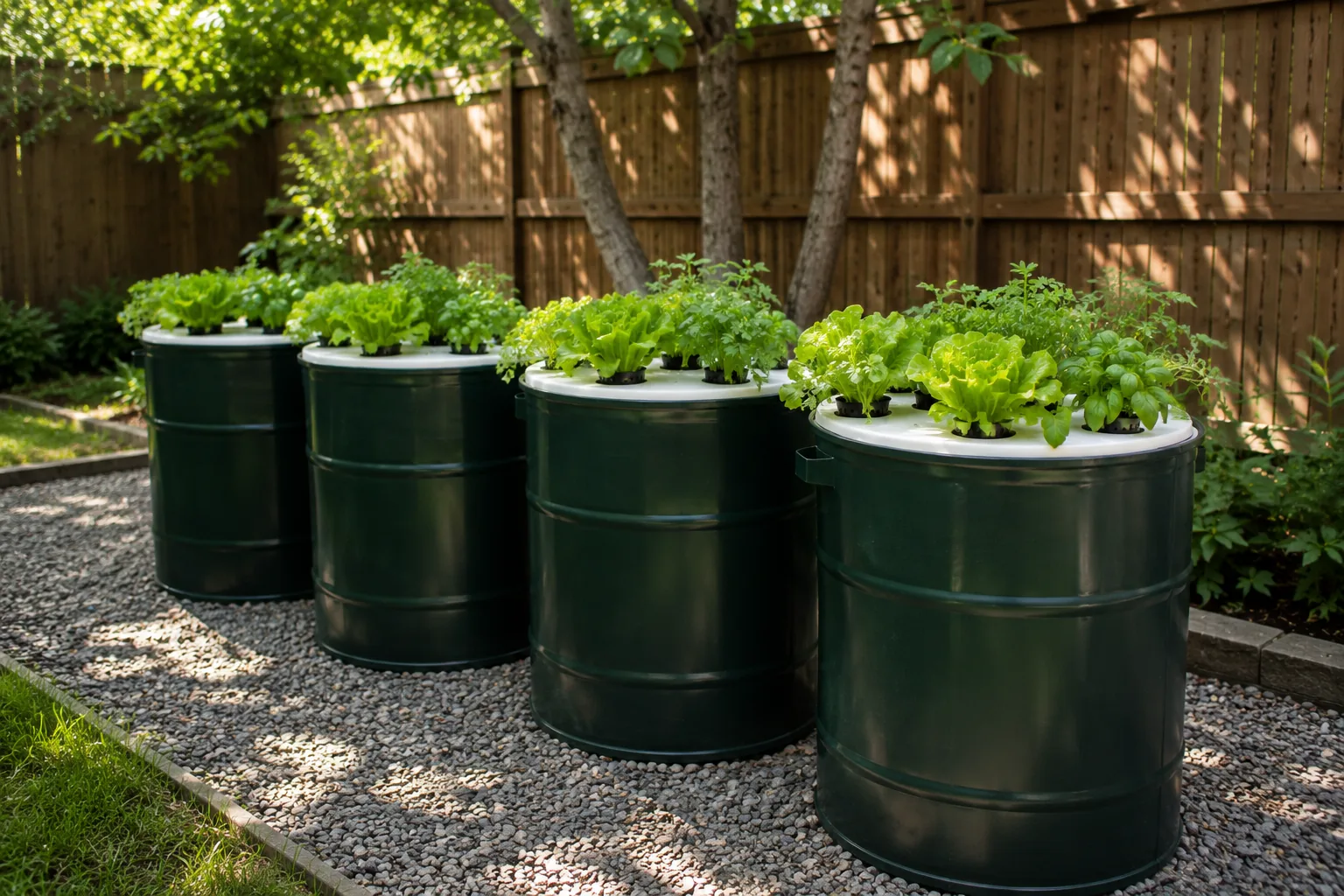
Food-grade barrels or large buckets used as static Kratky reservoirs in a backyard row. No pump, no electricity, no plumbing. Refill every 7 to 14 days. The lowest-cost outdoor setup on this list and easiest to scale.
Best for: Beginners, budget builds, off-grid setups. Plant count: 8 to 16. Cost: Under $50.
Use dark or opaque barrels only. Clear containers let light reach the nutrient solution and trigger algae growth within a week outdoors. For more on algae prevention, see hydroponic algae prevention.
11. Greenhouse NFT System
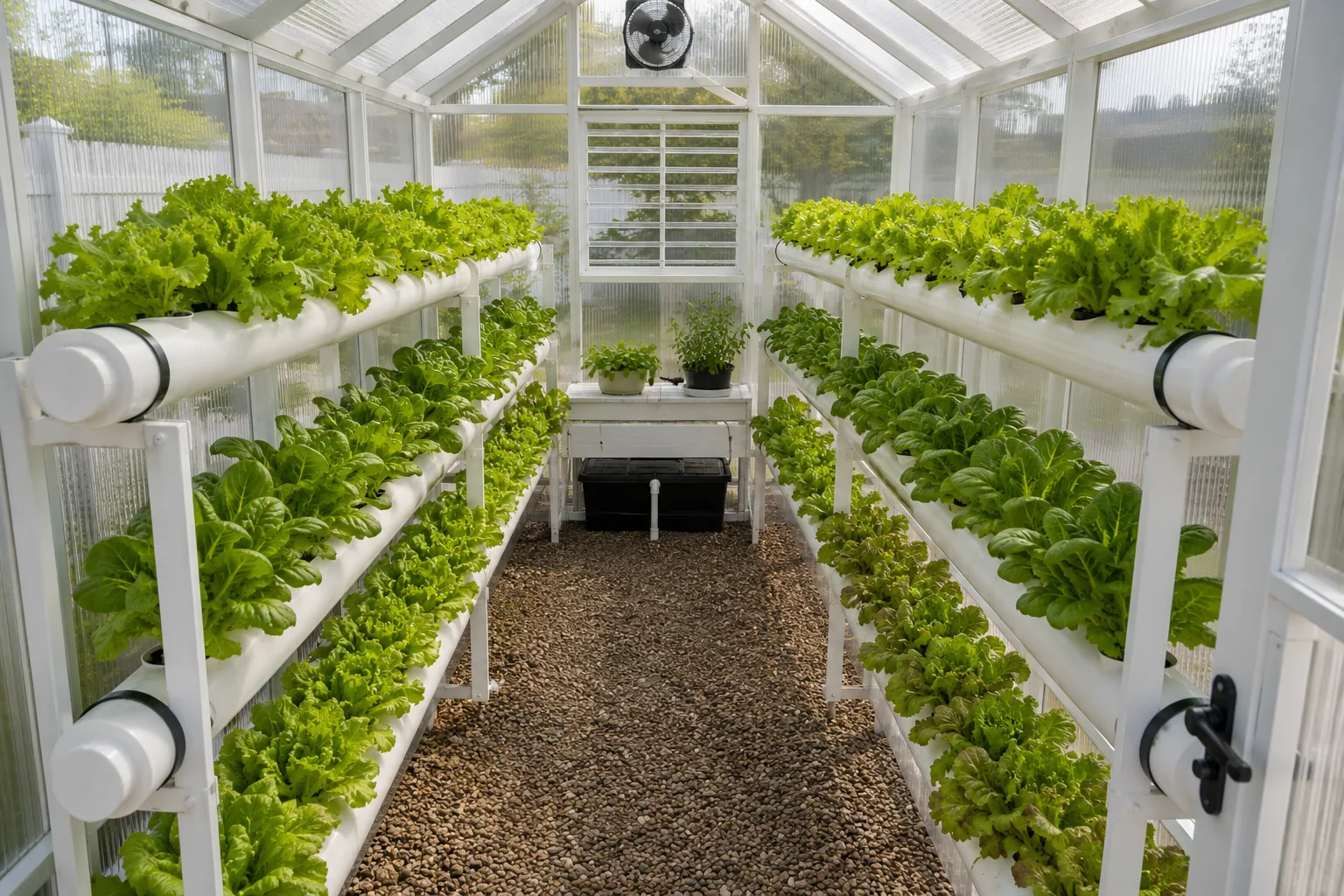
A small backyard greenhouse with NFT channels running the full interior length. Extends the growing season into fall and winter, protects plants from wind and pests, and doubles plant output compared to open-air setups.
Best for: Year-round growers in cold climates. Plant count: 40 to 80. Cost: $200 to $500+.
A 6x8 ft greenhouse fits two to three rows of NFT channels at 6-inch spacing, supporting 40 to 60 plants per cycle. Even an unheated greenhouse adds 4 to 6 weeks to both ends of the growing season by blocking frost and wind.
At a Glance: All 11 Systems Compared
| Setup | Drilling Needed | Plant Count | Best Season | Cost |
|---|---|---|---|---|
| Fence-Mounted NFT | Yes (fence) | 20 to 40 | Spring, Fall | $60 to $120 |
| Pergola Hanging NFT | Yes (beams) | 16 to 24 | All seasons | $70 to $120 |
| Backyard A-Frame NFT | No | 36 to 48 | Spring, Fall | $80 to $120 |
| Patio DWC Bucket System | No | 4 to 8 | Summer | $50 to $80 |
| Outdoor Vertical Tower | No | 16 to 20 | All seasons | $70 to $120 |
| Raised Deck NFT | Yes (deck) | 12 to 20 | Spring, Fall | $100 to $180 |
| Shade Sail NFT | Yes (posts) | 24 to 36 | Summer | $90 to $150 |
| Stock Tank DWC | No | 9 to 16 | Spring, Summer | $60 to $100 |
| Shed Wall NFT | Yes (shed) | 24 to 40 | Spring, Fall | $70 to $130 |
| Barrel Kratky Garden | No | 8 to 16 | All seasons | Under $50 |
| Greenhouse NFT System | No | 40 to 80 | Year-round | $200 to $500+ |
Cost ranges assume DIY builds with hardware-store parts and exclude the nutrient solution, seeds, and electricity. Plant counts are for leafy greens and herbs; fruiting crops need roughly half the density.
For crop selection and EC/pH targets per plant outdoors, see the best plants to grow hydroponically. For apartment setups without outdoor space, see 12 small-space hydroponic ideas for apartments.
Can I run a hydroponic system outdoors year-round?
In USDA hardiness zones 9 to 12, open-air NFT and DWC systems run year-round without protection. In zones 6 to 8, a shade sail or simple cold frame extends the season into early winter. In zones 5 and below, a greenhouse is the only reliable year-round option.
Which outdoor hydroponic setup requires no drilling or permanent installation?
The backyard A-Frame, outdoor vertical tower, stock tank DWC, and barrel Kratky garden all require zero drilling. The A-Frame and vertical tower are freestanding. The stock tank and barrels sit directly on the ground or patio surface with no anchoring needed.
What is the best outdoor hydroponic system for tomatoes and peppers?
The patio DWC bucket system. Fruiting crops need larger root zones than NFT channels provide. Five-gallon DWC buckets give each plant enough volume for full root development and support the higher EC levels fruiting crops require, 2.0 to 3.5 mS/cm compared to 1.2 to 2.0 mS/cm for leafy greens.
How do I keep my outdoor nutrient solution from overheating?
Keep the reservoir shaded or buried in the ground to insulate it. Use a shade sail or cover exposed NFT pipes with reflective pipe insulation foam. Target solution temperature between 65F and 72F. Above 75F, dissolved oxygen drops and root rot risk increases significantly.
How many plants can I grow on a small backyard patio?
A fence-mounted NFT handles 20 to 40 plants with no floor space. A vertical tower adds 16 to 20 plants in one corner. A stock tank DWC holds 9 to 16. Combined on a standard 10x12 patio, you can grow 45 to 76 plants with minimal floor impact, enough for daily salads and herbs for a household of four.
Sources (4)
- University of Arizona, Controlled Environment Agriculture Center, retrieved 2026-07-19, https://ceac.arizona.edu/
- Oklahoma State University Extension, Electrical Conductivity and pH Guide for Hydroponics, retrieved 2026-07-19, https://extension.okstate.edu/fact-sheets/electrical-conductivity-and-ph-guide-for-hydroponics.html
- Cornell University, Controlled Environment Agriculture, retrieved 2026-07-19, https://cea.cals.cornell.edu/
- USDA Agricultural Research Service, Plant Hardiness Zone Map, retrieved 2026-07-19, https://planthardiness.ars.usda.gov/