12 Small-Space Hydroponic Ideas for Apartments
No backyard needed. These 12 hydroponic setups grow fresh food in apartments using windows, walls, corners, and balconies, from $20 Kratky jars to ceiling-track NFT.
No backyard. No garden bed. No outdoor space. All 12 setups below grow fresh herbs, greens, or fruiting plants in apartments using what you already have: windows, corners, walls, balconies, and underused furniture. New to soilless growing? Start with the complete hydroponics beginner guide before choosing a setup.
The short version
- 12 setups ranging from free-standing to wall-mounted to furniture-integrated, for every apartment type from studios to balcony units.
- 5 setups require zero drilling or wall modification, ideal for renters.
- Costs range from under $40 (Kratky corner shelf) to custom furniture builds ($200+).
- The [University of Arizona CEA Center](https://ceac.arizona.edu/) documents that recirculating hydroponic systems use up to 90% less water than soil, relevant for apartments where over-watering is a common problem.
1. Window Shelf NFT
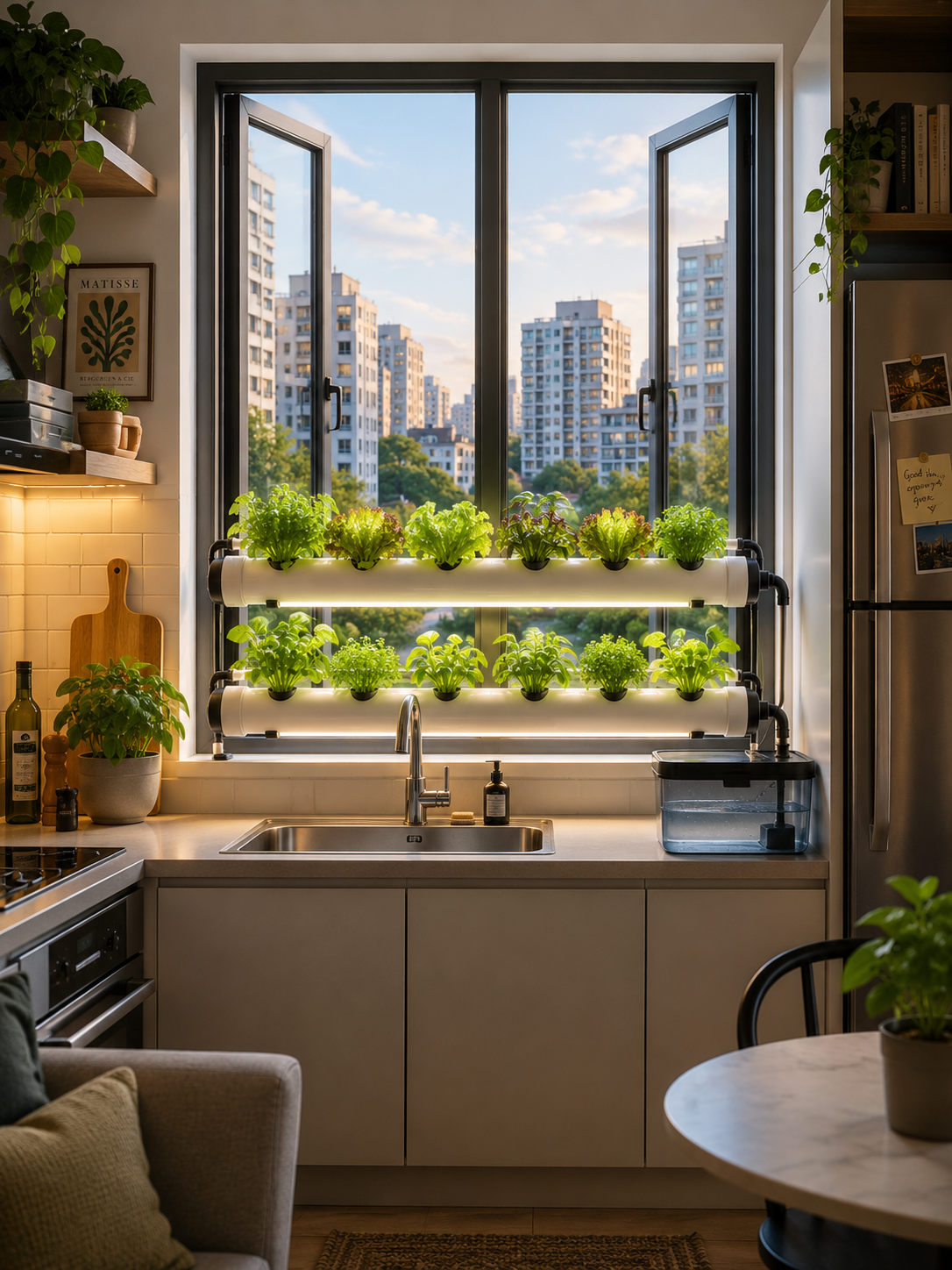
Mounts NFT pipes flush against the window frame so plants grow toward natural light with no floor space used. LED strips supplement on cloudy days. Holds 8 to 12 plants in a south or east-facing kitchen window. Works best for compact leafy greens like butterhead lettuce, spinach, and herbs that stay upright. The cleanest-looking window setup and the one most likely to start a conversation.
Best for: South or east-facing apartment kitchens. Plant count: 8 to 12. Cost: $50 to $80.
2. Rolling Rack Hydroponics
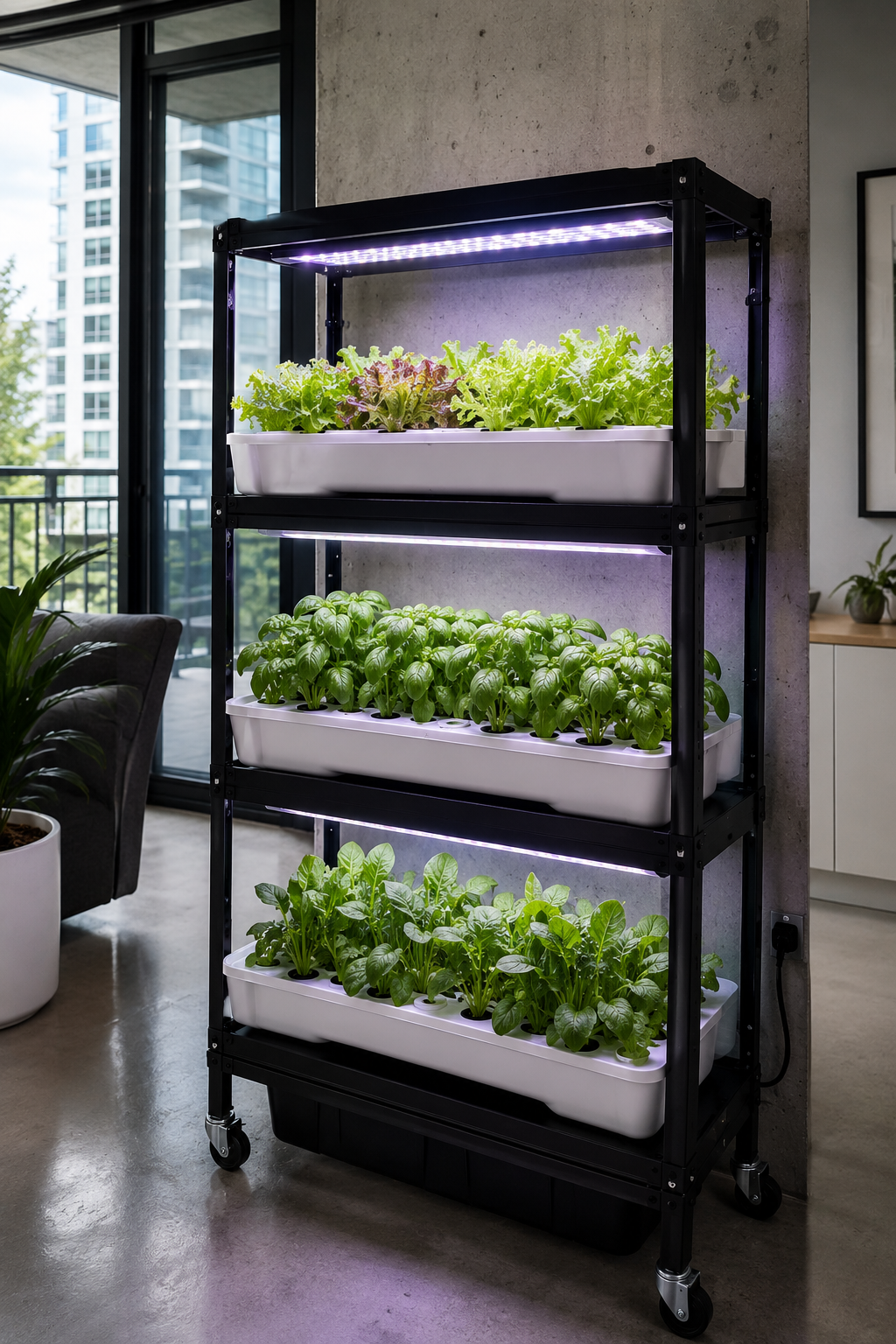
A grow rack on caster wheels that rolls wherever you need it. Move it into natural light during the day, roll it aside at night. Each tier has built-in LED grow lights, so no permanent installation is needed. Perfect for renters who cannot drill walls or mount ceiling fixtures. The most portable setup on this list and the easiest to move between apartments.
Best for: Renters needing mobility. Plant count: 12 to 24 (3 to 4 tiers). Cost: $80 to $150.
3. Wall-Mounted NFT
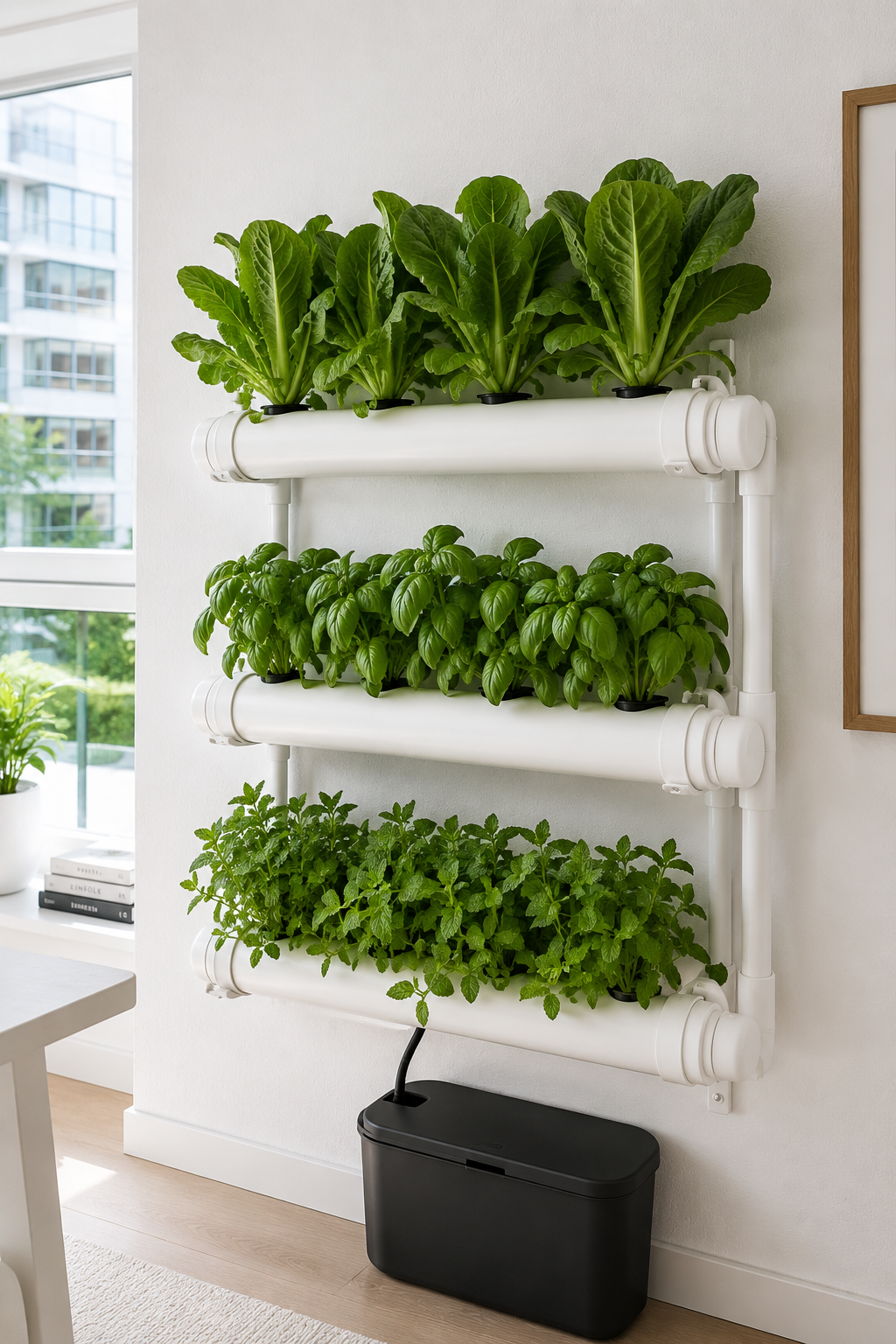
Three rows of white PVC pipes grow 18 to 24 plants in under 3 square feet of wall space with a single small reservoir at the base. The cleanest system for living rooms or kitchens with a south-facing wall. One mounting point per bracket means a standard apartment wall can hold a full system with six lag screws into studs. For the full DIY build guide, see how to build a wall-mounted NFT system.
Best for: Apartment walls with stud access. Plant count: 18 to 24. Cost: $60 to $100 DIY.
4. Balcony Tower
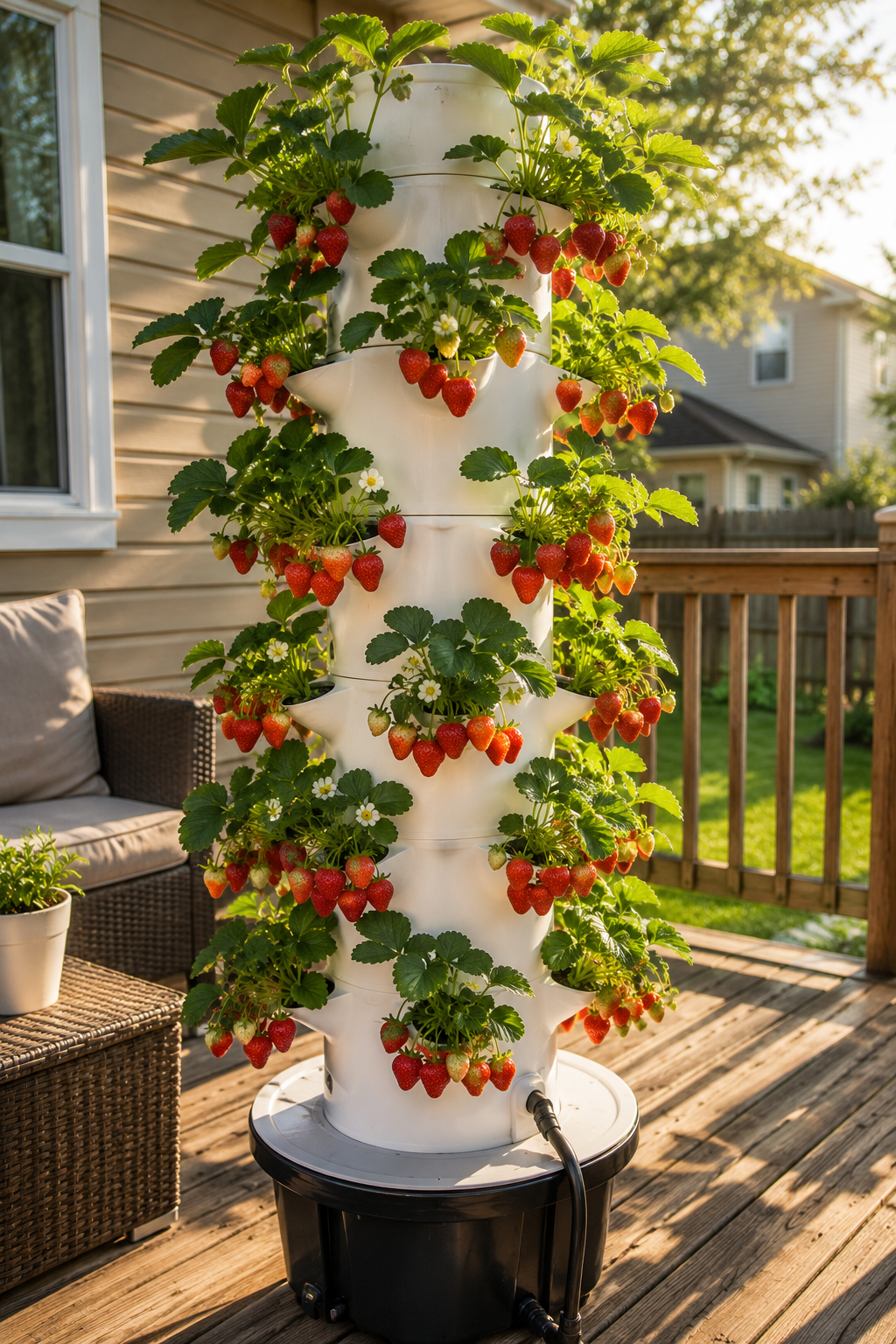
A freestanding tower that fits in a single balcony corner and grows 16 to 20 plants with no wall mounting and no drilling. Rolls indoors when weather turns. A built-in LED at the top means it works on shaded balconies that never see direct sun. The highest plant count per floor footprint of any setup that requires no installation at all. For the full build walkthrough, see how to build a DIY vertical hydroponic tower.
Best for: Balconies, any light level. Plant count: 16 to 20. Cost: $70 to $120 DIY.
5. Corner Kratky Shelf
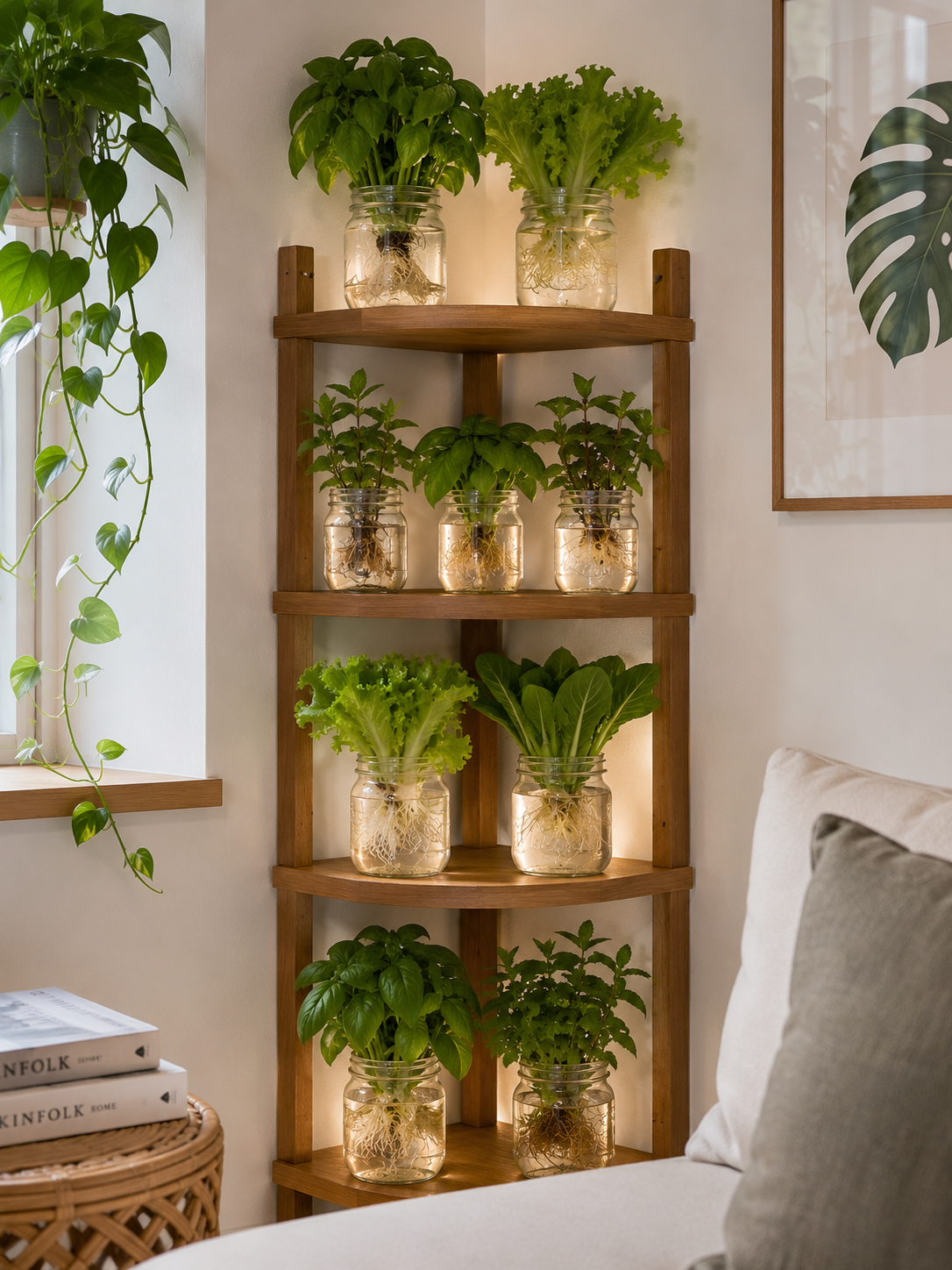
A wooden corner shelf holding mason jars with herbs and greens growing in plain water with no pump, no electricity, and no plumbing. The Kratky method keeps roots in static solution, the most beginner-friendly setup on this list at under $40 to build from scratch. The only caveat: clear glass jars let in light and trigger algae. Paint the exterior of each jar with dark spray paint (leave the top ring unpainted to monitor the water level). For how this works, see Kratky method for beginners.
Best for: Beginners, renters with no modifications. Plant count: 6 to 9 jars. Cost: Under $40.
6. Kitchen Counter DWC
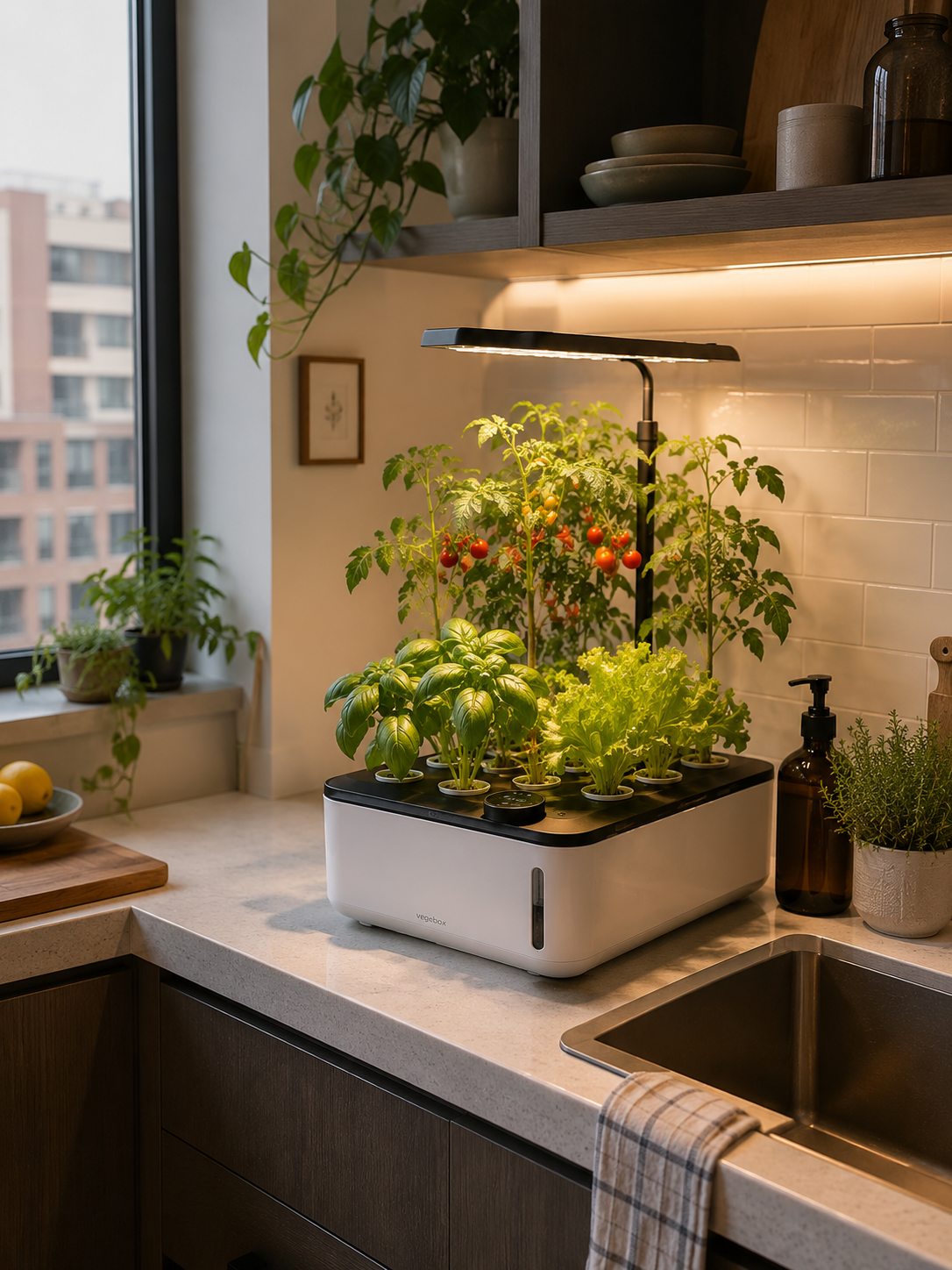
A plug-and-play countertop unit with a built-in LED and a quiet recirculating pump. Grows herbs, lettuce, and cherry tomatoes year-round without any DIY. The best choice for apartment dwellers who want results immediately without building or drilling anything. Maintain pH at 5.8 to 6.3 and EC at 1.2 to 2.0 mS/cm for leafy greens and herbs, as outlined in the Oklahoma State University EC and pH guide for hydroponics. See pH and nutrients for beginners for a full explanation.
Best for: Zero DIY, immediate results. Plant count: 4 to 9 (unit-dependent). Cost: $60 to $150 retail.
7. Over-the-Sink Herb Garden
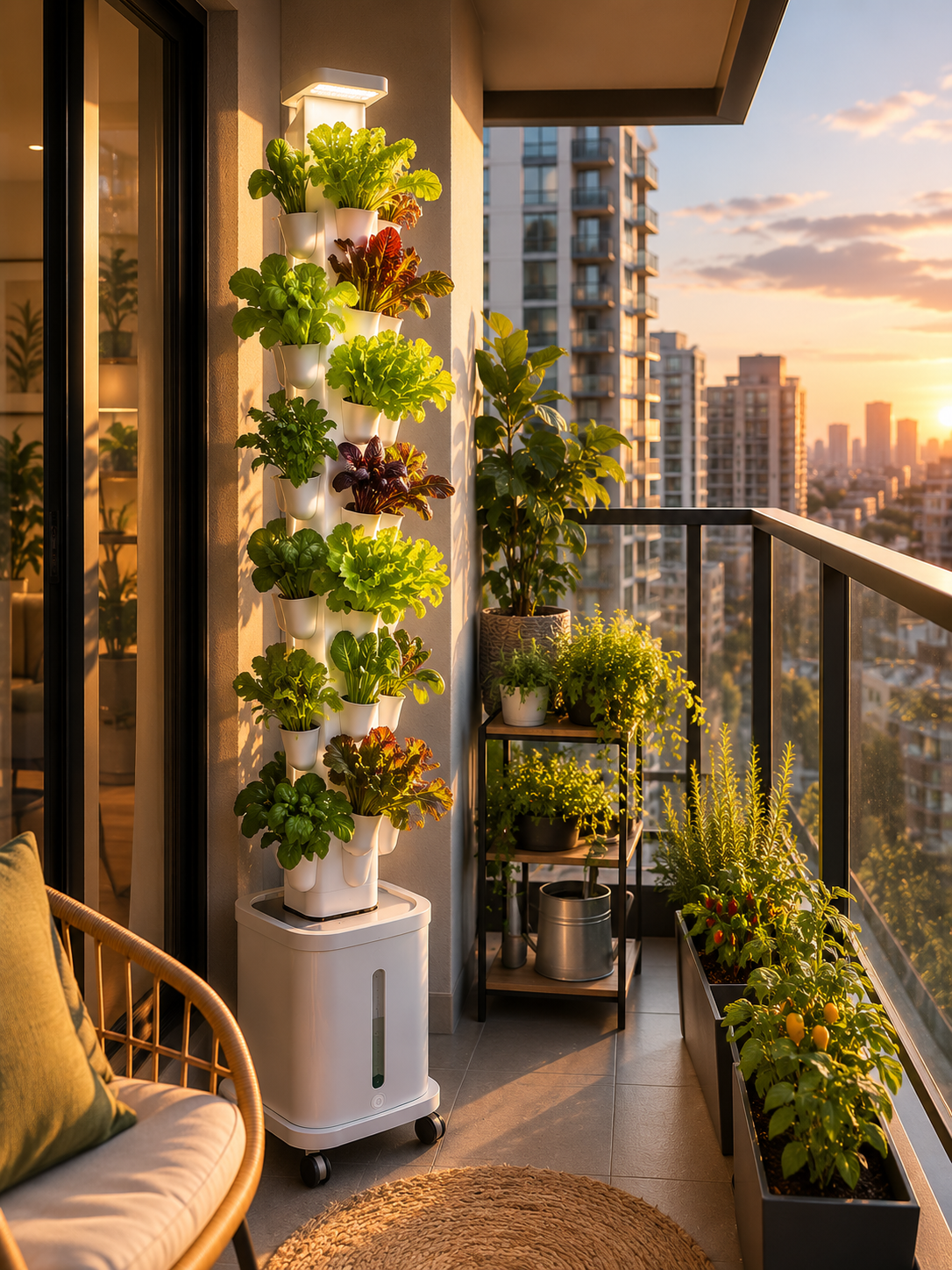
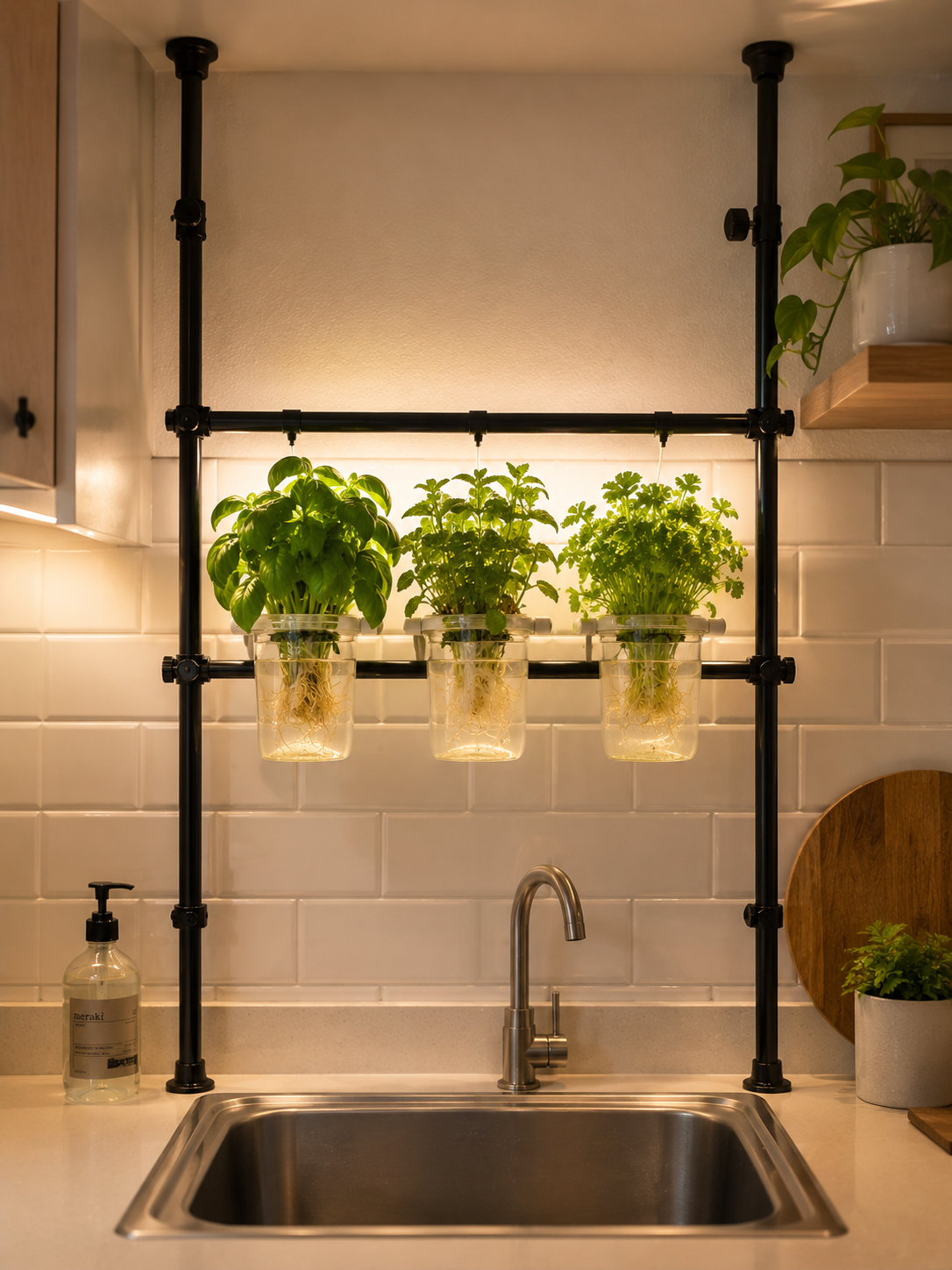
A tension rod system installed between two walls above the kitchen sink with no drilling required. Holds 3 to 5 herb jars directly above the water source, making it the easiest top-up routine of any setup on this list. Spring-tension rods leave zero wall damage, ideal for renters. Install height leaves the sink usable with clearance below. Replace clear jars with dark-colored or painted jars to block algae growth (see hydroponic algae prevention for detail).
Best for: Renters needing zero modifications. Plant count: 3 to 5 herb jars. Cost: Under $30.
8. Under-Stair Hydroponics
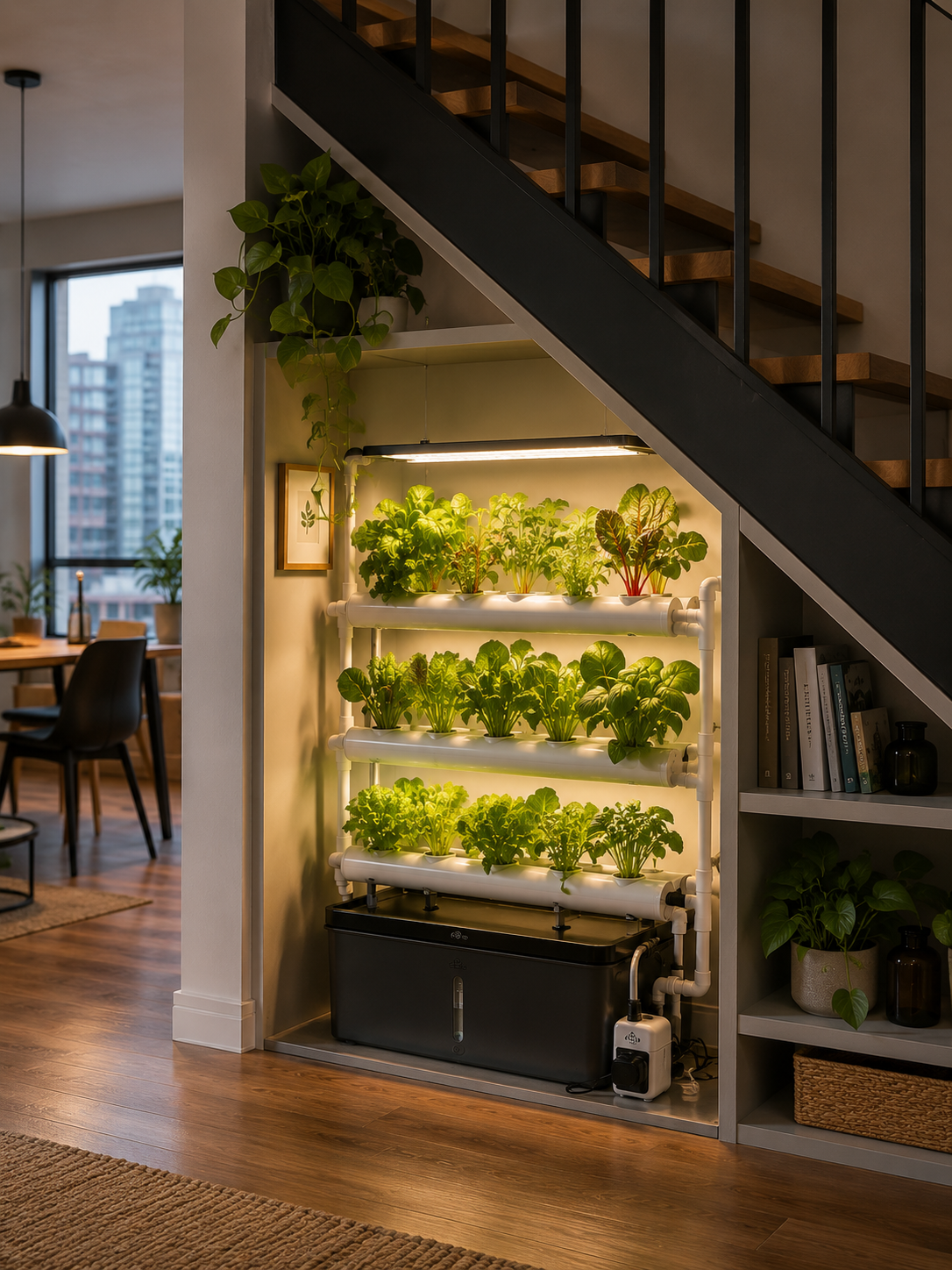
Converts a dead under-stair alcove into a fully lit food production zone. LED grow lights solve the low-light problem completely. The enclosed space actually helps maintain humidity and temperature stability, which benefits leafy greens. One of the highest plant counts possible: 20 to 30 plants in a space that would otherwise hold nothing but storage boxes. Requires only the space the alcove provides, no external floor space.
Best for: Apartments or townhomes with under-stair alcoves. Plant count: 20 to 30. Cost: $100 to $180 DIY.
9. Bookshelf Hydroponics
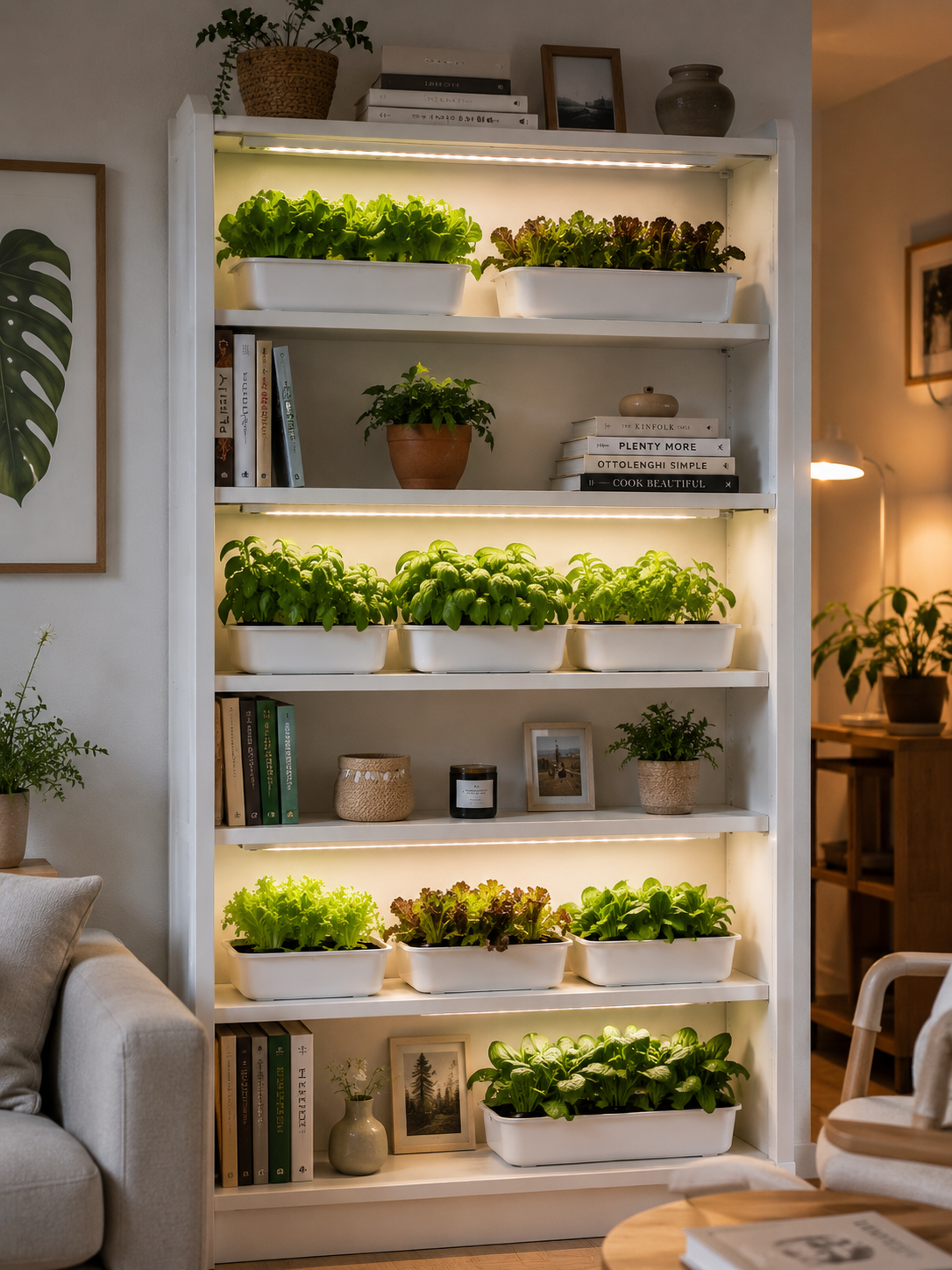
A standard bookshelf with hydroponic growing trays on alternating shelves and LED strips mounted under each growing tier. Books and plants share the same shelving unit without either looking out of place. Blends into living room decor better than any dedicated grow equipment. Keep growing trays on lower shelves to contain any drips. A waterproof tray liner under each hydroponic tier prevents shelf damage.
Best for: Living rooms, aesthetic-conscious growers. Plant count: 8 to 16 (shelf-dependent). Cost: $60 to $120 DIY.
10. Vertical Pipe Garden
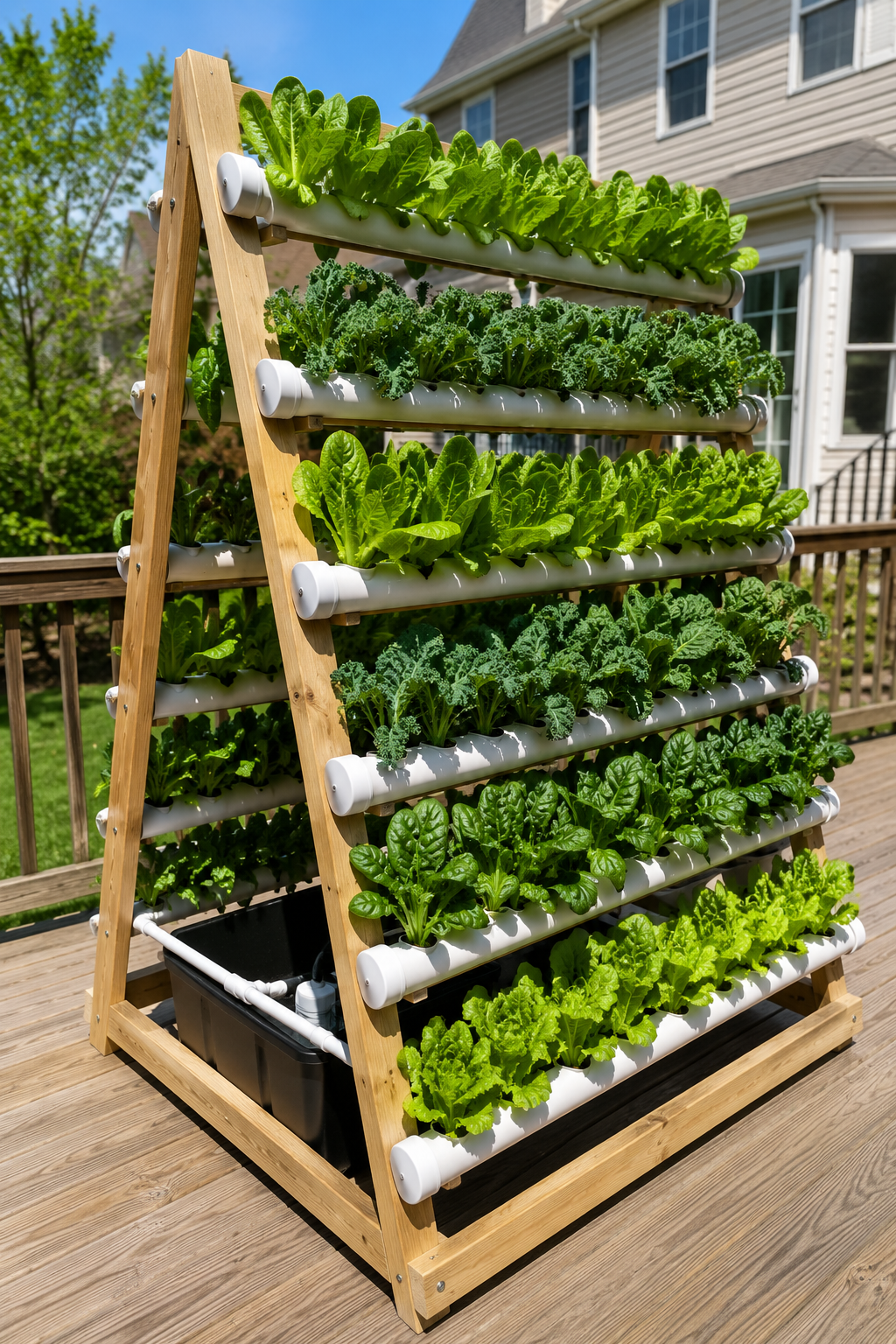
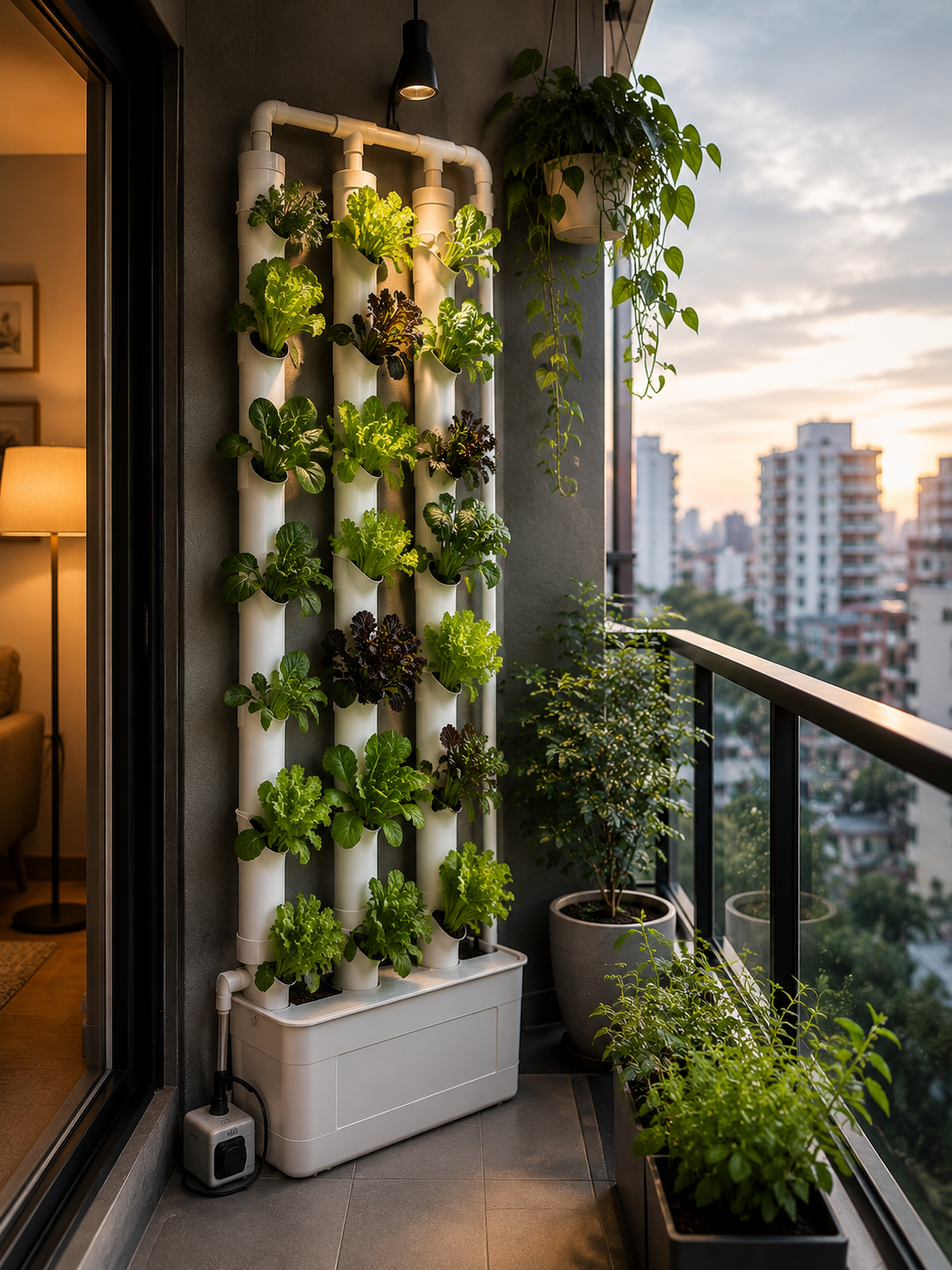
Multiple vertical PVC pipes mounted side by side on a balcony wall, each with staggered planting pockets running top to bottom. Grows 30 to 40 plants in a single wall panel. The highest density setup on this list for outdoor apartment spaces. Controlled environment agriculture research, including work from Cornell’s CEA program, consistently identifies vertical stacking as the most efficient use of limited outdoor space for food production.
Best for: Balconies with wall-mounting access. Plant count: 30 to 40. Cost: $80 to $140 DIY.
11. Coffee Table Hydroponics
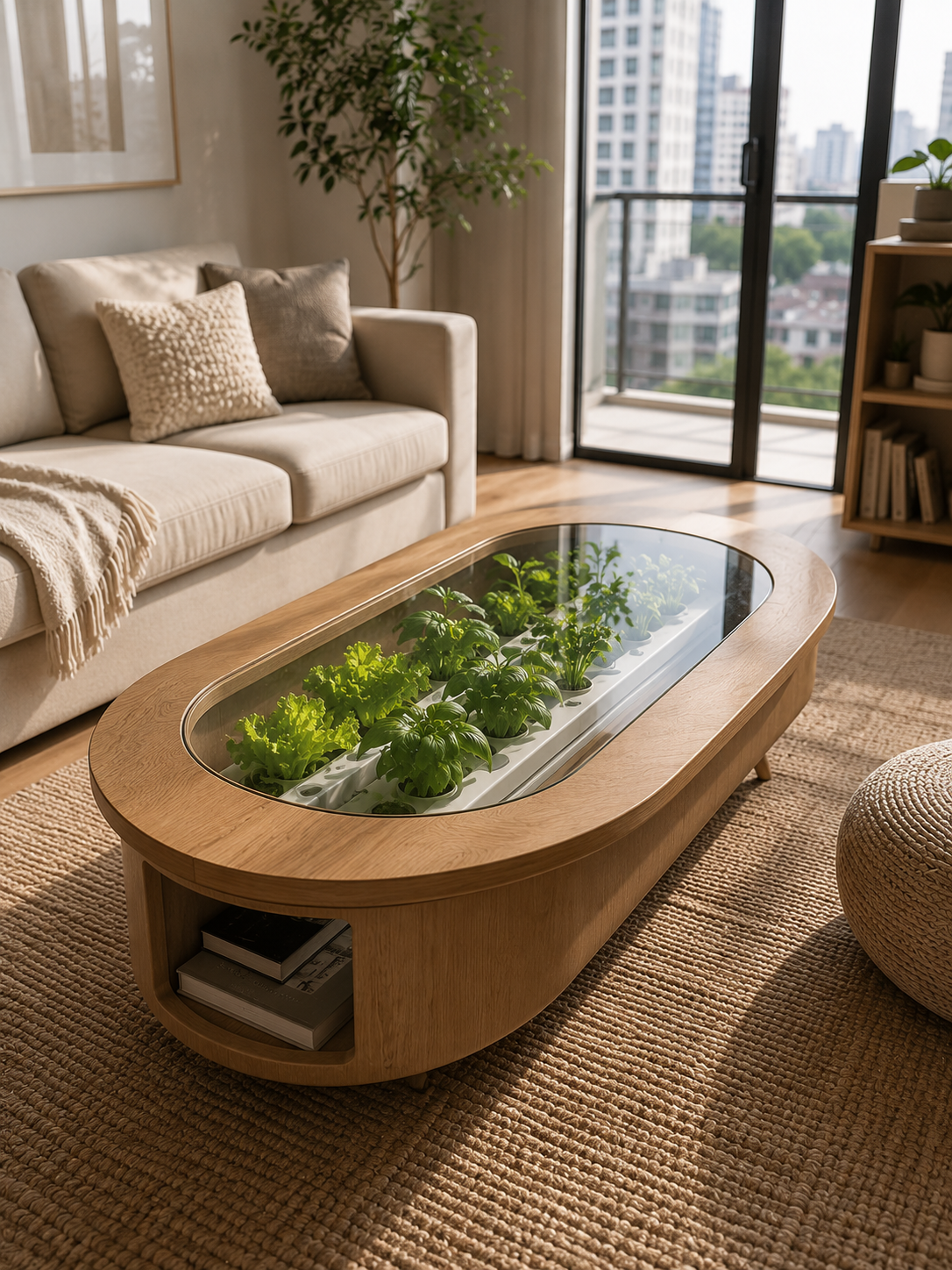
A coffee table with a built-in hydroponic NFT channel under a glass panel. Nutrient solution flows through a shallow channel below the glass while plants grow upward and become visible through the tabletop. Functional furniture and a food garden in one piece. The most conversation-starting setup on this list and one of the few that integrates growing completely into existing living room decor. Custom build, requires DIY or a local furniture maker.
Best for: Statement piece, living room. Plant count: 4 to 8. Cost: $200+ (custom build).
12. Hanging Hydroponic Garden
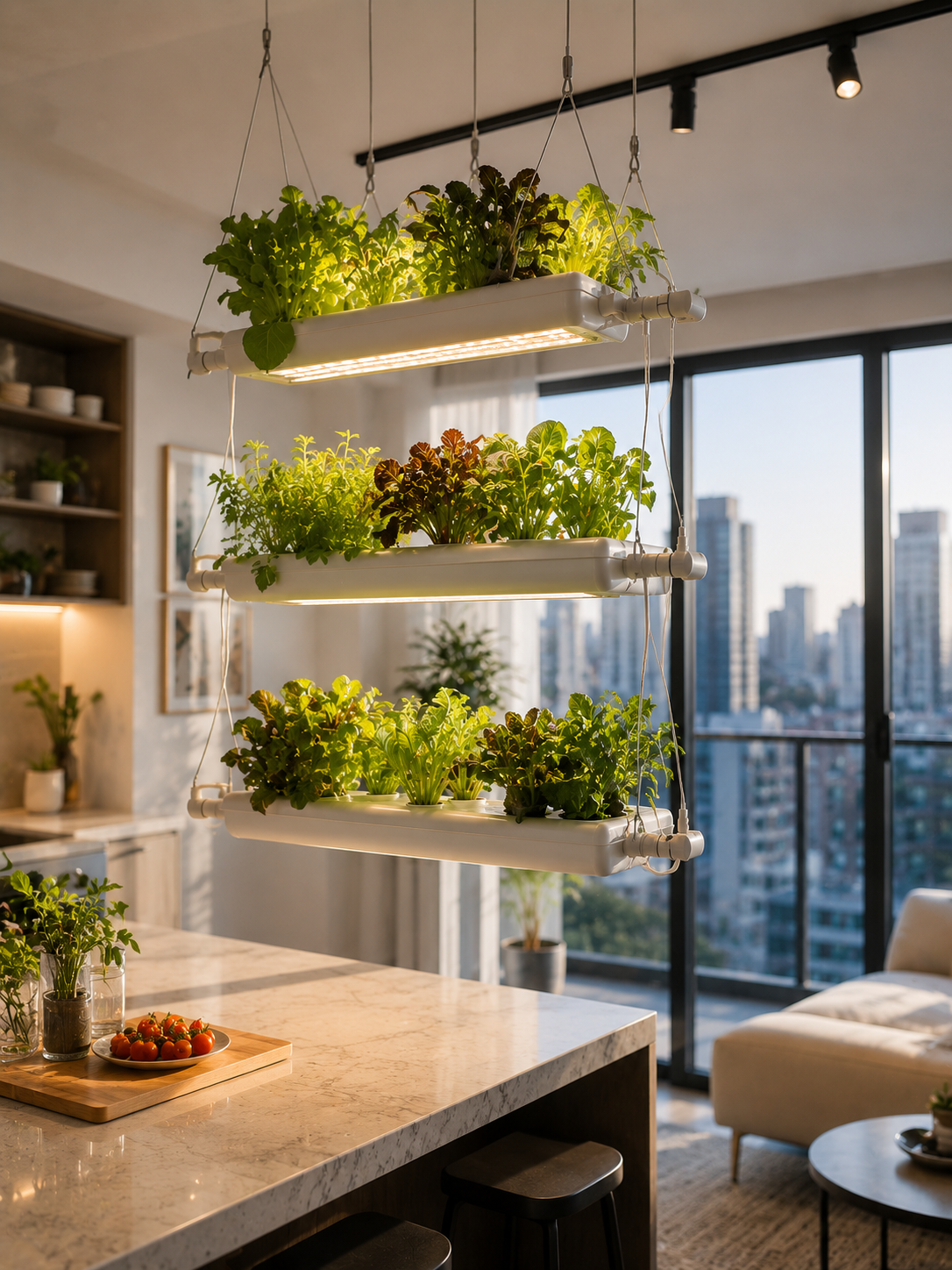
NFT pipes suspended from ceiling track or a tension rod system, hanging above a kitchen island or dining table. Uses ceiling height instead of wall or floor space. The most dramatic-looking setup on this list. Integrated LED lights under each tier handle lighting even in rooms without south-facing windows. Ceiling track systems require one-time installation, confirm weight limits with your landlord before hanging a full reservoir system.
Best for: High ceilings, dramatic aesthetic. Plant count: 12 to 18. Cost: $120 to $200 DIY.
At a Glance: All 12 Systems Compared
| Setup | Drilling Needed | Plant Count | Indoor/Outdoor | Cost |
|---|---|---|---|---|
| Window Shelf NFT | No | 8 to 12 | Indoor | $50 to $80 |
| Rolling Rack | No | 12 to 24 | Indoor | $80 to $150 |
| Wall-Mounted NFT | Yes (studs) | 18 to 24 | Indoor | $60 to $100 |
| Balcony Tower | No | 16 to 20 | Either | $70 to $120 |
| Corner Kratky Shelf | No | 6 to 9 | Indoor | Under $40 |
| Kitchen Counter DWC | No | 4 to 9 | Indoor | $60 to $150 |
| Over-the-Sink Herbs | No | 3 to 5 | Indoor | Under $30 |
| Under-Stair NFT | Yes | 20 to 30 | Indoor | $100 to $180 |
| Bookshelf Grow | No | 8 to 16 | Indoor | $60 to $120 |
| Vertical Pipe Garden | Yes | 30 to 40 | Outdoor | $80 to $140 |
| Coffee Table NFT | No | 4 to 8 | Indoor | $200+ |
| Hanging NFT | Ceiling track | 12 to 18 | Indoor | $120 to $200 |
For a full breakdown of vertical system types by build difficulty and plant output, see how to build a vertical hydroponic system at home. For crop selection and EC/pH targets per plant, see the best plants to grow hydroponically.
Can I grow hydroponics in an apartment without natural sunlight?
Yes. Rolling racks, bookshelf setups, and under-stair builds use LED grow lights on every tier and run independently of windows. A full-spectrum LED panel at 14 to 16 hours per day replaces natural light completely for leafy greens and herbs.
Which small-space hydroponic setup requires no drilling or wall damage?
The corner Kratky shelf, over-the-sink tension rod system, rolling rack, and coffee table setup all require zero drilling. The tension rod system installs between two walls using spring pressure alone. None of these setups leave marks, ideal for renters.
How much does a small-space apartment hydroponic system cost?
The corner Kratky shelf costs under $40 using mason jars. A window shelf NFT system runs $50 to $80 in materials. Countertop DWC units (plug-and-play, no DIY) cost $60 to $150 at retail. The coffee table and hanging ceiling setups are the most expensive, typically $200 or more for custom builds.
Can I leave an apartment hydroponic system running while on vacation?
Pump-based systems (NFT, DWC, drip towers) need someone to top up the reservoir every 4 to 7 days, depending on plant size and room temperature. Kratky systems (mason jars, corner shelf) are the exception, they can run unattended for 7 to 14 days before needing a top-up, making them the best choice for people who travel.
How many plants can I grow in a studio apartment?
A window shelf NFT fits 8 to 12 plants with no floor space. A wall-mounted NFT adds 18 to 24 plants on a single wall. A corner Kratky shelf holds 6 to 9 jars. Combined, a studio apartment with south or east windows can support 30 to 40 plants across multiple setups, more than enough for daily herbs and weekly salads.
Sources (3)
- University of Arizona, Controlled Environment Agriculture Center, retrieved 2026-06-28, https://ceac.arizona.edu/
- Oklahoma State University Extension, Electrical Conductivity and pH Guide for Hydroponics, retrieved 2026-06-28, https://extension.okstate.edu/fact-sheets/electrical-conductivity-and-ph-guide-for-hydroponics.html
- Cornell University, Controlled Environment Agriculture, retrieved 2026-06-28, https://cea.cals.cornell.edu/