Hydroponic Reservoir Maintenance: 9 Tips Every Grower Needs
Keep your hydroponic reservoir clean and balanced with 9 simple habits: how often to change water, top off vs. full change, and a quick cleaning routine.
A neglected reservoir is the quiet cause behind a surprising number of “why are my plants struggling” questions. There’s no soil buffer to absorb your mistakes in a hydroponic system, so it’s easy to set it and forget it until something goes wrong.
Good news: keeping a reservoir healthy doesn’t take complicated chemistry. It takes a handful of habits, repeated on a schedule. Here are the 9 that matter most.
The short version
- Do a full water and nutrient change every 7 to 14 days, and top off with plain water in between (UMN Extension).
- Topping off and a full change solve different problems, dilution versus nutrient depletion, and mixing them up is the most common beginner mistake.
- Pair every water change with a quick wipe-down, and sanitize fully between grow cycles.
- Keep the solution between 65-75°F (18-24°C) and pH between 5.5-6.5, and most other problems take care of themselves.
1. Stick to a water change schedule
Most recirculating systems, including DWC, NFT, and ebb-and-flow setups, need a complete nutrient solution change every 7 to 14 days (UMN Extension). Stretch that past 21 days and you’re inviting root-zone decay and pathogen buildup, even if the water still looks clear.
That window isn’t fixed. Young seedlings barely sip water, so you can stretch the interval early on. Once plants hit peak vegetative growth, their uptake speeds up and the schedule should tighten. Warmer rooms push it tighter still, since heat drives faster evaporation and concentrates whatever’s left in the tank.
2. Know topping off vs. a full change
Here’s the mistake that trips up almost every beginner: assuming a top-off is the same as a water change. It isn’t. Topping off replaces water lost to evaporation. It does nothing to fix nutrient depletion.
Plants don’t drink every nutrient at the same rate. Nitrogen and potassium get pulled out fast, while calcium, magnesium, and sulfate linger (PMC8181128, 2021). Keep topping off without ever draining the tank, and that ratio drifts further out of range every day, eventually causing the exact deficiency symptoms you’d blame on something else entirely. A simple rule: once your cumulative top-offs equal the reservoir’s original volume, it’s time for a full drain and refill.
3. Run a two-tier cleaning routine
Sanitation is your best defense against biofilm, algae, and root disease. Treat it as two separate jobs. During an active grow, wipe down the reservoir walls, pump intake, and air stones at every water change, plain warm water and a soft sponge, no soap (UMN Extension). Soap residue in a fresh nutrient batch can damage roots.
Between grow cycles, go deeper. Drain everything, then circulate a mild, unscented bleach solution (roughly a tablespoon per gallon) through the pump and lines for 15 to 30 minutes before a thorough freshwater flush. One thing most guides skip: avoid vinegar or citric acid for routine pH tweaks. Those organic acids break down fast and feed bacterial blooms, which is the opposite of what you want in a system you just sanitized.
4. Keep light out to stop algae before it starts
Algae needs exactly three things to grow: light, water, and nutrients (OSU Extension). Your reservoir already has two of those covered permanently, so light is the only lever you can pull. Opaque, light-sealed reservoirs starve algae before it ever takes hold.
Check lid seals, cord entry ports, and any clear tubing, all of those are common leak points. If you’re already dealing with a green tint, our full algae prevention and removal guide walks through the cleanup protocol step by step.
5. Don’t skimp on aeration
Roots need a steady oxygen supply to actively pull in nutrients, and that’s just as true underwater as it is in soil. In DWC and raft systems especially, low dissolved oxygen leads to root suffocation, and the same low-oxygen conditions favor Pythium, the pathogen behind most root rot (PlantTalk Colorado).
An air pump paired with a porous air stone, or a circulating water pump that agitates the surface, keeps oxygen exchange happening where the water meets the air. If your roots are already turning brown and mushy, that’s usually a sign aeration (or temperature) has slipped, and our root rot guide covers how to recover.
6. Hold the temperature steady
Water temperature controls how much oxygen your solution can physically hold, and the relationship runs backward from what you’d hope: warmer water holds less oxygen, right when warm conditions make plants demand more of it (MU Extension). The sweet spot for most hydroponic crops is 65-75°F (18-24°C).
Push past that range and dissolved oxygen drops while pathogen activity speeds up, a bad combination. Insulating the reservoir and keeping it away from warm pumps or grow light ballasts goes a long way toward keeping it in range without extra equipment.
7. Check pH and EC every time you touch the reservoir
pH and EC (electrical conductivity) aren’t a once-a-week chore, they’re a daily habit (OSU Extension). pH determines whether nutrients stay dissolved or precipitate out as unusable solids; most crops want 5.5-6.5. EC tracks total dissolved salts, which is your read on how concentrated the solution actually is.
Always adjust EC before pH, since adding concentrated nutrients shifts the baseline pH anyway. If you’re still getting comfortable with what these numbers mean and how to adjust them, our pH and nutrients guide for beginners covers the fundamentals in more depth.
8. Size your reservoir for stability, not just convenience
A bigger reservoir is more forgiving, full stop. Water acts as a buffer against sudden swings in temperature, salinity, and pH, and the more volume you have, the slower those swings happen.
In a small bucket-sized system, a single day’s plant uptake can be a large share of total volume, which means pH and EC can swing hard within 24 hours. A 20-gallon-plus tank absorbs the same daily draw with barely a ripple. If you’re designing a new system, err generous on reservoir size rather than minimal.
9. Know the warning signs that mean “act now”
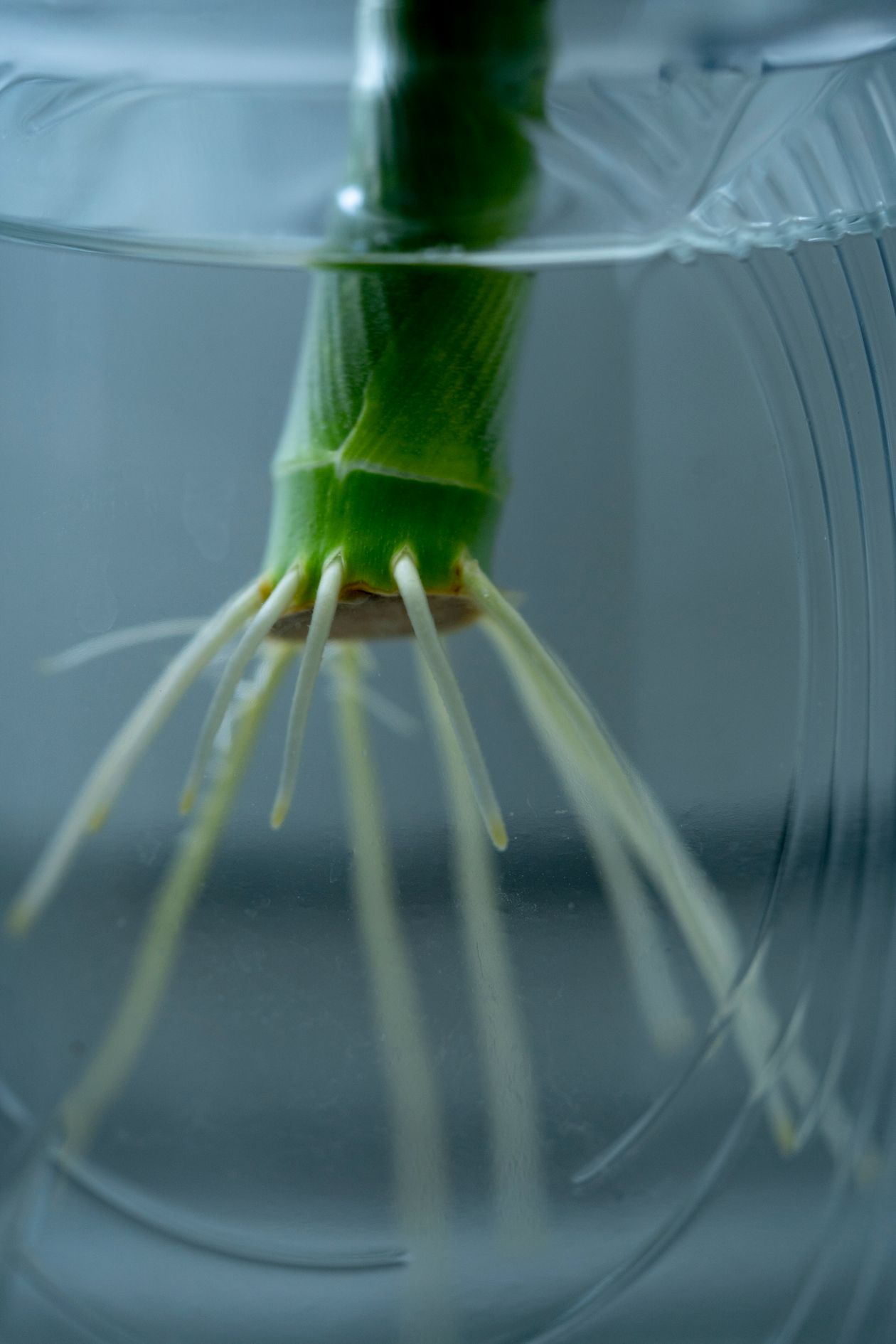
Even with a good routine, things slip. Learn what healthy looks like so abnormal stands out immediately: clear water, a neutral or faintly earthy smell, and roots that are pearly white and firm.
Cloudy or green-tinted water, a sour or rotten-egg smell, or roots turning brown and slimy all mean stop and intervene, not wait and see. A sudden pH rebound above 7 usually points to alkaline source water; cloudy water often means a bacterial bloom; any sour smell is a sign to drain, sanitize, and rebuild the solution before the problem spreads further.
How often should I clean my hydroponic reservoir?
Give the basin and pump a quick rinse and wipe-down at every full water change, roughly every 7 to 14 days (UMN Extension). Between grow cycles, run a deeper sanitize with a mild bleach or hydrogen peroxide solution to clear out any pathogens before the next planting.
Can I just top off my reservoir instead of changing the water?
No. Topping off only replaces water lost to evaporation, it doesn’t reset depleted nutrients. Plants pull nitrogen and potassium faster than calcium, magnesium, or sulfate (PMC8181128, 2021), so the leftover ratio drifts out of balance over time. You still need a full change every 1 to 2 weeks.
What's the easiest way to sanitize a reservoir between grow cycles?
Empty the system completely, scrub the walls and pump with warm water, then circulate a mild, unscented bleach solution through the lines for 15 to 30 minutes (UMN Extension). Flush thoroughly with clean water afterward and let everything dry before the next planting.
Does reservoir size affect how often I need to do maintenance?
Yes. A small reservoir under 5 gallons has very little buffering capacity, so daily plant uptake causes fast pH and EC swings. Larger reservoirs, 20 gallons and up, dilute that daily draw across more volume and stay stable for longer between adjustments.
The bottom line
None of this requires special equipment or a chemistry background. Change the water on a schedule, don’t confuse topping off with a real reset, keep light and warmth out of the equation, and check pH and EC before they check you.
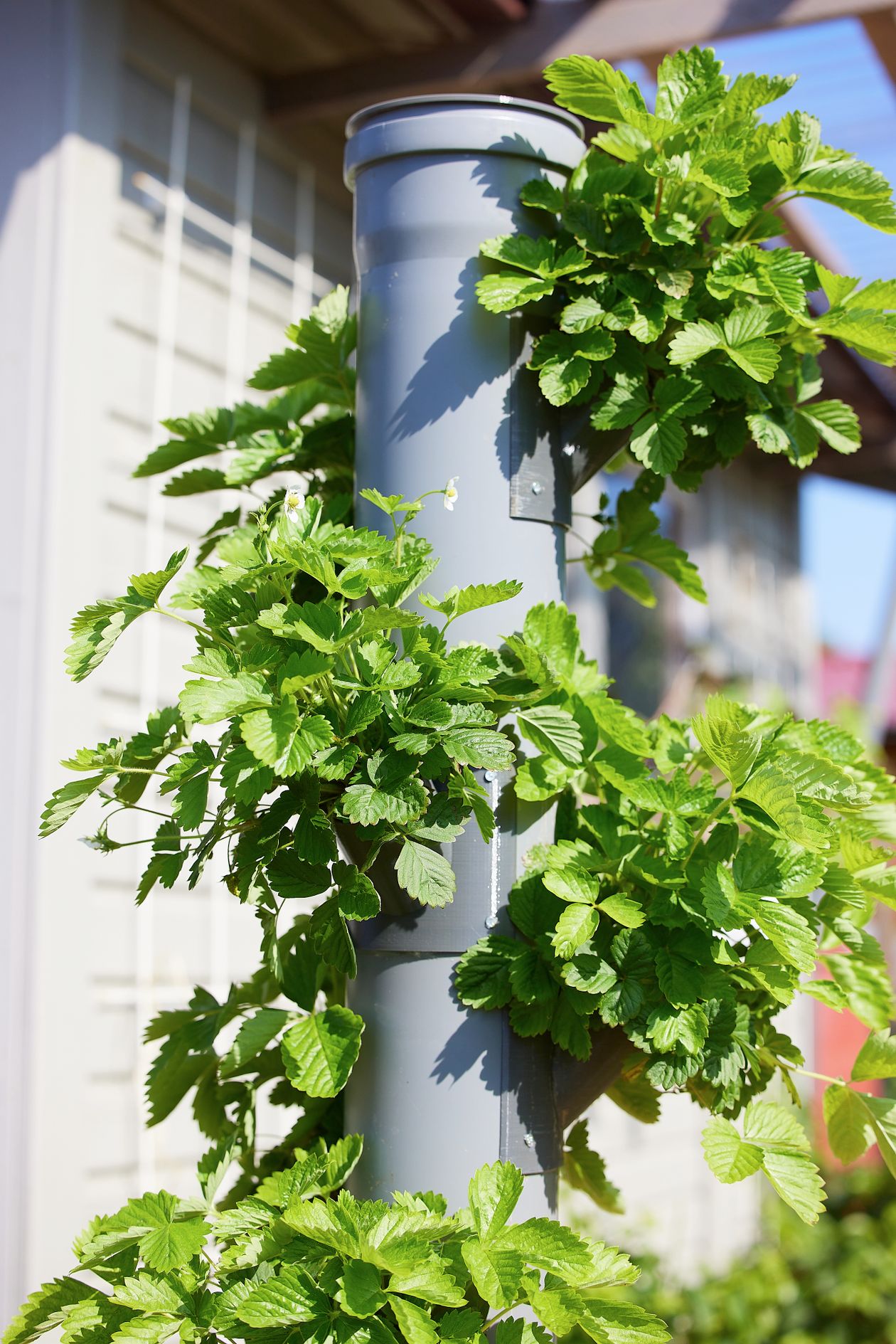
Build those four habits into muscle memory and most of the problems that send growers searching for fixes, algae, root rot, nutrient lockout, simply stop happening. If you’re building a new system from scratch, our PVC Kratky wall build is a good next read.
Sources (8)
- Penn State Extension, Hydroponics Systems and Principles Of Plant Nutrition, retrieved 2026-06-22, https://extension.psu.edu/hydroponics-systems-and-principles-of-plant-nutrition-essential-nutrients-function-deficiency-and-excess
- University of Minnesota Extension, Small-scale hydroponics, retrieved 2026-06-22, https://extension.umn.edu/how/small-scale-hydroponics
- Illinois Extension, Home Hydroponics, retrieved 2026-06-22, https://extension.illinois.edu/sites/default/files/illinois_extension_hydroponics_handouts.pdf
- Oklahoma State University Extension, Electrical Conductivity and pH Guide for Hydroponics, retrieved 2026-06-22, https://extension.okstate.edu/fact-sheets/electrical-conductivity-and-ph-guide-for-hydroponics
- Oklahoma State University Extension, Algae Control for Greenhouse Production, retrieved 2026-06-22, https://extension.okstate.edu/fact-sheets/algae-control-for-greenhouse-production
- PlantTalk Colorado, Root Disease Problems & Management in Hydroponic Systems, retrieved 2026-06-22, https://planttalk.colostate.edu/topics/miscellaneous/2043-root-disease-problems-management-hydroponic-systems/
- MU Extension, Hydroponic Nutrient Solutions, retrieved 2026-06-22, https://extension.missouri.edu/publications/g6984
- Theoretical and Experimental Analyses of Nutrient Control in Electrical Conductivity-Based Nutrient Recycling Soilless Culture System, PMC8181128, retrieved 2026-06-22, https://pmc.ncbi.nlm.nih.gov/articles/PMC8181128/