Hydroponics: The Complete Beginner's Guide (2026)
Hydroponics grows food in water, no soil needed, and uses 13x less water than field farming. This science-backed guide covers systems, costs, crops, nutrients, pH, and light so you can start today.
In this guide
- What is hydroponics, exactly?
- Why does hydroponics work so well in small spaces?
- Which system should a beginner start with?
- What can you actually grow as a beginner?
- What nutrients and pH does your water need?
- How much light do hydroponic plants actually need?
- What are the most common beginner mistakes?
- Is hydroponics worth it for a home grower?
- Frequently Asked Questions
- Where to go from here
Hydroponics is growing plants in nutrient-rich water instead of soil. The roots sit in, or are regularly fed by, a water solution that carries everything a plant needs. That’s the whole idea, and it’s why you can grow real food on a kitchen counter, a balcony, or a spare corner of your apartment. No yard required.
If you’ve ever killed a basil plant or stared at a shady window wondering what you could possibly grow, this guide is for you. We’ll cover every piece. What systems actually cost, what crops to pick, how to manage nutrients and pH, and how much light your plants need. All backed by peer-reviewed studies and university extension programs, not other blogs.
Some links in this article may be affiliate links. We earn a small commission if you purchase through them, at no extra cost to you.
The short version
- Hydroponic lettuce uses about 13× less water and produces 11× higher yields per area than field lettuce, but uses ~82× more energy per kg (Barbosa et al., 2015).
- The cheapest start is a DIY Kratky jar at $10–$20. A complete DWC kit runs $52–$80; plug-and-play smart gardens begin at $110.
- Keep your solution pH between 5.5 and 6.5, and check it at the same time each day. Midday readings skew high.
- Aim for a Daily Light Integral of 12–17 mol/m²/day for leafy greens. Roughly 16 hours of light hits the mark.
- Lettuce is harvest-ready in about 35 days from seed, up to 10 cycles a year from the same footprint.
What is hydroponics, exactly?
Hydroponics is a method of growing plants without soil, feeding roots directly with a water-based nutrient solution. As the University of Illinois Extension puts it, “soil is replaced with a nutrient-rich water solution that provides the necessary nutrients for plant growth” (Illinois Extension).
Think of soil as a middleman. In a garden, soil stores water and nutrients and the roots work to pull them out. Hydroponics removes the middleman. You mix the nutrients into water yourself, and the roots absorb directly. You control exactly what the plant gets and when.
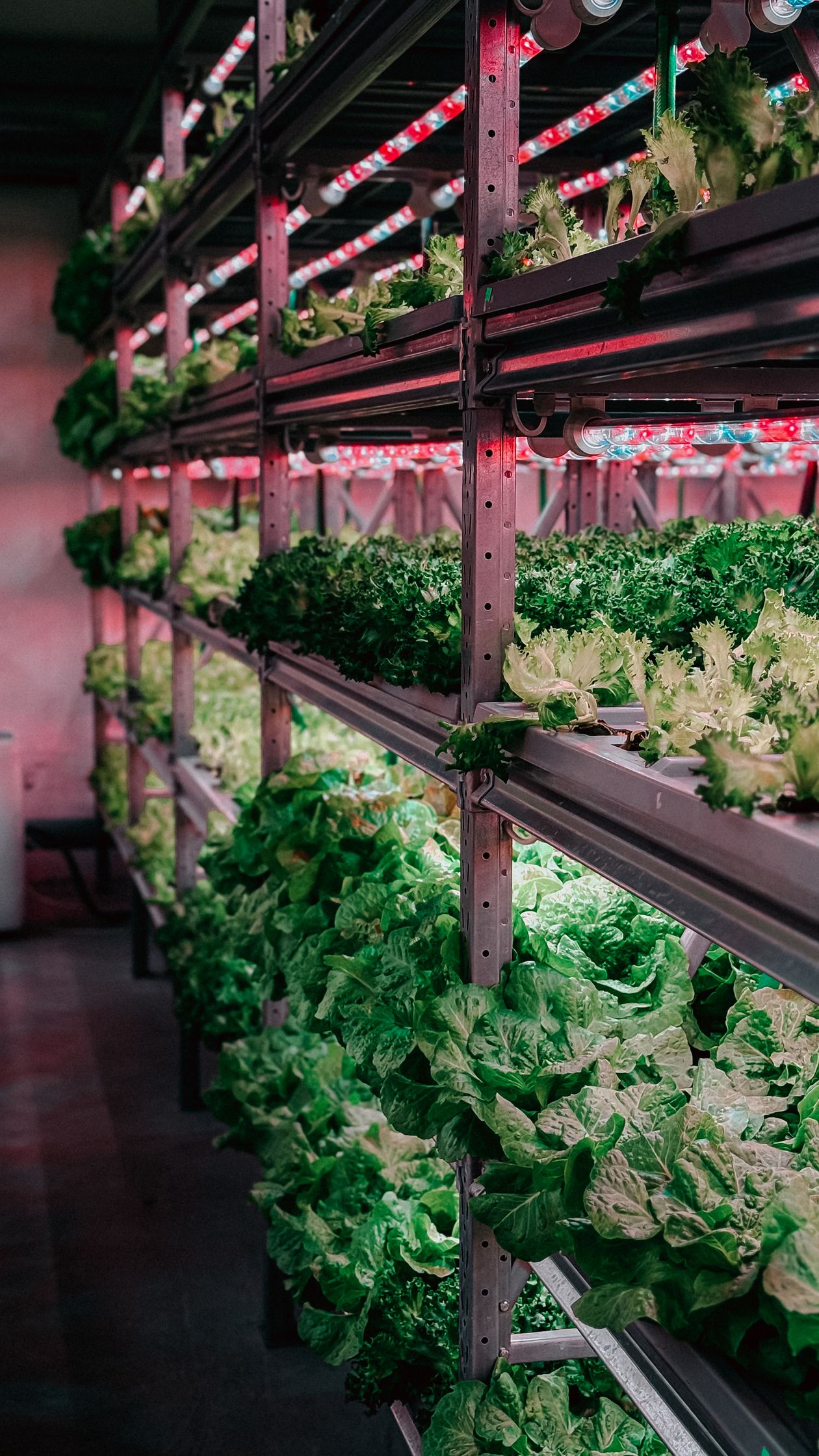
That control is why hydroponics works indoors, year-round, in places where traditional gardening can’t. No yard, no season, no frost. Just water, nutrients, light, and a plant.
I started hydroponics to make a side income, not just as a hobby. NFT made sense for production scale. I now run 3 production tables with 100 holes each, plus a dedicated “remaja” (juvenile) table with 300 holes where seedlings grow before being transferred.
Why does hydroponics work so well in small spaces?
Traditional agriculture accounts for 70% of all global freshwater withdrawals, according to the Food and Agriculture Organization (FAO). Most of that water evaporates, runs off, or drains into the ground. Never reaching the crop. Hydroponics solves this with a closed loop: the nutrient solution stays in the system, and only what the plant actually drinks disappears.
A peer-reviewed comparison found that field-grown lettuce in an arid climate used about 250 liters of water per kilogram of yield, while hydroponic lettuce needed just 20 liters. A 13× reduction (Barbosa et al., 2015; confirmed by CRAF 2024).
Water to grow 1 kg of lettuce
A 13× reduction. Sources: Barbosa et al. 2015 (PMC4483736); CRAF 2024.
Speed is the other big win. With nutrients and oxygen delivered straight to the roots, plants grow noticeably faster than in soil. Hydroponic lettuce goes from seed to a full head in just 35 days, enabling up to 10 harvests a year from the same footprint.
The honest trade-off most guides skip: that same study found hydroponic lettuce used about 82× more energy per kilogram than field-grown. Mostly for lighting and climate control (Barbosa et al., 2015). At home this shows up on your electricity bill. Hydroponics saves water and space; it spends energy to do it.
"Start tiny and cheap. One jar, one lettuce. If you enjoy it, scale up."The smartest way to begin
Which system should a beginner start with?
Start with the Kratky method. The simplest, cheapest, and most forgiving entry point. It was developed and published by Dr. B.A. Kratky at the University of Hawaiʻi as a “suspended pot, non-circulating hydroponic method” (University of Hawaiʻi CTAHR). No pumps, no electricity, no moving parts. You mix nutrients in water, set a plant in a net cup above the solution, and let it grow as the water level slowly drops.
Here’s how the common beginner systems compare on real hardware cost:
Starter setup. Hardware only (USD, 2026)
Hardware only. Add nutrients (~$44), a pH kit (~$16), and a grow light (~$28) if needed. Sources: Active Aqua / AeroGarden / Click & Grow. Mid-2026 pricing.
DIY Kratky ($10–$20 total): A light-proof 5-gallon bucket, a net pot lid, nutrients, and water. Zero electricity needed. The cheapest way to learn the fundamentals.
Deep Water Culture ($52–$80 for a 1-bucket kit): The Active Aqua Root Spa is a widely used DWC kit at $52–$80 depending on retailer (GrowDaddy). An air pump keeps the nutrient solution oxygenated, which grows bigger, faster plants than Kratky. A natural step up once you’ve done one Kratky cycle.
Smart gardens ($110–$370): The AeroGarden Harvest costs $109.95; Click & Grow Smart Garden 3 runs $124–$170 (Click & Grow). Everything built in. Pump, light, timer. Convenient, but they use proprietary nutrient pods, which adds ongoing cost.
NFT (Nutrient Film Technique): A thin film of nutrient solution flows continuously through channels past the roots. This is a production-grade system, and it’s what I run myself. I currently grow across 4 NFT tables: 3 production tables with 100 holes each, plus one “remaja” table with 300 holes. If you want to eventually grow at scale, NFT is excellent. But start with Kratky or DWC to understand the fundamentals first.
My honest advice: try a Kratky jar first. Once you’ve grown one head of lettuce, a bigger system stops feeling intimidating.
No floor space to spare? A vertical tower or wall system multiplies growing space in the same footprint. See our guide to vertical hydroponic gardens for small spaces for the system types, the real yield math, and what to check before mounting one on a balcony.
What can you actually grow as a beginner?
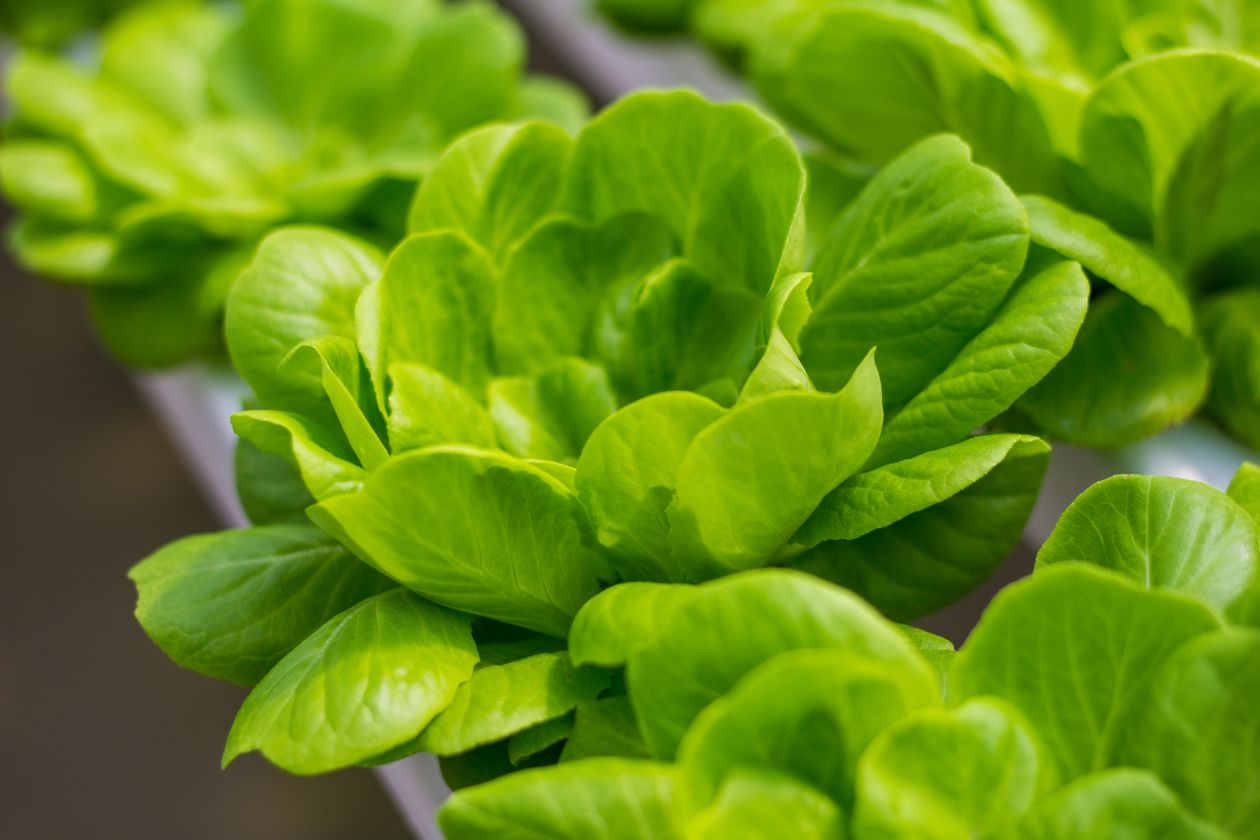
Start with leafy greens and herbs. They’re fast, forgiving, and give you feedback before you try anything harder. Illinois Extension puts it well: “leafy greens and herbs are good plants to start with. They grow quickly and take up minimal space” (Illinois Extension).
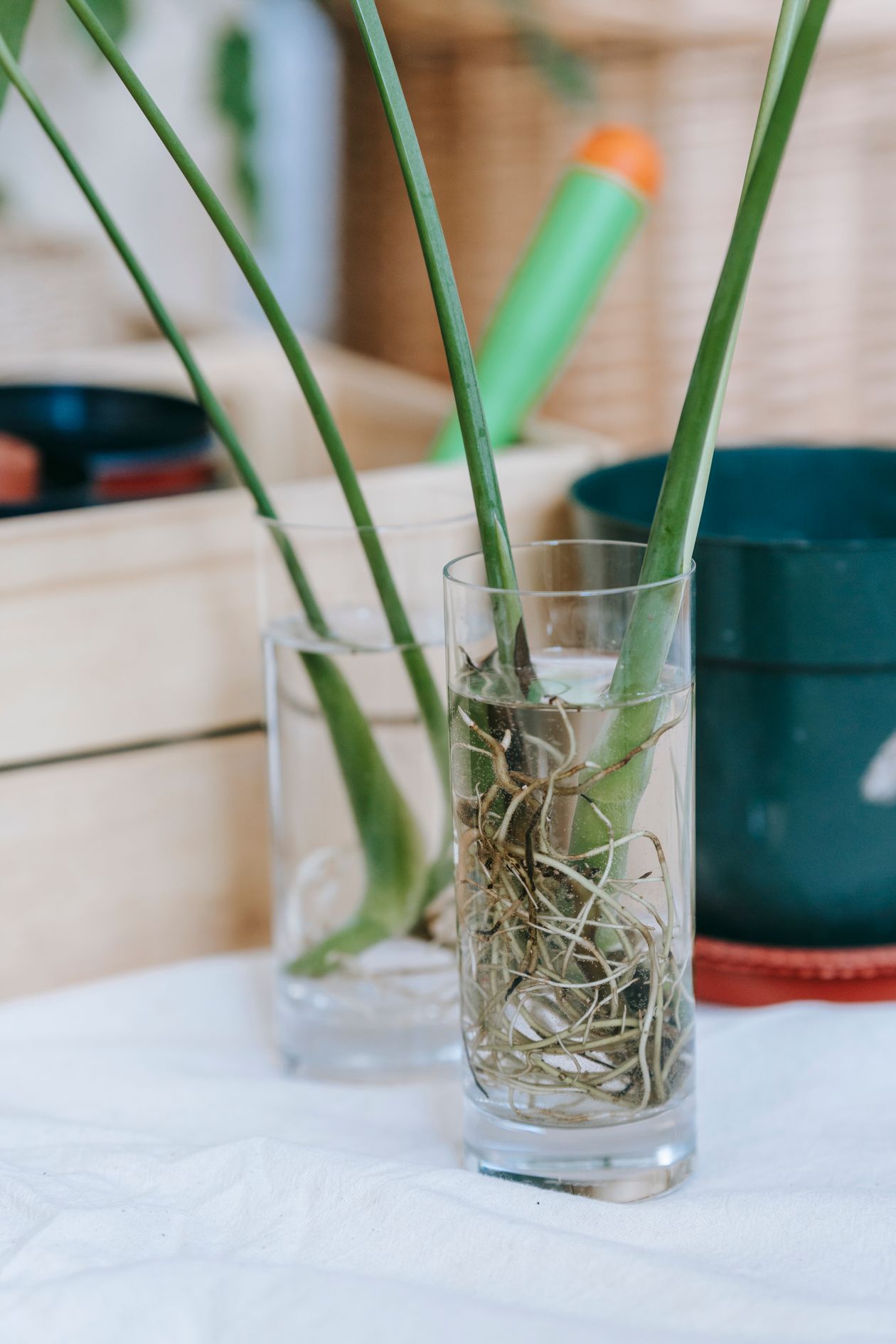
If you’d rather grow for looks than the kitchen, many popular houseplants root and live in plain water too, which is about the lowest-stakes way to try soilless growing.
Here’s what to expect in terms of growth speed:
| Crop | Ready to harvest | Notes |
|---|---|---|
| Lettuce | 35 days from seed | Full head (5–6 oz); up to 10 harvests/year (Greenhouse Product News) |
| Kale | 2–3 weeks (baby leaf) or 50–60 days (full) | Baby leaf is tender and premium quality; germinates in 5–8 days |
| Spinach | 45 days to full maturity | Bolts under heat or long photoperiods. Keep it cool |
| Basil | Months of rolling harvest | Pinch flowers to keep producing; cut-and-come-again for months (Cornell) |
In my NFT system, lettuce is the main production crop. The 35-day figure matches real-world results well when the system is dialed in. The remaja stage is what makes it reliable, because plants are always ready to move up to production tables so you never have empty holes sitting idle.
Save for later: tomatoes, peppers, cucumbers, strawberries. All absolutely doable hydroponically, but they need more light, more support, and more patience. Get a few salad harvests under your belt first.
What nutrients and pH does your water need?
Why regular plant food won’t work in hydroponics. Soil fertilizers. Blood meal, bone meal, standard Miracle-Gro granules. Rely on soil microbes to break down organic compounds into a form roots can absorb. In a sterile hydroponic reservoir there are no microbes, so those compounds just sit in the water, start to rot, and crash the dissolved oxygen level. Use a nutrient formula designed for hydroponics. The General Hydroponics FloraSeries 3-part system (~$44 for a quart starter set) is a reliable starting point.
EC. How concentrated is your solution? Electrical Conductivity (EC), measured in mS/cm, tells you how strong your nutrient solution is. Too low and plants starve. Too high and water gets pulled OUT of the roots by osmotic pressure, causing wilting and leaf burn. Different crops need different EC levels:
| Crop | Optimal EC (mS/cm) | pH range | Key note |
|---|---|---|---|
| Lettuce | 1.2–1.8 (seedlings: 0.8–1.2) | 5.5–6.5 | Drop EC at germination to avoid root burn (UF/IFAS) |
| Kale | 1.6–2.5 | 5.5–6.8 | High EC boosts biomass; kale depletes nitrogen fast (Frontiers 2025) |
| Basil | 1.0–1.6 | 5.5–6.5 | High EC dilutes aromatic oils. Keep it moderate |
| Spinach | 1.4–1.8 | 5.5–6.5 | Very strict pH needed for iron uptake (Cornell) |
pH. The master switch. Keep solution pH between 5.5 and 6.5 for almost every leafy green or herb. Below 5.0, calcium and phosphorus lock out. Above 6.8, iron and zinc precipitate out of solution and fall to the bottom of the reservoir. Useless to the plant even though they’re technically “in the water” (Illinois Extension, 2026). pH drifts upward naturally as plants absorb nutrients, so you’ll add pH Down (phosphoric acid) on a regular basis.
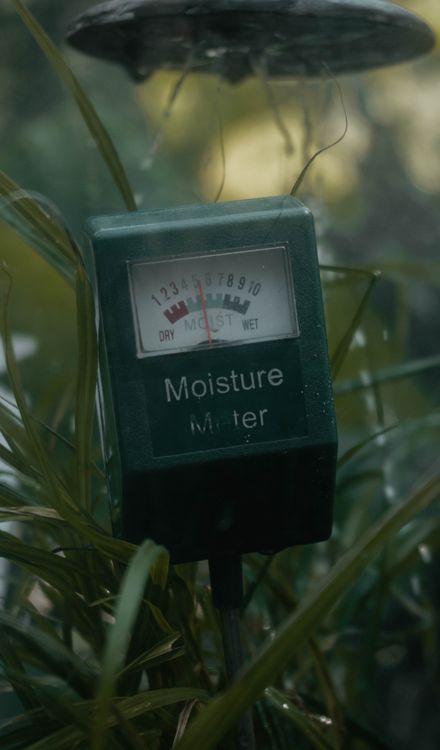
From my NFT system: I check pH every single day, always at night. I avoid midday readings entirely. Temperature peaks in the afternoon, and heat pushes pH readings artificially upward, adding noise to the data. The real rule is: pick one consistent time, either morning or night, and stick to it every day.
The $15.93 General Hydroponics pH kit. With a liquid indicator, a pH Up bottle (potassium carbonate), and a pH Down bottle (phosphoric acid). Is all you need to start (Hydrobuilder). Ready to go deeper? See the full step-by-step guide to mixing nutrients, hitting the right EC, and diagnosing lockout.
How much light do hydroponic plants actually need?
Leafy greens need a Daily Light Integral (DLI) of 12–17 mol/m²/day. The simplest way to hit it: run a 250 µmol/m²/s LED for 16 hours, which delivers exactly 14.4 DLI. Right in the target range (MU Extension).
Plants don’t respond to lumens or lux the way humans perceive brightness. What matters is PAR. Photosynthetically Active Radiation. The 400–700nm wavelength band that actually drives photosynthesis. The metric that determines real growth is the Daily Light Integral (DLI): the total volume of PAR photons hitting the canopy over a full 24 hours, measured in mol/m²/day.
Think of PPFD (instantaneous light intensity, in µmol/m²/s) as the flow rate of a hose, and DLI as the total volume of water collected in a bucket by end of day. You can hit the same DLI with a bright light run for fewer hours, or a dimmer light run for longer.
For leafy greens, the target DLI is 12–17 mol/m²/day. The simplest way to hit that without an expensive PAR meter:
- Run lights for 16 hours on / 8 hours off
- At a PPFD of 250 µmol/m²/s, a 16-hour day delivers exactly 14.4 DLI. Right in the sweet spot
Avoid 24-hour continuous lighting. Plants need a dark period to move carbohydrates from leaves down to the roots and complete normal cellular respiration.
Oklahoma State University Extension gives a practical wattage guideline (OSU Extension): 16W of actual LED draw per square foot for leafy greens and herbs; 25W per square foot for fruiting crops later. Keep your LED fixture 6–12 inches above the canopy and raise it as plants grow (University of Minnesota Extension). A Sansi grow bulb ($27–$30) covers a single Kratky or small DWC setup.
What are the most common beginner mistakes?
The three mistakes that trip up almost everyone are skipping pH checks, letting water get too warm, and using the wrong nutrients. Here’s the full list:
- Ignoring pH. Adding nutrients but never testing pH is the number-one reason healthy-looking water still produces sad, yellowing plants. If leaves are already yellowing, our yellow-leaf diagnosis guide walks through which cause it is.
- Checking pH at the wrong time. Afternoon temperature spikes push pH readings upward. You see a false problem and over-correct. Check at the same time each day, morning or evening.
- Letting the water warm up. Warm water holds less dissolved oxygen, which invites root rot. Root-zone temperature directly affects lettuce physiology (Yan et al., 2023). Keep the reservoir around 65–72°F (18–22°C) and out of direct sun.
- Letting light hit the reservoir. Algae grow wherever there’s light and nutrients. Use opaque containers and keep the solution covered.
- Starting too ambitious. Tomatoes on day one usually ends in frustration. Greens first, then move up.
- Using soil fertilizers. In a sterile reservoir, organic fertilizers rot instead of breaking down. Stick to hydroponic-specific mineral nutrients.
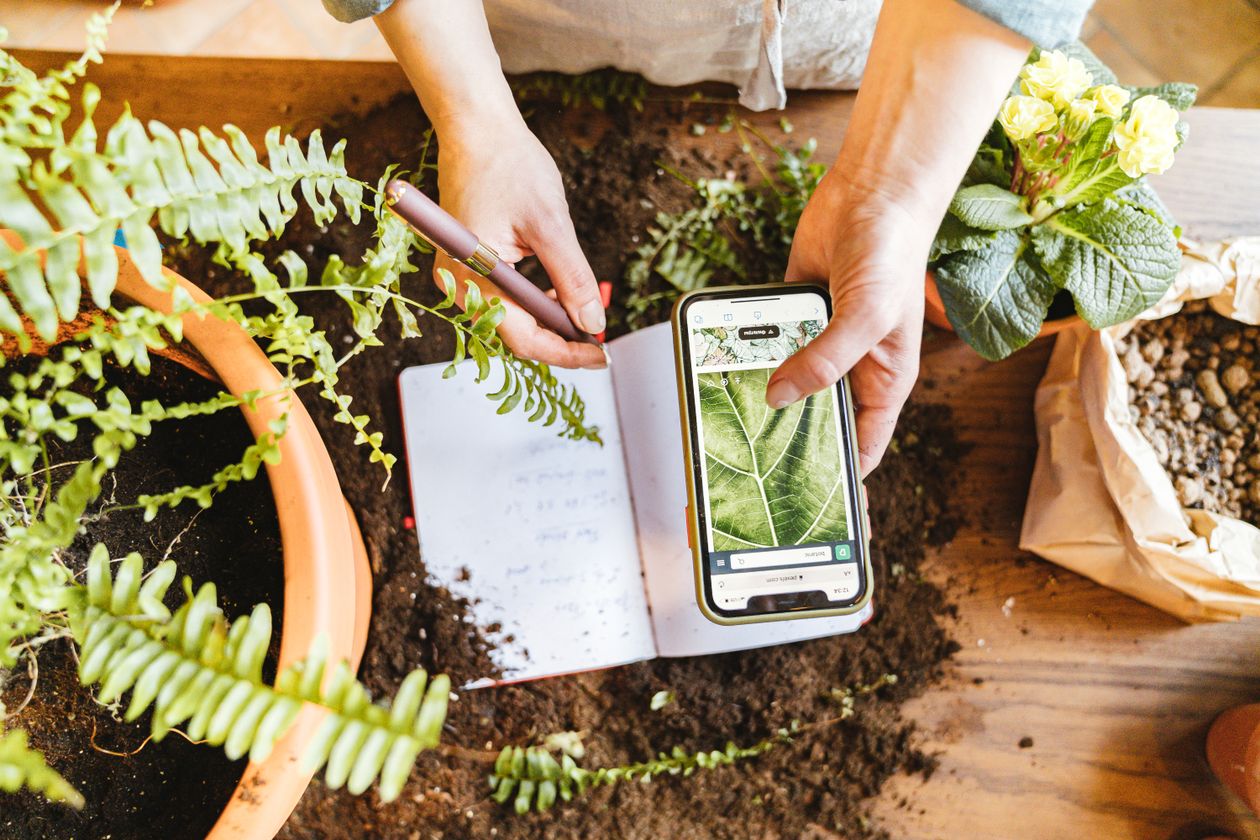
The thing nobody warned me about: the first 1–3 harvest cycles go smoothly, and it’s easy to think you’ve figured it out. Then around the 4th cycle, problems arrive. I got hit with root rot and Cercospora leaf spot (known locally as “mata kodok”. Circular fungal spots on the leaves that look like frog eyes). Both are humidity and system hygiene problems that build up invisibly between cycles. Clean your system thoroughly between every cycle, not just when you see symptoms.
Is hydroponics worth it for a home grower?
For most apartment and small-space growers, yes. If you want fresh greens and herbs year-round without outdoor space. You spend a little upfront, a few minutes a day checking pH and water level, and you get fast, clean, pesticide-free harvests from a shelf or counter. The water and space savings are real and well-documented (Barbosa et al., 2015).
It’s less compelling if you already have a big sunny garden, or if you want something completely hands-off. The energy trade-off is real. Your grow light runs on electricity. But for an apartment grower with no yard and some curiosity, it’s one of the most reliable ways to grow your own food.
The smartest way to find out: start tiny and cheap. One jar, one lettuce. If you enjoy it, scale up.
That’s the general answer. For the actual crop-by-crop payback math, herbs pay back in months and lettuce in years: is a small-space hydroponic setup actually worth it?
Frequently Asked Questions
Is hydroponics hard for beginners?
No. A passive Kratky setup needs no pumps or electricity. Just water, nutrients, and a plant (University of Hawaiʻi). The learning curve is mostly about checking pH and water level. Start with leafy greens and you’ll see results within a few weeks.
What does a basic hydroponic setup cost?
A DIY Kratky jar costs $10–$20 for hardware. Add about $44 for a starter hydroponic nutrient set, $16 for a pH kit, and $27–$30 for a grow light if your space lacks natural light. A complete DWC kit runs $52–$80; plug-and-play smart gardens start at $110.
Does hydroponics really save water?
Yes. Peer-reviewed research found hydroponic lettuce uses about 20 liters of water per kilogram of yield, versus roughly 250 liters per kilogram for field-grown lettuce. A 13× reduction (Barbosa et al., 2015). The savings come from recirculation: the nutrient solution stays in the system instead of draining away.
What's the catch with hydroponics?
Energy. That same peer-reviewed study found hydroponic lettuce uses about 82× more energy per kilogram than field-grown, mostly for lighting and climate control (Barbosa et al., 2015). At home it means an electricity cost. Modest for a few shelves of greens, but not zero.
What pH should hydroponic water be?
Between 5.5 and 6.5 for most leafy greens and herbs. The range where roots absorb all essential nutrients most efficiently (Illinois Extension, 2026). Check at the same time each day. Temperature fluctuations during midday push readings upward and make it hard to spot real trends.
How long does it take to grow lettuce hydroponically?
About 35 days from seed to a full 5–6 oz head (Greenhouse Product News). That’s up to 10 harvests per year from the same space. Results depend on your light levels, temperature, and system type.
Can you mix different crops in the same reservoir?
Not easily. Different crops need different EC levels. Kale thrives at 1.6–2.5 mS/cm while basil does best at 1.0–1.6 mS/cm. Setting EC high enough for kale stresses the basil, and vice versa. Keep one crop type per reservoir, or use separate containers.
Where to go from here
Hydroponics looks complex from the outside, but the core is simple: feed roots clean, balanced, oxygenated water and give the plant enough light. Start with a Kratky jar of lettuce, keep pH between 5.5 and 6.5 (and check it at the same time each day), and you’ll have your first harvest in about five weeks.
When you’re ready for the next step, pick a system and follow the step-by-step guide.
Sources (18)
- Barbosa, G.L., et al. (2015). “Comparison of Land, Water, and Energy Requirements of Lettuce Grown Using Hydroponic vs. Conventional Agricultural Methods.” International Journal of Environmental Research and Public Health, 12(6), 6879–6891. https://pmc.ncbi.nlm.nih.gov/articles/PMC4483736/ retrieved 2026-06-07
- University of Illinois Extension. “Growing without soil: Getting started with hydroponics at home.” Good Growing, Jan 16, 2026. https://extension.illinois.edu/blogs/good-growing/2026-01-16-growing-without-soil-getting-started-hydroponics-home retrieved 2026-06-07
- Yan, et al. (2023). “Controlling root zone temperature improves plant growth and pigments in hydroponic lettuce.” Frontiers in Plant Science (PMC). https://pmc.ncbi.nlm.nih.gov/articles/PMC10667003/ retrieved 2026-06-07
- Kratky, B.A. “A Suspended Pot, Non-Circulating Hydroponic Method.” University of Hawaiʻi CTAHR. https://www.ctahr.hawaii.edu/hawaii/downloads/A_Suspended_Pot_Non-circulating_Hydroponic_method.pdf retrieved 2026-06-07
- FAO Knowledge Repository. “Growing Food in Impossible Places” (SDGs 2 & 13). https://openknowledge.fao.org/bitstreams/55e02f3e-2b3b-443d-a463-30215494a801/download retrieved 2026-06-07
- CRAF 2024. “Hydroponics and Aquaponics: Future Prospects in Urban Agriculture.” https://www.agrifarming.org/articles/CRAF-2024-5-3-39-45.pdf retrieved 2026-06-07
- Penn State Extension. “Hydroponics Systems and Principles of Plant Nutrition.” https://extension.psu.edu/hydroponics-systems-and-principles-of-plant-nutrition-essential-nutrients-function-deficiency-and-excess retrieved 2026-06-07
- UF/IFAS AE610. “How Efficient Are Hydroponic Lettuce Production Systems in Nutrient Usage Under Low and High Salinity?” https://ask.ifas.ufl.edu/publication/AE610 retrieved 2026-06-07
- Frontiers in Plant Science (2025). “Modified nutrient management protocol for optimum biomass production…” https://www.frontiersin.org/journals/plant-science/articles/10.3389/fpls.2025.1629432/full retrieved 2026-06-07
- Cornell University. “Growth and Tissue Elemental Composition Response of Spinach to Hydroponic and Aquaponic Water Quality.” https://blogs.cornell.edu/aquaculture/files/2019/09/Growth-and-Tissue-Elemental-Composition-Response-of-Spinach.pdf retrieved 2026-06-07
- MU Extension. “Controlled Environment Agriculture: Understanding Grow Lights.” https://extension.missouri.edu/publications/g6987 retrieved 2026-06-07
- Oklahoma State University Extension. “LED Grow Lights for Plant Production.” https://extension.okstate.edu/fact-sheets/led-grow-lights-for-plant-production retrieved 2026-06-07
- University of Minnesota Extension. “Lighting for indoor plants and starting seeds.” https://extension.umn.edu/planting-and-growing-guides/lighting-indoor-plants retrieved 2026-06-07
- Greenhouse Product News. “Growing Hydroponic Leafy Greens.” https://gpnmag.com/article/growing-hydroponic-leafy-greens/ retrieved 2026-06-07
- Cornell AgSci blogs. “Caring for Basil.” https://blogs.cornell.edu/agsci-interns/2013/06/30/caringforbasi/ retrieved 2026-06-07
- GrowDaddy. “Active Aqua Root Spa 1 Bucket Systems.” https://growdaddycanada.com/products/active-aqua-root-spa-1-bucket-systems retrieved 2026-06-07
- Click & Grow Smart Garden 3. https://www.clickandgrow.com/products/the-smart-garden-3 retrieved 2026-06-07
- Hydrobuilder. “General Hydroponics pH Control Kit.” https://hydrobuilder.com/products/general-hydroponics-ph-control-kit retrieved 2026-06-07