How to Build a Vertical Hydroponic Garden for Small Spaces
A vertical hydroponic tower can grow 13.8x more lettuce per square foot than a flat bed, with one tradeoff. Here's how to pick, build, and mount one safely.
In this guide
- What Counts as a Vertical Hydroponic System?
- How Much More Can You Actually Grow Going Vertical?
- Which Vertical System Is Right for Your Space?
- How Do You Build a Basic PVC Tower?
- What Should You Check Before Mounting One on a Balcony?
- Best Plants for Vertical Hydroponic Towers
- Common Vertical System Mistakes
A single vertical hydroponic tower takes up about 1 square foot of floor space, yet it can out-produce a flat hydroponic bed several times over in that same footprint. That matters if you’re growing on an apartment balcony, in a rented flat, or anywhere floor space is the scarce resource, not sunlight or ambition.
This guide covers the four practical types of vertical system, the real yield math behind “grow up, not out,” and the balcony-specific weight and anchoring checks most guides skip. If you haven’t set up hydroponics before, the complete hydroponics beginner’s guide covers the core concepts this builds on.
The short version
- A peer-reviewed comparison found a vertical tower system produced 13.8x more lettuce by weight per square meter than a flat hydroponic bed (Touliatos, Dodd & McAinsh, 2016).
- The catch: individual plants ran smaller in the tower (95g average) than in the flat bed (138g). The gain is density, not per-plant size, so towers suit cut-and-come-again greens better than full heads.
- Four system types cover most small-space setups: PVC spiral tower, vertical NFT rail, pocket wall, and hanging net-pot chain.
- A full reservoir is heavier than it looks. Check your lease and anchor to structure, not just a railing, before mounting anything to a balcony wall.
What Counts as a Vertical Hydroponic System?
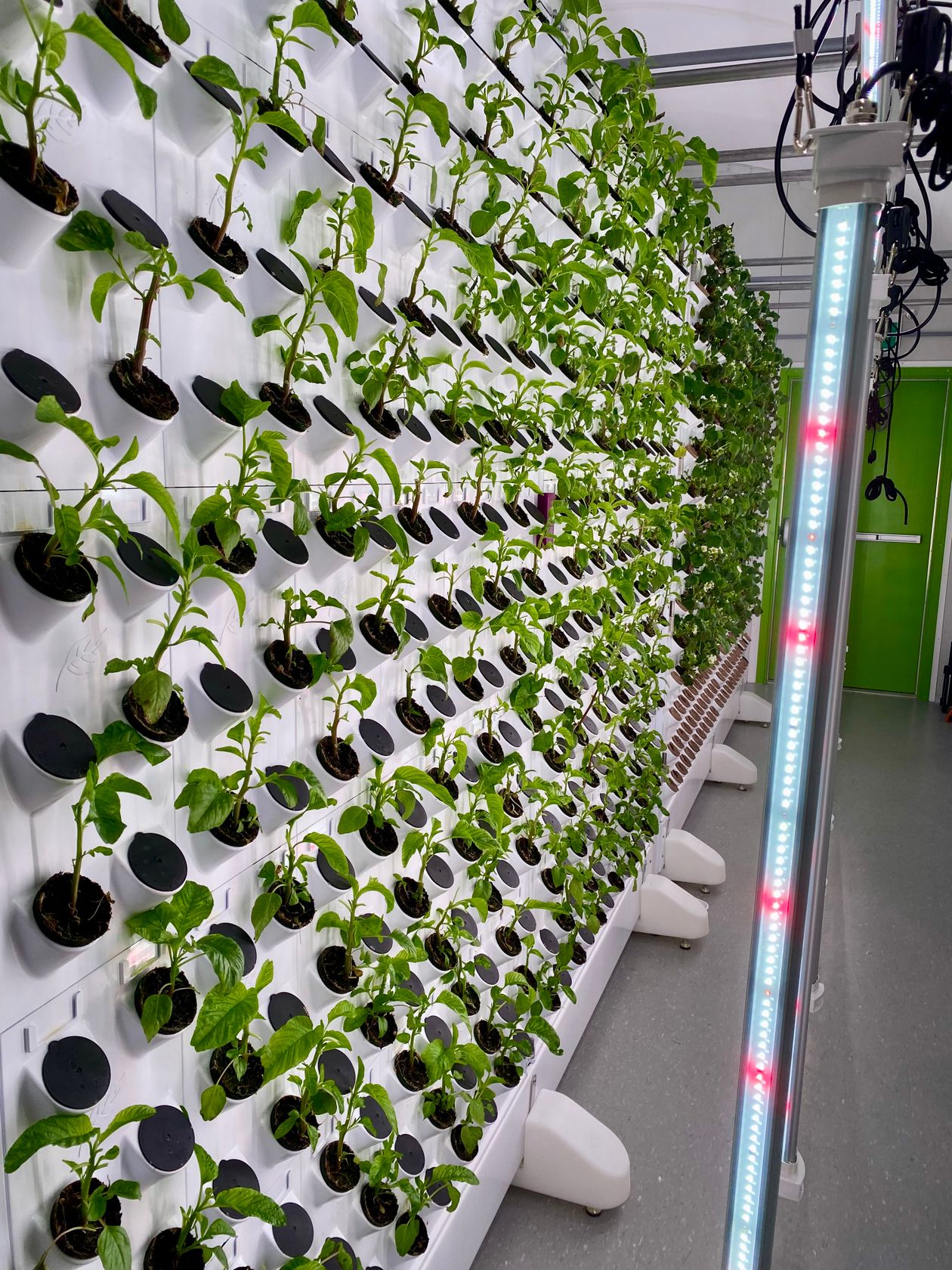
Four setups cover almost every small-space vertical build: the PVC spiral tower, the vertical NFT rail, the pocket or felt wall, and the hanging net-pot chain. Each solves the same problem differently: getting nutrient solution to plants stacked above the reservoir instead of floating beside it.
A PVC spiral tower pumps solution to the top of a vertical pipe. It trickles down through net pot holes drilled in a spiral, watering every level on its way back to the base. A vertical NFT rail runs the same thin-film principle through stacked horizontal channels on a wall bracket, flowing sideways across each shelf before dropping to the one below.
A pocket or felt wall holds growing medium in individual fabric pockets, drip-fed from a line at the top. A hanging net-pot chain is the simplest of the four: pots wired in a vertical line, each one flood-and-drained by hand or a timed drip line, no pump required for a short chain.
University extension programs increasingly point to setups like these as a practical way to grow more food in a small footprint (UF/IFAS Extension, 2025), which matches exactly what the yield data below shows.
How Much More Can You Actually Grow Going Vertical?
A peer-reviewed comparison found a vertical tower system produced 95 kg of lettuce fresh weight per square meter of occupied floor area, versus 6.9 kg/m² for a conventional horizontal hydroponic bed. A 13.8-fold increase (Touliatos, Dodd & McAinsh, 2016, Food and Energy Security). The study used Romaine lettuce (cv. “Little Gem”) in both setups, with matched fertigation and planting conditions.
That gain comes entirely from density, not plant vigor. The vertical system packed roughly 1,000 plants per square meter against 50 plants/m² in the flat bed, but individual plants averaged just 95g fresh weight in the tower versus 138g in the flat system.
The researchers note the tower format suits precut, cut-and-come-again greens far better than whole-head sales. The same logic applies at home: don’t expect a tower to grow you dinner-plate heads of lettuce, expect a lot of smaller, fast-turning leaves instead.
Lettuce Yield: Vertical Tower vs. Flat Hydroponic Bed
Fresh weight per square meter of occupied floor area, Romaine lettuce cv. "Little Gem" (Touliatos, Dodd & McAinsh, 2016, Food and Energy Security).
Which Vertical System Is Right for Your Space?
The right system depends less on which one produces the most and more on what your space, budget, and DIY tolerance can handle. A pocket wall needs no pump for a small unit; a tower or NFT rail needs one running continuously.
For a full side-by-side of all five build types (A-Frame, Wall-Mounted NFT, Tower Garden, Grow Racks, and the passive Mason Jar Wall) with costs and space requirements, see how to build a vertical hydroponic system at home.
If you’re not ready for a pump at all, the Kratky method is the simplest hydroponic system on the site, a flat, no-pump setup worth mastering before you add the extra complexity of vertical flow.
How Do You Build a Basic PVC Tower?
A PVC spiral tower is the cheapest DIY entry point: a length of Schedule 40 pipe, a submersible pump, and net pot holes staggered every 6–8 inches so no plant shades the one below it. Dry-test the pump before planting. A tower that waters the top holes strong and the bottom holes as a trickle almost always means a clogged line, not a weak pump.
For the full build walkthrough, including the heat-forming technique for cutting clean planting pockets, tool list, and cost breakdown, see how to build a DIY vertical hydroponic tower. Nutrient mixing and pH targets are the same as any other system. See pH and nutrients for beginners if you haven’t dialed those in yet.
What Should You Check Before Mounting One on a Balcony?
A full vertical system is heavier than it looks: water alone weighs about 8.3 lb per gallon, before the pipe, pump, and soaked medium are counted. A modest tower with a few gallons in circulation can add 40–60 lb of standing weight to whatever it’s resting on or mounted against.
For balcony or wall installs, treat containment and anchoring as non-negotiable:
- Use a full drip tray under the entire base, sized for a worst-case leak, not just normal drips. A leak that reaches the floor below is a landlord problem, not just a plant problem.
- Anchor to structure, like a stud or masonry wall, rather than a railing alone. Railings are rated for hand pressure, not a static hanging load that never comes off.
- Check your lease before drilling anything. A freestanding, weighted-base tower avoids the question entirely if permanent fixtures aren’t allowed.
Unsure whether your balcony can hold a loaded system? That's a question for a building manager or structural pro, not a guess. A five-minute conversation beats a genuinely expensive mistake.
Best Plants for Vertical Hydroponic Towers
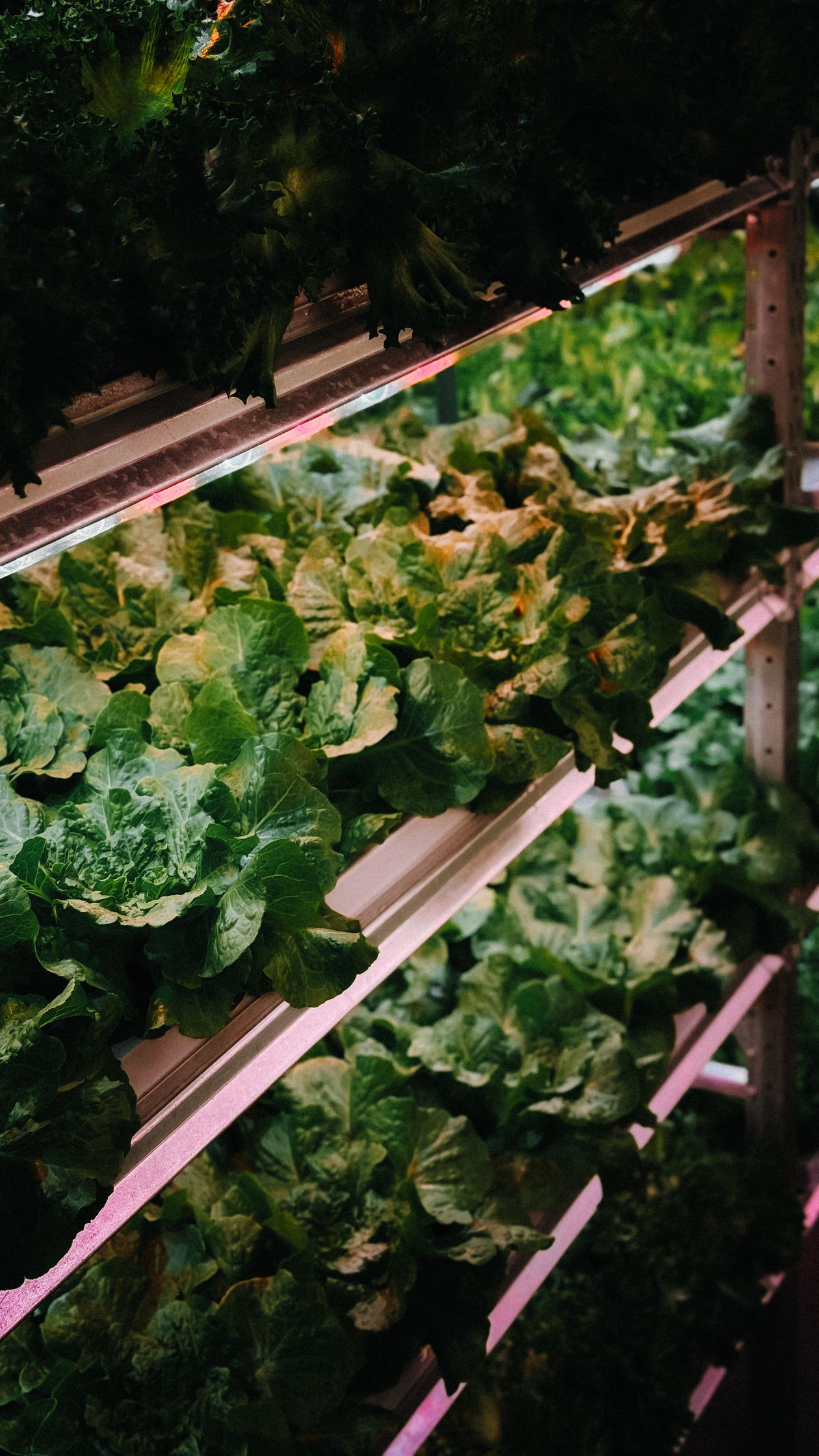
Leafy greens and compact herbs are the best match for tower density, and strawberries do well too once established. Their light weight and cut-and-come-again growth habit line up with what the tower format actually rewards, per the yield data above.
Skip large fruiting plants like full-size tomatoes on a tower. Their weight stresses the pipe and net pot connections, and their height blocks light from everything growing below them. For crop-specific detail, see 8 best leafy greens for hydroponics, growing basil and herbs hydroponically, and growing strawberries hydroponically.
Common Vertical System Mistakes
Three failures account for most vertical-system problems:
- Uneven flow between top and bottom holes. Usually a partial clog rather than a weak pump. Check flow at every hole before planting, not after.
- Shading. Taller plants on upper tiers block light for anything growing below. Stagger plant height, not just plant type.
- Overloaded felt pockets, most common on pocket walls. Pack medium too tight and water pools instead of draining, inviting the exact root rot the system was supposed to avoid.
Vertical hydroponics solves a real problem for anyone without ground to spare: it multiplies growing space without adding floor area. The tradeoff is density for size, and a loaded system deserves the same respect for weight and anchoring as anything else bolted to a rental building. Start small, dry-test your flow, and pick a system that matches how much pump maintenance you actually want to do.
Is a vertical hydroponic garden harder to maintain than a flat one?
It needs one extra habit: checking that water reaches the top and bottom holes evenly. Gravity does the distribution in a tower, so a clogged emitter starves whichever plants sit downstream. Otherwise, pH and nutrient care are identical to any other hydroponic system.
Can I put a vertical hydroponic tower on an apartment balcony?
Yes, with two checks first: confirm your lease allows drilling or mounting hardware, and use a full drip tray under the tower or wall to catch any leaks before they reach a neighbor’s unit below. A full reservoir is heavier than it looks, so anchor to structure, not just railings.
Do all plants grow well in a vertical tower?
No. Leafy greens, herbs, and strawberries thrive in tower density. Large fruiting plants like tomatoes struggle: their weight stresses the structure and their height blocks light for everything below them. Save fruiting crops for a flat DWC or Dutch bucket system instead.
How much does a DIY vertical hydroponic tower cost?
A basic PVC-pipe tower runs cheapest, built from hardware-store parts, a net pot set, and a small submersible pump. Pre-built tower kits cost more but skip the drilling and flow-testing steps. See our full DIY tower build guide for an exact parts list and total cost.
What's the difference between a vertical tower and an NFT wall?
Both circulate a thin film of nutrient solution past plant roots. A tower arranges holes in a radial spiral around a central pipe; an NFT wall runs the same film principle through flat, stacked horizontal channels mounted vertically. Towers fit tight footprints better; walls fit flush against a flat surface.
Sources (2)
- Touliatos, Dodd & McAinsh, Vertical farming increases lettuce yield per unit area compared to conventional horizontal hydroponics, 2016, Food and Energy Security, retrieved 2026-07-27, https://pmc.ncbi.nlm.nih.gov/articles/PMC5001193/
- UF/IFAS Extension St. Lucie County, Vertical Hydroponic Towers: A Space-Saving Revolution in Sustainable Farming, 2025, retrieved 2026-07-27, https://blogs.ifas.ufl.edu/stlucieco/2025/02/06/vertical-hydroponic-towers-a-space-saving-revolution-in-sustainable-farming/