Why Are Plant Leaves Turning Yellow? Hydroponic Guide
Yellow hydroponic leaves usually mean nitrogen, magnesium, or iron deficiency, or pH lockout. Use leaf position and vein pattern to find which one.
In this guide
- Start with pH, not the nutrient bottle
- Is it nitrogen? (Older leaves, even yellowing)
- Is it magnesium? (Older leaves, yellow between the veins)
- Is it iron? (New leaves, yellow between the veins)
- Is it zinc? (New leaves, small and bunched)
- When yellow leaves aren’t a nutrient problem
- The yellow-leaf diagnostic chart
- The bottom line
When your plant’s leaves are turning yellow, the instinct is to reach for more nutrients. Hold off. In a hydroponic system, most yellowing isn’t a missing nutrient at all. It’s usually pH locking out nutrients that are already in the reservoir, or a root-zone problem that has nothing to do with feeding. Add more fertilizer to a locked-out system and you raise the salt level, stress the roots, and make the yellowing worse. The fix starts with reading the leaves. Where the yellowing shows up, and the pattern it makes, tells you which cause you’re dealing with.
Some links in this article may be affiliate links. We earn a small commission if you purchase through them, at no extra cost to you.
The short version
- Check pH first. Yellowing usually means nutrients are locked out by pH drift, not absent from the reservoir.
- Old leaves yellowing points to a mobile nutrient: nitrogen if the fading is even, magnesium if it's between the veins.
- New leaves yellowing points to an immobile nutrient (iron or zinc), and high pH is often the real trigger.
- Whole-plant yellowing with wilting is a root-zone problem (low oxygen or rot), not a feeding one.
Start with pH, not the nutrient bottle
Before you change anything, check your reservoir pH. Most hydroponic crops absorb nutrients best between pH 5.5 and 6.5 (Penn State Extension; Oklahoma State University Extension). Outside that band, nutrients that are physically present in the solution become chemically unavailable to the roots, so the plant shows a deficiency even though the reservoir is full. Growers call this nutrient lockout, and it’s the single most common reason leaves yellow in a well-mixed system.
Iron feels it first, because the chelate that keeps it dissolved breaks down as pH climbs (ASHS Journals). So calibrate your pH pen against fresh buffer solution, test, and correct the pH into range before you add a single milliliter of nutrients. If the yellowing stops spreading after a day or two, lockout was your answer. For the full chemistry of how pH and EC control nutrient uptake, see how pH and nutrient lockout work.
Is it nitrogen? (Older leaves, even yellowing)
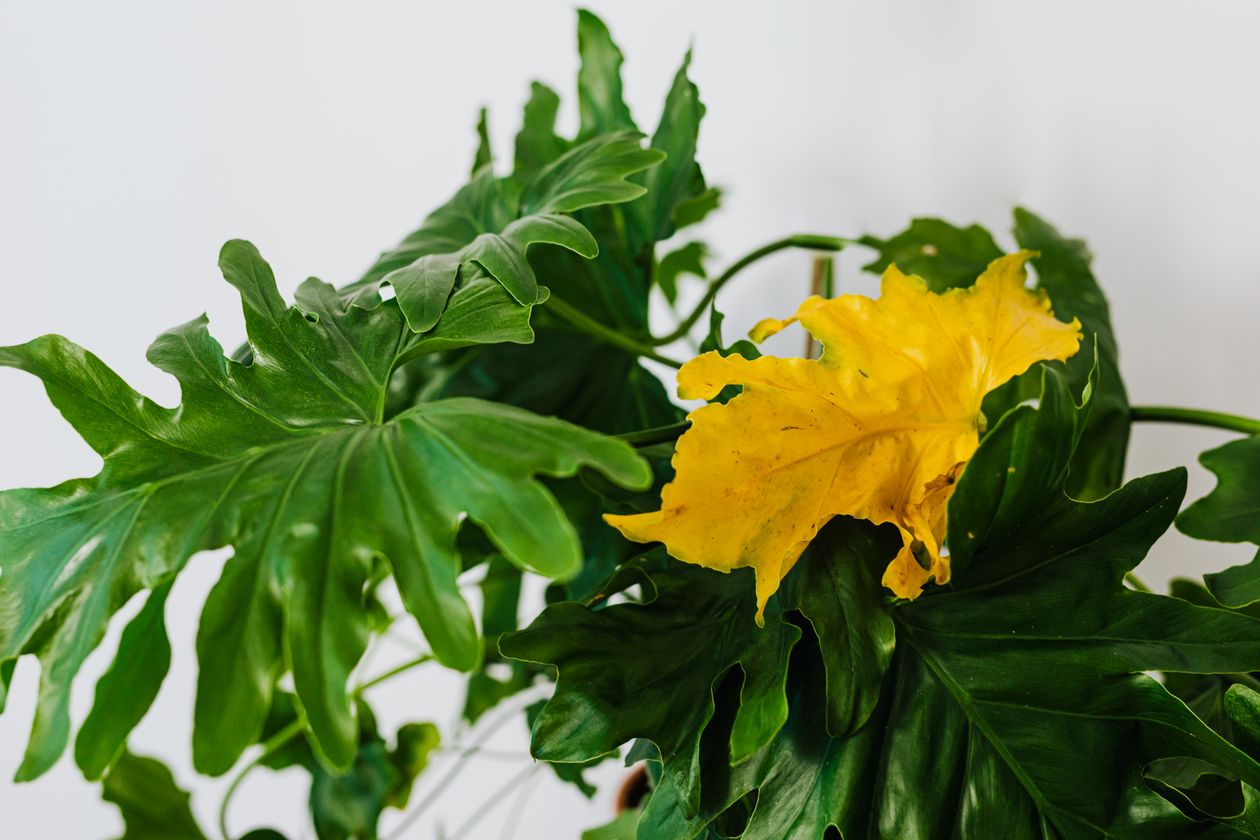
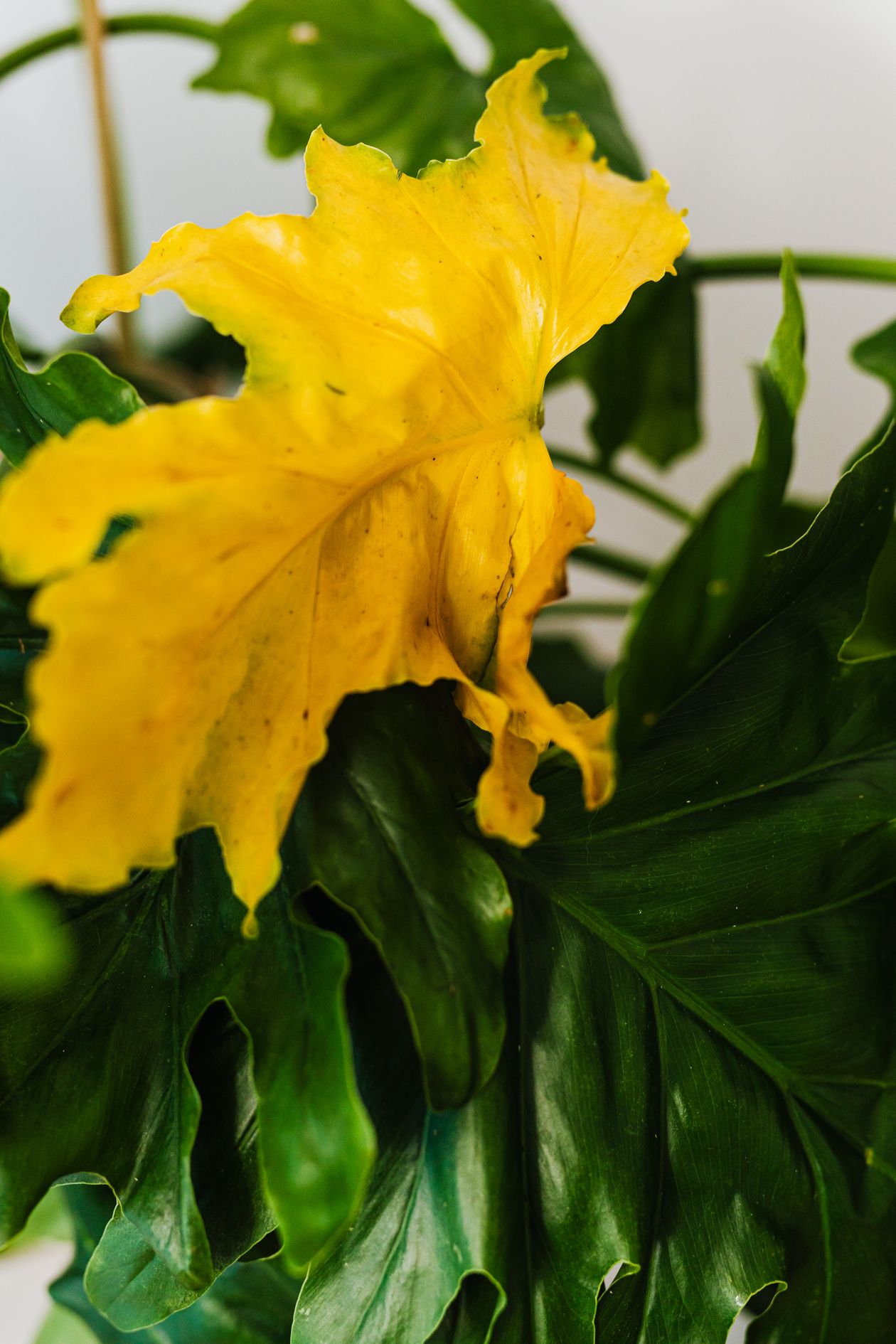
Nitrogen deficiency shows up as a uniform, even yellowing that starts on the oldest, lowest leaves while the new growth up top stays green (Penn State Extension; e-GRO). The whole leaf fades together. The veins don’t stay green the way they do with other deficiencies.
The reason old leaves go first is mobility. Nitrogen is a mobile nutrient, so when supply runs short the plant pulls it out of older leaves and ships it to the new growth, and the bottom of the plant pays the price first (Michigan State University Extension). In a recirculating reservoir, a true nitrogen shortage usually means the solution is old and depleted or the EC has drifted low. A fresh, correctly mixed batch fixes it.
Is it magnesium? (Older leaves, yellow between the veins)
Magnesium deficiency also hits the older, lower leaves first, but the pattern is different from nitrogen. The tissue between the veins turns yellow while the veins themselves stay green, a pattern called interveinal chlorosis (Penn State; Iowa State University Extension). On some crops the yellowed areas later turn reddish or develop brown specks.
Magnesium sits at the center of every chlorophyll molecule, and like nitrogen it’s mobile, which is why the damage starts low (Iowa State University Extension). In hydroponics the cause is often not a lack of magnesium but competition. Too much potassium or calcium in the mix can crowd magnesium off the root’s uptake sites (e-GRO). Check your ratios before you dose in more cal-mag supplement.
Is it iron? (New leaves, yellow between the veins)
Iron deficiency looks like magnesium’s interveinal pattern, yellow between green veins, but it shows up on the newest leaves at the top instead of the old ones at the bottom (e-GRO; UC IPM). In bad cases the new leaves come in almost white, with only the finest veins still green.
The position is the tell. Iron is immobile, so the plant can’t move it from old leaves to feed new growth (Michigan State University Extension). Iron is also the nutrient most sensitive to pH. Even with plenty of iron in the reservoir, a high pH locks it out, and the chelate keeping it dissolved sets the ceiling:
| Iron chelate | Stays stable up to about | Best use |
|---|---|---|
| EDTA | pH 6.0 | Low cost, but fails fast in alkaline water |
| DTPA | pH 7.0 | Standard choice for most setups |
| EDDHA | pH 9.0+ | Hard water and high-pH correction |
Source: ASHS Journals; e-GRO, "Ironing Out Chlorosis."
That’s why iron-deficient new growth is so often a pH problem, not an iron problem. Drop the pH into range first, and confirm your chelated iron suits your water (Western Michigan University).
Is it zinc? (New leaves, small and bunched)
Zinc deficiency also appears on new growth with interveinal yellowing, but the giveaway is size. The new leaves come in stunted and narrow, and the stem stops elongating so they cluster together at the tip, a look growers call “little leaf” or rosetting (Utah State University; University of Kentucky).
Zinc drives the production of a growth hormone the plant needs to elongate its cells, so when it’s short, growth bunches up (ASHS Journals). Like iron, zinc locks out at high pH, and heavy phosphorus dosing makes it worse by binding zinc into a form roots can’t take up (University of Arizona Cooperative Extension). If your new leaves are pale and oddly small, check pH and ease off the phosphorus.
When yellow leaves aren’t a nutrient problem
If the whole plant yellows at once, old and new leaves together, and it looks wilted, stop thinking about feeding. That pattern points to the root zone. Warm or stagnant water holds far less dissolved oxygen, and oxygen-starved roots can’t take up water or minerals no matter how good the solution is (Penn State Extension; Kansas State University). Reservoirs creeping above the low 70s Fahrenheit are the usual culprit.
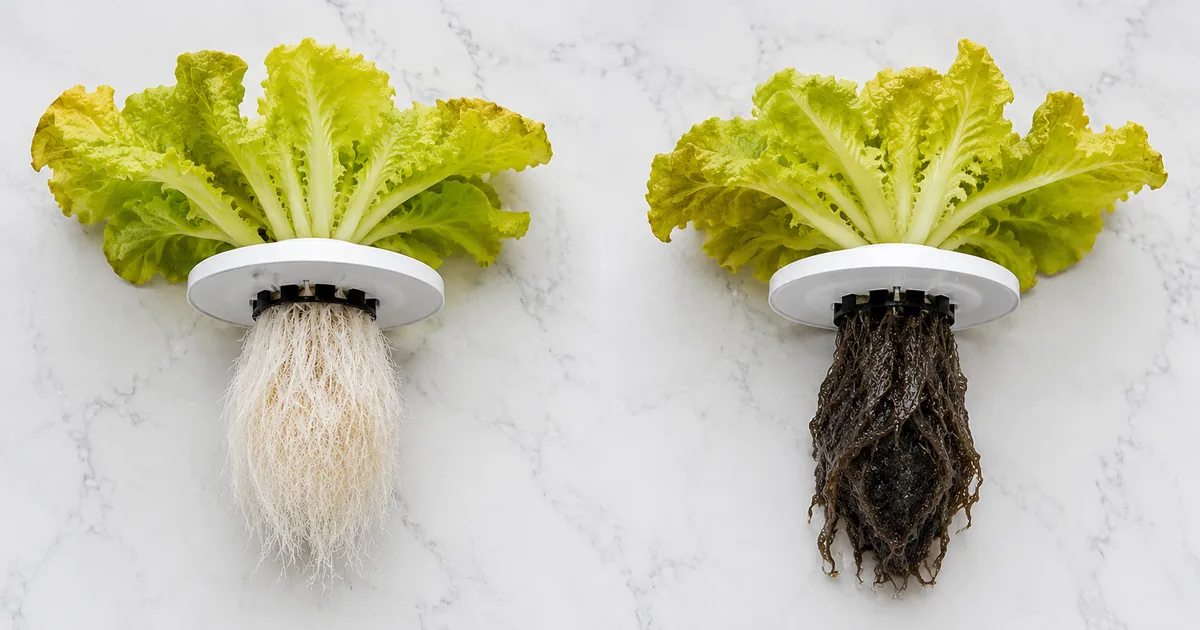
Low oxygen also invites root rot, which turns roots brown, slimy, and sour-smelling. If that’s what you’re seeing, work through the full root rot diagnosis guide, and watch for algae, which competes with roots for that same oxygen. If wilting is the main symptom but roots are still white and firm, the plant wilting guide covers the dissolved oxygen mechanism and all four causes in detail. The opposite problem also yellows leaves: overfeeding. A too-high EC, which you can only catch with a TDS or EC meter, pulls water back out of the roots and burns the leaf edges brown, ringed by a thin yellow halo (UC IPM). When in doubt, flush and remix at half strength. If brown, crispy tips are your main symptom rather than overall yellowing, our brown leaf tips guide covers tipburn and the other tip-specific causes. Still not sure whether you’re looking at a feeding problem or a failing root zone? Start with root rot vs nutrient deficiency, which separates the two before you change anything.
The yellow-leaf diagnostic chart
Put it together and the diagnosis comes down to two questions: which leaves are yellowing, old or new, and is the color even or stuck between the veins. This chart maps every common cause so you can find yours at a glance.
| Where it shows | Pattern | Other clues | Likely cause | First move |
|---|---|---|---|---|
| Old / lower leaves | Even, whole-leaf | Stunted, thin stems | Nitrogen | Check pH, then refresh or strengthen the solution |
| Old / lower leaves | Between the veins | Veins stay green, may redden | Magnesium | Check potassium and calcium excess, then add magnesium |
| New / upper leaves | Between the veins | New leaves near-white | Iron | Lower pH into range, check the iron chelate |
| New / upper leaves | Between the veins | Leaves small, bunched at the tip | Zinc | Lower pH, cut back phosphorus |
| Whole plant | Diffuse, dull yellowing | Wilting, brown or slimy roots | Root hypoxia or rot | Cool and oxygenate, treat the rot |
| Whole plant | Brown edges with a yellow halo | Crispy margins, high EC | Salt toxicity (overfeeding) | Flush, remix at half strength |
Yellowing is the symptom growers misread most often, because four different causes produce it. The full diagnosis and prevention guide separates all eight common failures with a fix for each, plus the 5-minute daily check that catches them early.
The bottom line
The next time leaves turn yellow, resist the urge to dump in more nutrients. Read the plant first.
- Check and correct pH before anything else. Lockout, not shortage, is the usual cause.
- Old leaves point to nitrogen or magnesium; new leaves point to iron or zinc.
- Whole-plant yellowing with wilting is a root-zone problem, not a feeding one.
- If the leaves are curling as well as yellowing, read the curl direction first. It narrows the cause faster than color does.
Damaged leaves won’t turn green again, so judge any fix by the new growth that follows. Start with pH and nutrients, and you’ll catch most yellowing before it spreads.
Will my yellow leaves turn green again?
No. Once a leaf loses its chlorophyll and goes yellow, that tissue doesn’t get its color back. The plant has already pulled what it could from those leaves to feed new growth. Judge any fix by the leaves that emerge next, which should come in green and normal-sized. You can trim the old yellow leaves once the new growth looks healthy.
How soon will I know if my fix worked?
Watch the newest leaves, not the damaged ones. Once you correct the cause (most often pH), the yellowing should stop spreading to fresh growth and new leaves should emerge green. The leaves that already yellowed won’t change color, so don’t use them to judge progress.
Can overfeeding cause yellow leaves too?
Yes. Too much nutrient solution raises the EC and pulls water back out of the roots, which burns leaf edges brown with a thin yellow halo and can yellow the plant overall (UC IPM). If your leaves are yellowing with crispy brown margins and your EC reads high, flush the system and remix at half strength.
What's the very first thing to check?
pH. In a properly mixed reservoir the nutrients are almost always present; pH drift is what makes them unavailable to the roots. Calibrate your meter, test the reservoir, and correct the pH to 5.5–6.5 before you add anything. Many of the deficiencies growers chase disappear once pH is back in range.
Sources (17)
- Penn State Extension, “Hydroponics Systems and Principles of Plant Nutrition: Essential Nutrients, Function, Deficiency, and Excess,” retrieved 2026-06-18, https://extension.psu.edu/hydroponics-systems-and-principles-of-plant-nutrition-essential-nutrients-function-deficiency-and-excess
- Oklahoma State University Extension, “Electrical Conductivity and pH Guide for Hydroponics,” retrieved 2026-06-18, https://extension.okstate.edu/fact-sheets/electrical-conductivity-and-ph-guide-for-hydroponics
- e-GRO, “Ironing Out Chlorosis: Selecting and Applying Iron Chelates Correctly,” Alert 2026-15-09, retrieved 2026-06-18, https://www.e-gro.org/pdf/2026-15-09.pdf
- ASHS Journals, “Fertigation with Fe-EDTA, Fe-DTPA, and Fe-EDDHA Chelates to Prevent Iron Chlorosis of Sensitive Species in High-pH Soilless Media,” HortScience 60(3), retrieved 2026-06-18, https://journals.ashs.org/downloadpdf/view/journals/hortsci/60/3/article-p404.pdf
- Michigan State University Extension, “Knowing Nutrient Mobility Is Helpful in Diagnosing Plant Nutrient Deficiencies,” retrieved 2026-06-18, https://www.canr.msu.edu/news/knowing_nutrient_mobility_is_helpful_in_diagnosing_plant_nutrient_deficienc
- e-GRO, “Symptoms of Common Nutrient Deficiencies in Hydroponic Lettuce” (Mattson, 2015), retrieved 2026-06-18, https://www.e-gro.org/pdf/Mattson_Lettuce_2015_9.pdf
- Penn State, Department of Plant Science, “Magnesium Deficiency,” retrieved 2026-06-18, https://plantscience.psu.edu/research/labs/roots/methods/methods-info/nutritional-disorders-displayed/magnesium-deficiency
- Iowa State University Extension and Outreach, “Magnesium Deficiency Symptoms,” Sustainable Vegetable Production, retrieved 2026-06-18, https://www.extension.iastate.edu/vegetablelab/magnesium-deficiency-symptoms
- e-GRO, “Magnesium Deficiency of Hydroponic and Container Grown Basil,” Alert E3-03, retrieved 2026-06-18, https://www.e-gro.org/pdf/E303.pdf
- UC IPM (University of California), “Common Nutrient Deficiency Symptoms,” retrieved 2026-06-18, https://ipm.ucanr.edu/PMG/GARDEN/ENVIRON/idmineral.html
- Western Michigan University, “Hydroponic Growth Systems and Plant Nutrient Deficiency,” retrieved 2026-06-18, https://files.wmich.edu/s3fs-public/attachments/u5694/2024/Plant_Nutrient_Deficiency.pdf
- Utah State University, “Zinc Deficiency in Soils as Affected by Soluble Phosphate,” Digital Commons, retrieved 2026-06-18, https://digitalcommons.usu.edu/cgi/viewcontent.cgi?article=2865&context=etd
- University of Kentucky, “Zinc Deficiency,” Scouting Guides for Problems of Vegetables, retrieved 2026-06-18, https://veggiescout.mgcafe.uky.edu/zinc-deficiency
- ASHS Journals, “Cytological and Ultrastructural Evaluations of Zinc Deficiency in Leaves,” JASHS 128(2), retrieved 2026-06-18, https://journals.ashs.org/downloadpdf/view/journals/jashs/128/2/article-p171.pdf
- University of Arizona Cooperative Extension, “Guide to Symptoms of Plant Nutrient Deficiencies,” retrieved 2026-06-18, https://extension.arizona.edu/publication/guide-symptoms-plant-nutrient-deficiencies
- Kansas State University Research and Extension, “Hydroponic Systems,” MF1169, retrieved 2026-06-18, https://extension.k-state.edu/historicpublications/pubs/MF1169.pdf
- UC IPM (University of California), “Nutrient and Mineral Excesses, Salinity, and Salt Toxicity,” retrieved 2026-06-18, https://ipm.ucanr.edu/PMG/GARDEN/ENVIRON/salttoxicity.html