8 Best Fruits to Grow Hydroponically (Ranked by Difficulty)
8 hydroponic fruits ranked from beginner to expert, each with the exact pH, EC, and system. Start with chili peppers, work up to blueberries and grapes.
In this guide
8 Best Fruits to Grow Hydroponically (Ranked by Difficulty)
Most guides list hydroponic fruits the same way they list leafy greens, as if growing a cherry tomato and growing butterhead lettuce take the same approach. They do not. Fruiting crops need higher EC, hand pollination in most cases, trellis support, and a longer wait before first harvest.
None of that should stop you. It just means you need a realistic starting point.
This list ranks 8 fruits from most forgiving to most demanding, with the exact pH, EC, and system for each. If you are still getting pH and EC dialed in before adding fruiting crops, the guide to pH and nutrients for beginners covers the foundation first.
Key Takeaways
- Fruiting crops need EC of 2.0 to 3.5 mS/cm, well above leafy greens at 1.2 to 2.0
- Most fruiting crops require hand pollination indoors. Shake stems or use a soft brush every 2 to 3 days when flowers are open
- Never put blueberries in a shared reservoir. Their required pH of 4.5 to 5.5 locks out nutrients for everything else
- Start with chili peppers before moving to tomatoes or cucumbers. They teach you how fruiting crops behave without punishing every mistake
- Trellis support is non-negotiable for tomatoes, cucumbers, peppers, watermelon, and grape
Are Hydroponic Fruits Worth the Extra Effort?
Yes, with the right expectations. Fruiting crops in a well-managed hydroponic or aeroponic system consistently beat soil on yield. In a 2014 peer-reviewed comparison published in the Journal of Agricultural and Food Chemistry, aeroponic cherry tomatoes yielded about 35 percent more than soil-grown plants, and bell peppers about 53 percent more (Chandra et al.).
The tradeoff is management complexity: EC adjustments between growth stages, physical support structures, and active intervention at flowering. Once you understand the pattern, none of it is difficult. But it will catch you off guard if you treat fruiting crops the way you treat lettuce.
8 Best Hydroponic Fruits at a Glance
| Fruit | pH | EC (mS/cm) | Best System | First Harvest | Difficulty |
|---|---|---|---|---|---|
| Chili Pepper | 5.5–7.0 | 2.0–3.0 | NFT / Drip | 70–90 days | Beginner |
| Cherry Tomato | 5.8–6.3 | 2.0–3.5 | DWC / Drip | 50–70 days | Beginner |
| Cucumber Mini | 5.5–6.0 | 1.7–3.5 | Dutch Bucket / DWC | 50–65 days | Beginner |
| Strawberry | 5.5–6.5 | 1.0–1.8 | NFT / Substrate | 60–90 days | Intermediate |
| Bell Pepper | 5.8–6.5 | 2.0–3.5 | Drip / NFT | 60–90 days | Intermediate |
| Watermelon Mini | 5.5–6.5 | 1.5–3.0 | Dutch Bucket | 70–90 days | Intermediate |
| Blueberry | 4.5–5.5 | 1.5–2.5 | DWC / Substrate | Season 2 | Advanced |
| Grape | 5.5–6.5 | 1.5–3.0 | Dutch Bucket | 1–2 years | Expert |
First Harvest is counted from transplant, not from seed. Add 2 to 4 more weeks for the seed-to-transplant stage.
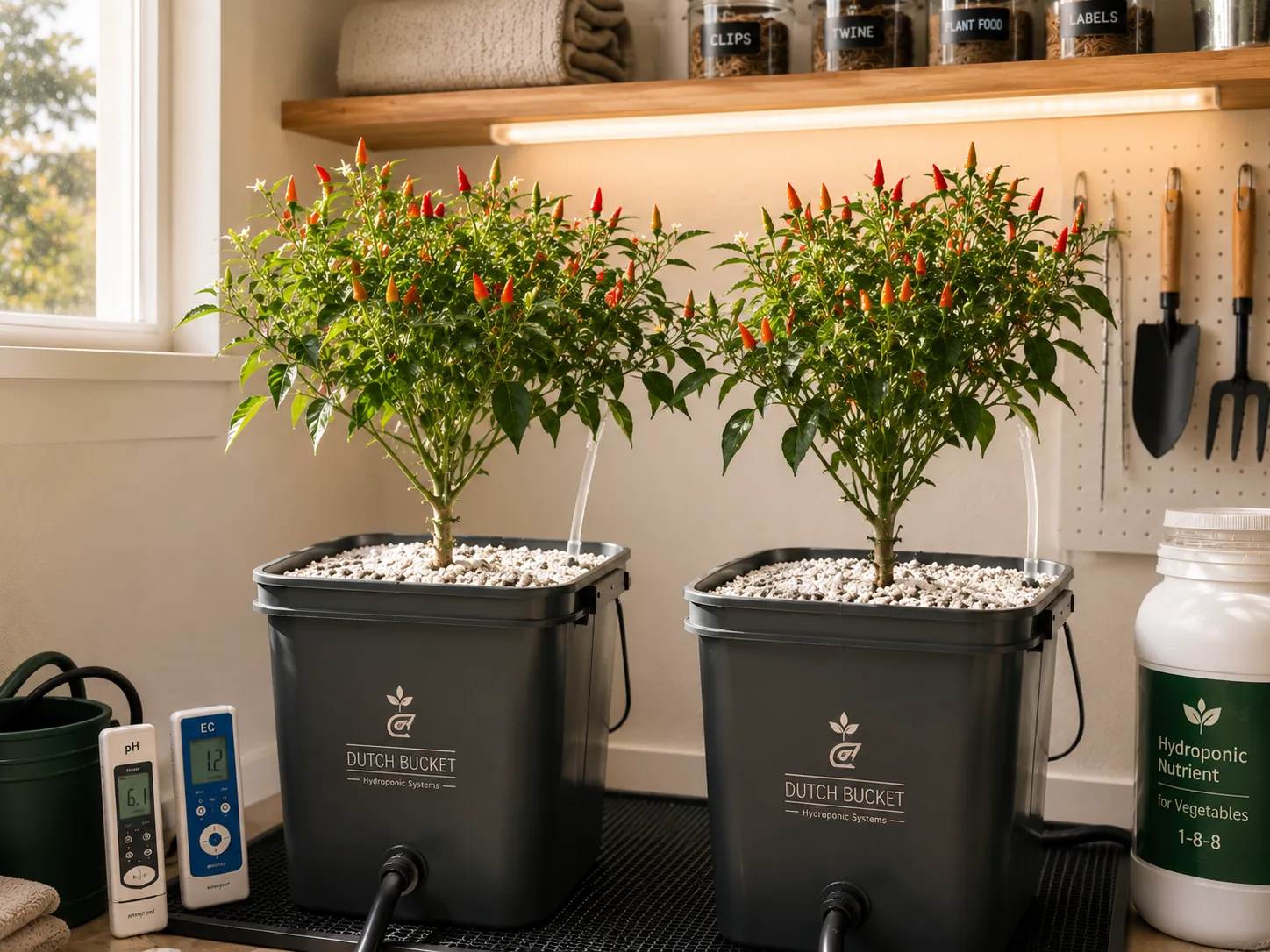
1. Chili Pepper
The most forgiving fruiting crop in hydroponics, with the widest pH tolerance on this list. Good airflow handles pollination in most indoor setups, so you can skip the hand work other fruits need. Start here before anything else.
pH: 5.5–7.0 · EC: 2.0–3.0 mS/cm · System: NFT or drip · Harvest: 70–90 days
2. Cherry Tomato
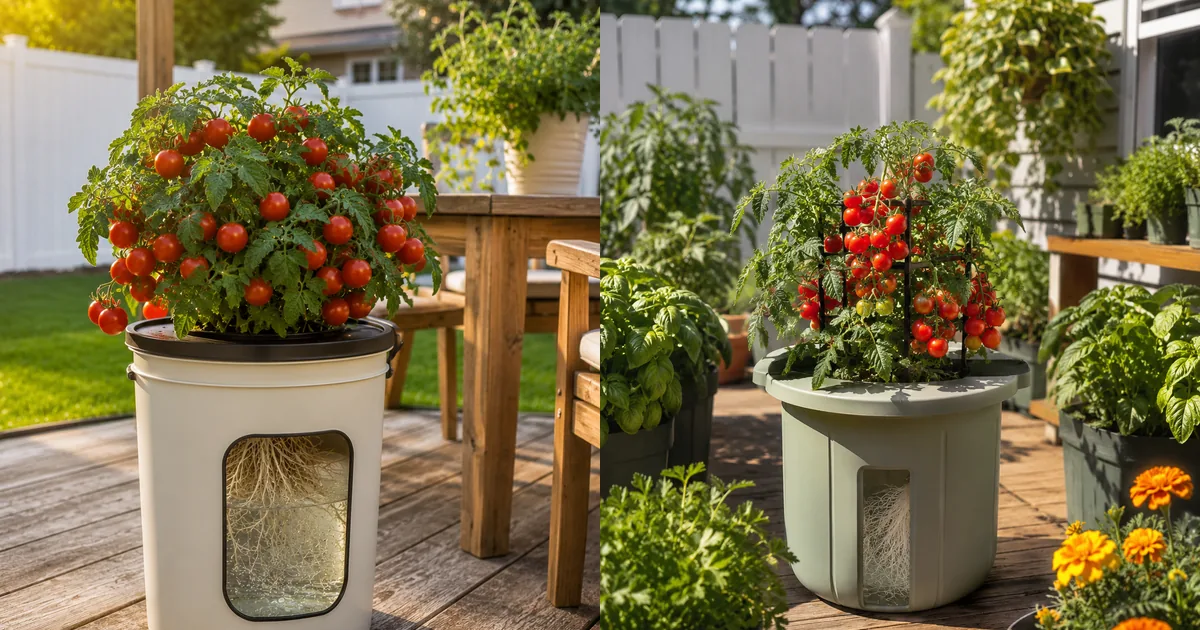
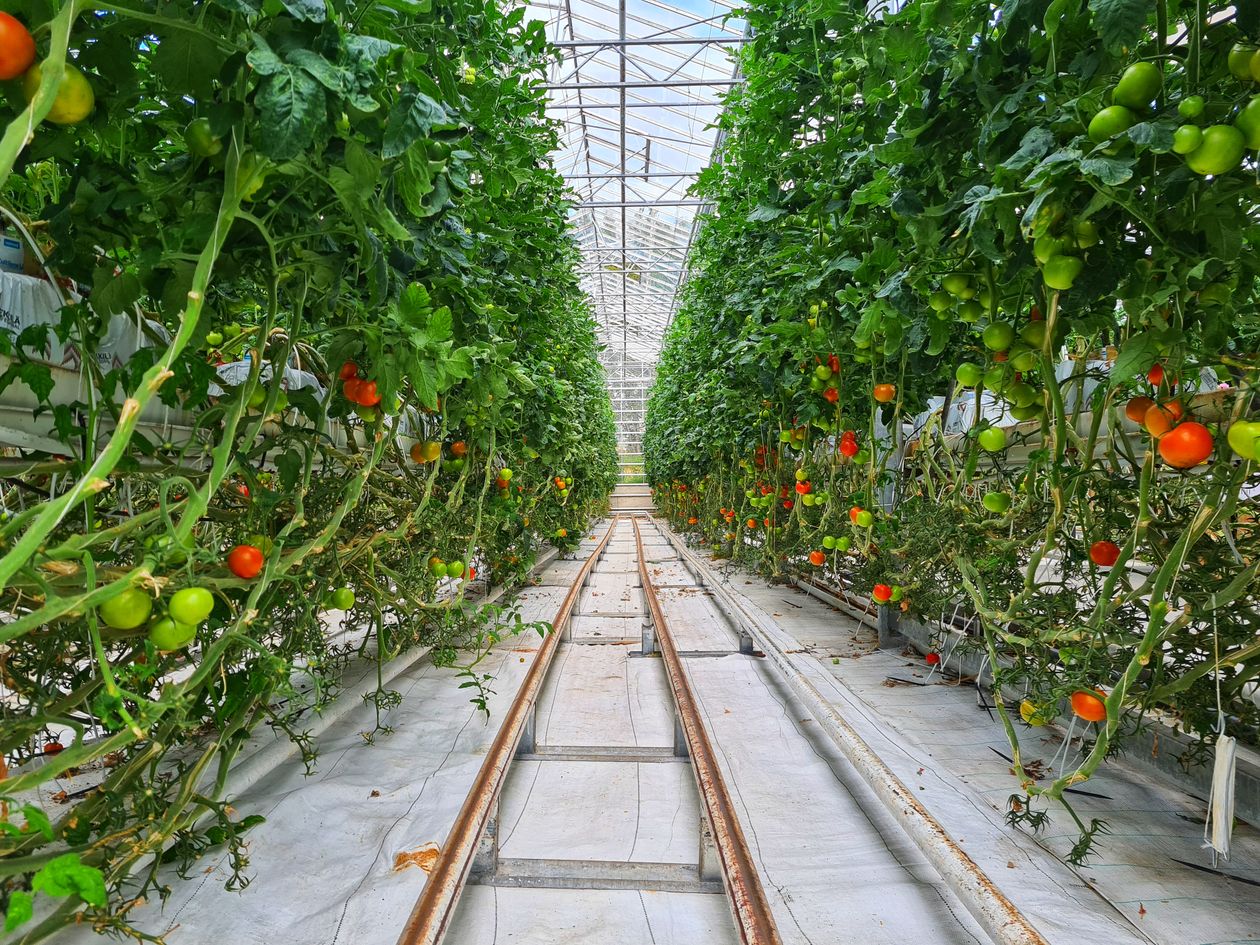
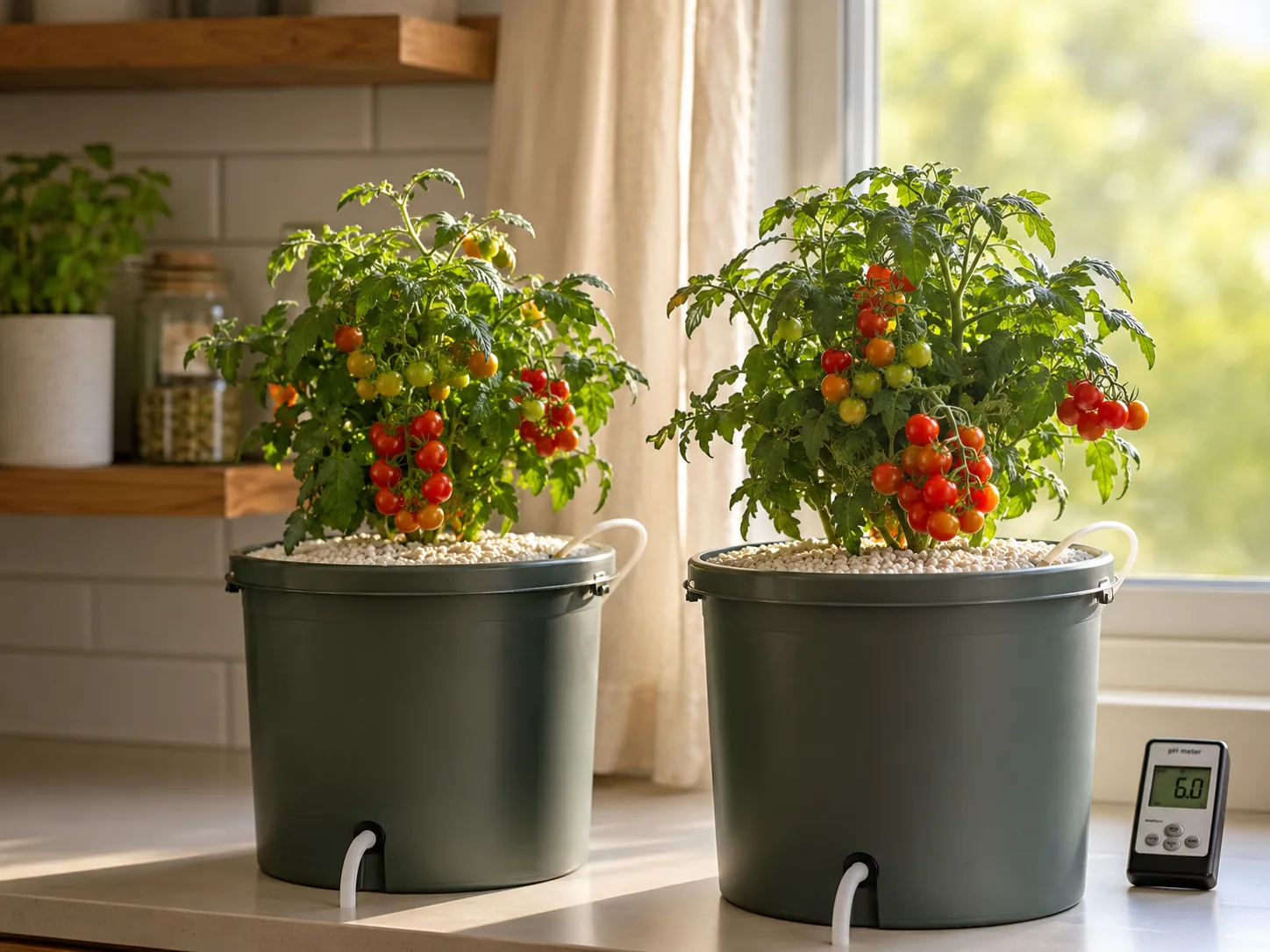
Indeterminate varieties fruit continuously once they get going. Hand pollinate by shaking the stems every 2 to 3 days while flowers are open, and give the plant a trellis early. See the full hydroponic tomato guide for variety picks and staking.
pH: 5.8–6.3 · EC: 2.0–3.5 mS/cm · System: DWC or drip · Harvest: 50–70 days
3. Cucumber Mini
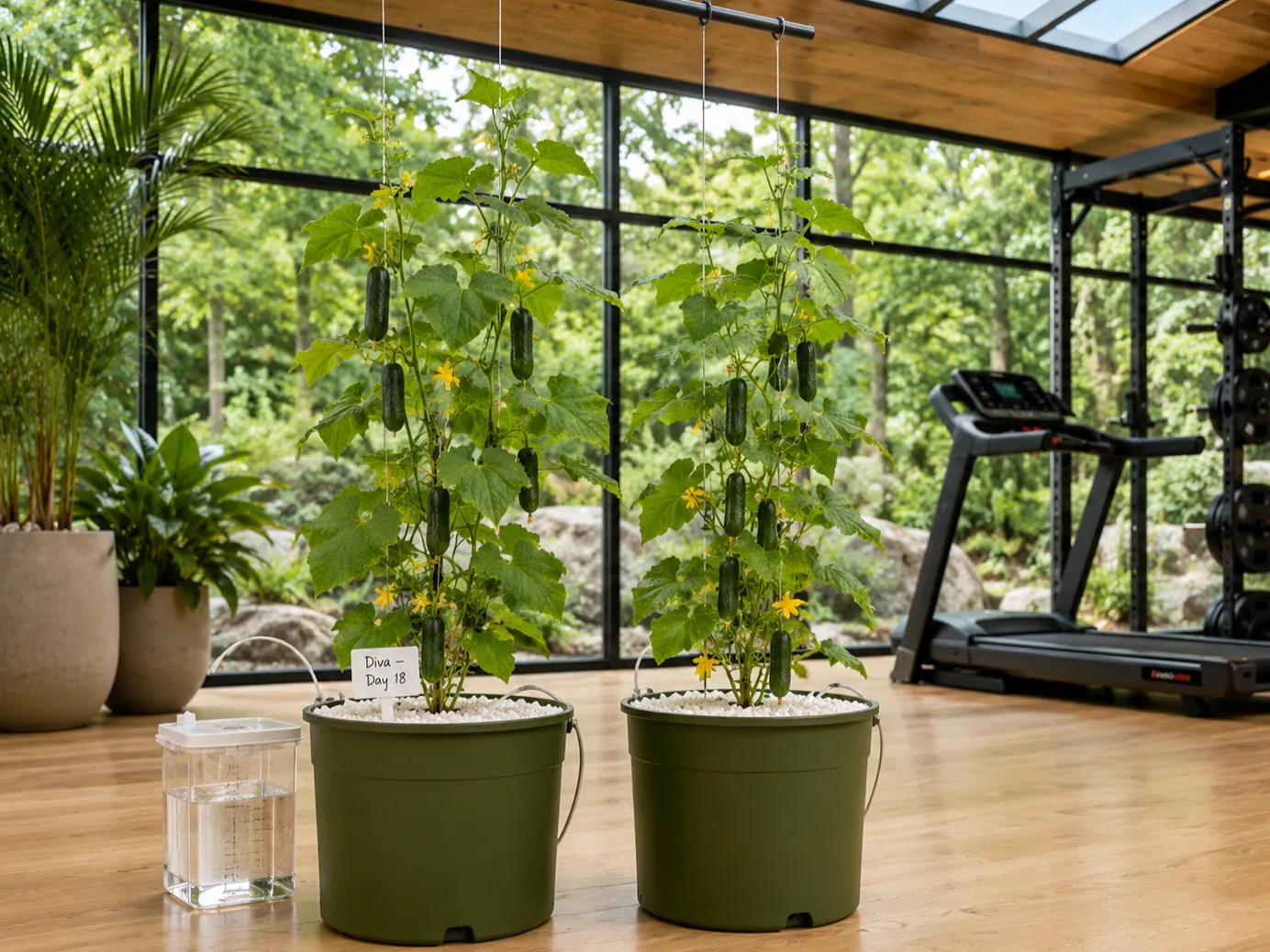
Choose parthenocarpic varieties like Diva or Camaro, which set fruit with no pollination at all. One healthy plant yields 30 to 50 cucumbers over 12 to 16 weeks. Train the vine up a trellis to keep fruit clean and airflow high.
pH: 5.5–6.0 · EC: 1.7–3.5 mS/cm · System: Dutch Bucket or DWC · Harvest: 50–65 days
4. Strawberry
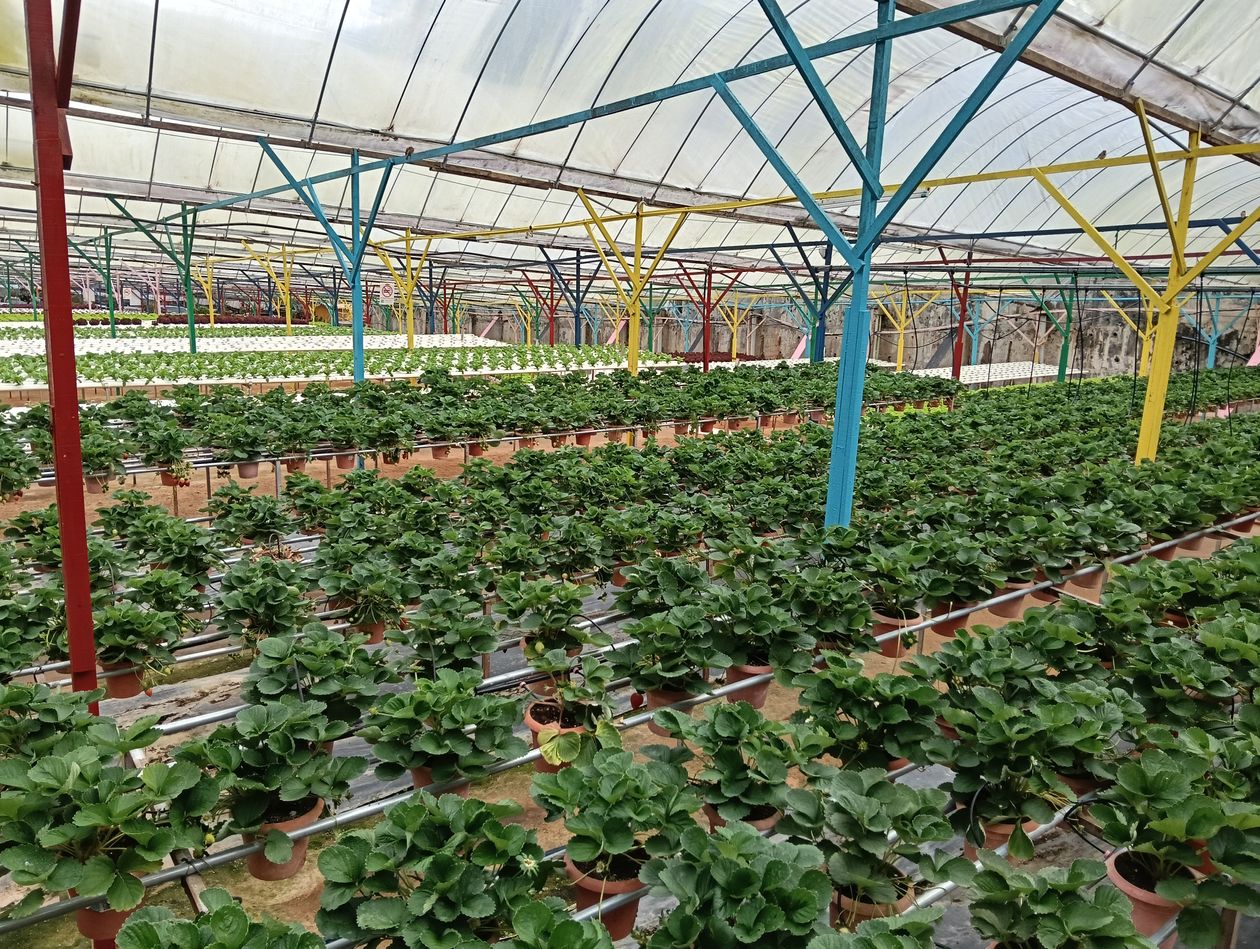
Run the lowest EC of any fruit here; richer solutions give small, sour berries. Day-neutral varieties like Albion fruit year-round, and a substrate or NFT system out-yields deep water culture for berries (Frontiers in Plant Science, 2025). Keep humidity below 80 percent to prevent botrytis, and see the full strawberry guide for the pollination step.
pH: 5.5–6.5 · EC: 1.0–1.8 mS/cm · System: NFT or substrate · Harvest: 60–90 days

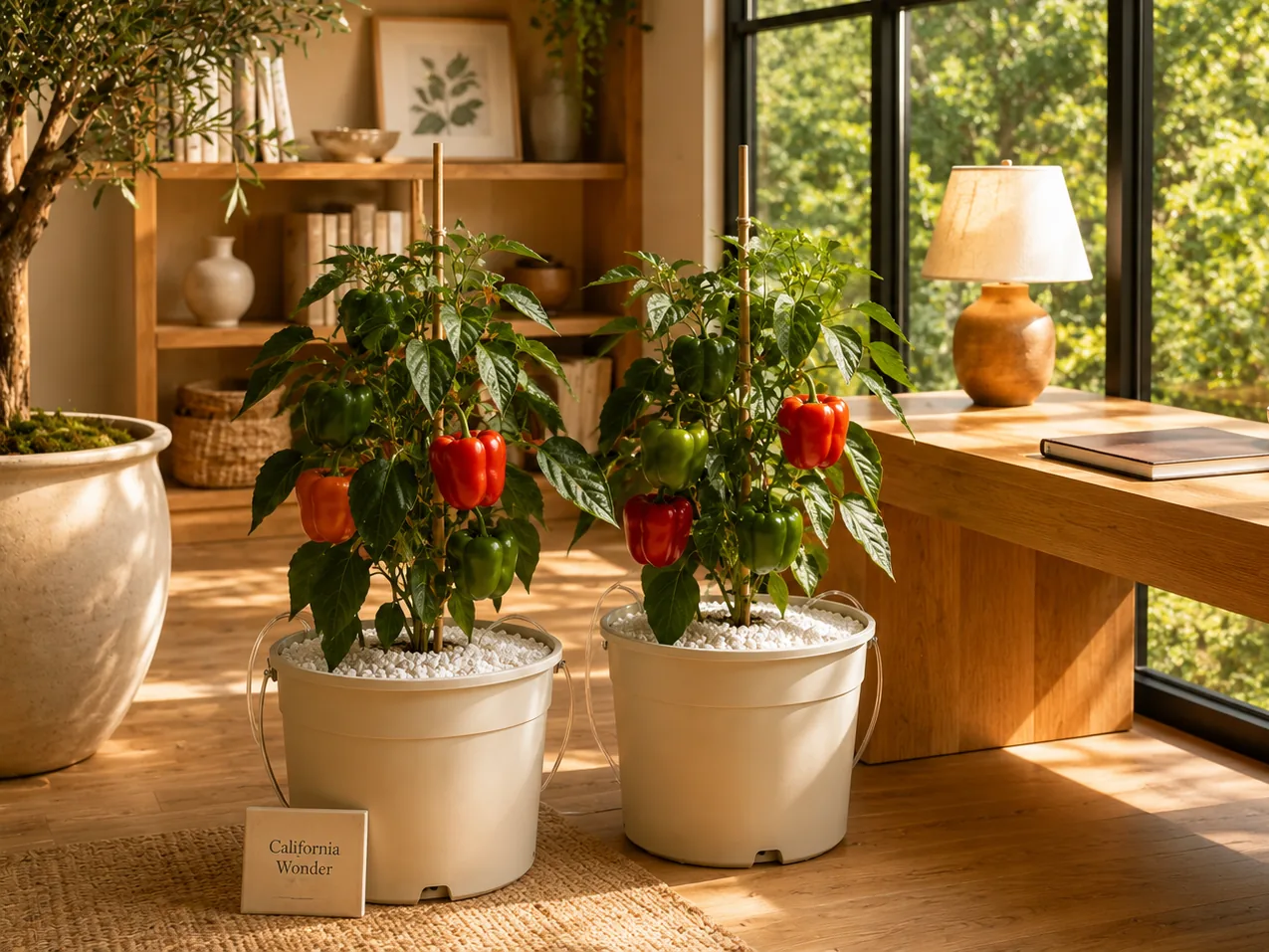
5. Bell Pepper
High value per plant over a long harvest window, but slow to color up fully. Calcium deficiency causes blossom end rot before the fruit is even visible, so keep EC steady and pH below 6.5. Trellis required.
pH: 5.8–6.5 · EC: 2.0–3.5 mS/cm · System: Drip or NFT · Harvest: 60–90 days
6. Watermelon Mini
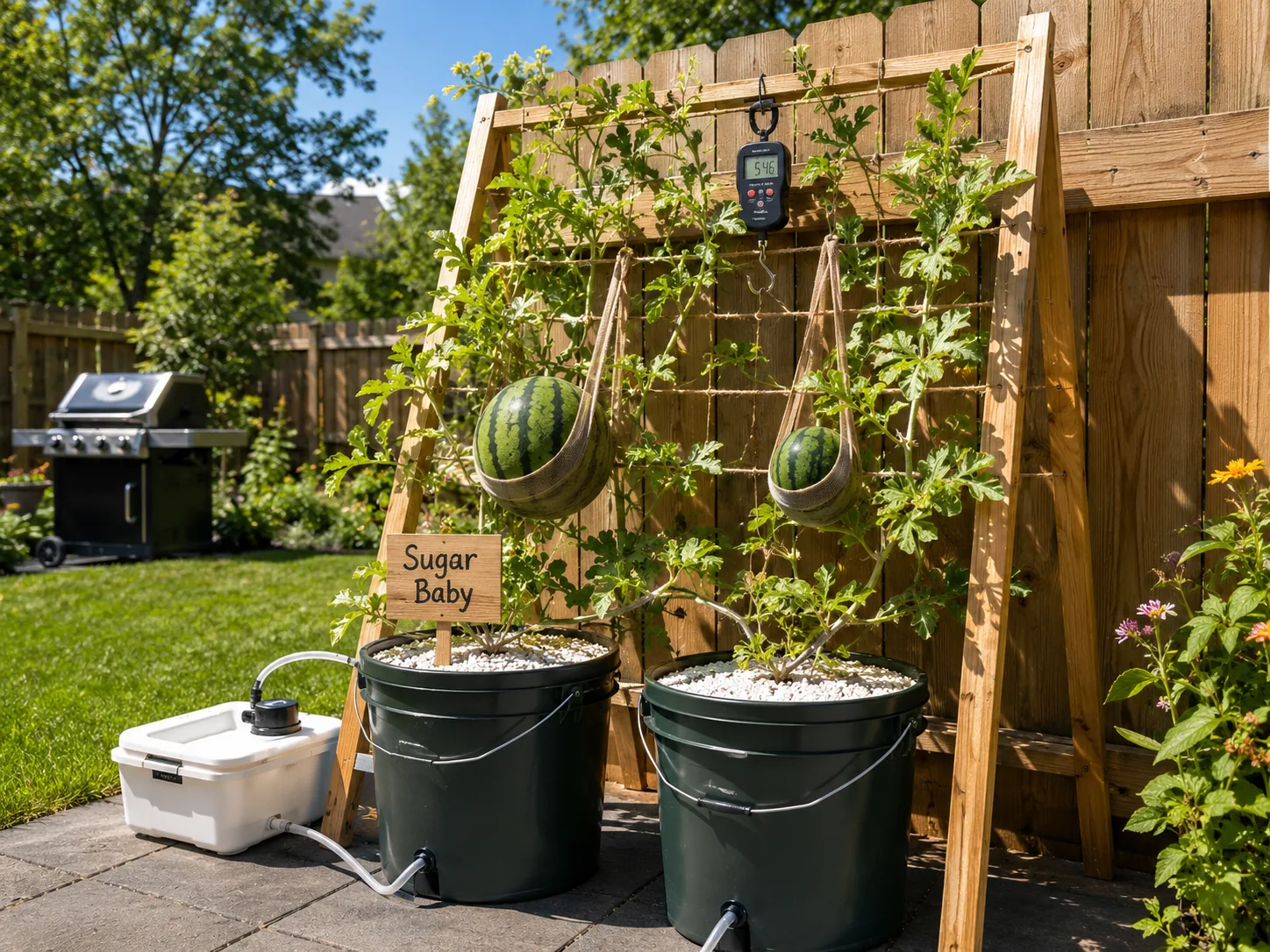
Icebox or personal-size varieties only. Each fruit needs its own fabric sling on the trellis as it swells, or the vine snaps under the weight. Hand pollinate every morning while the flowers are open.
pH: 5.5–6.5 · EC: 1.5–3.0 mS/cm · System: Dutch Bucket · Harvest: 70–90 days
7. Blueberry
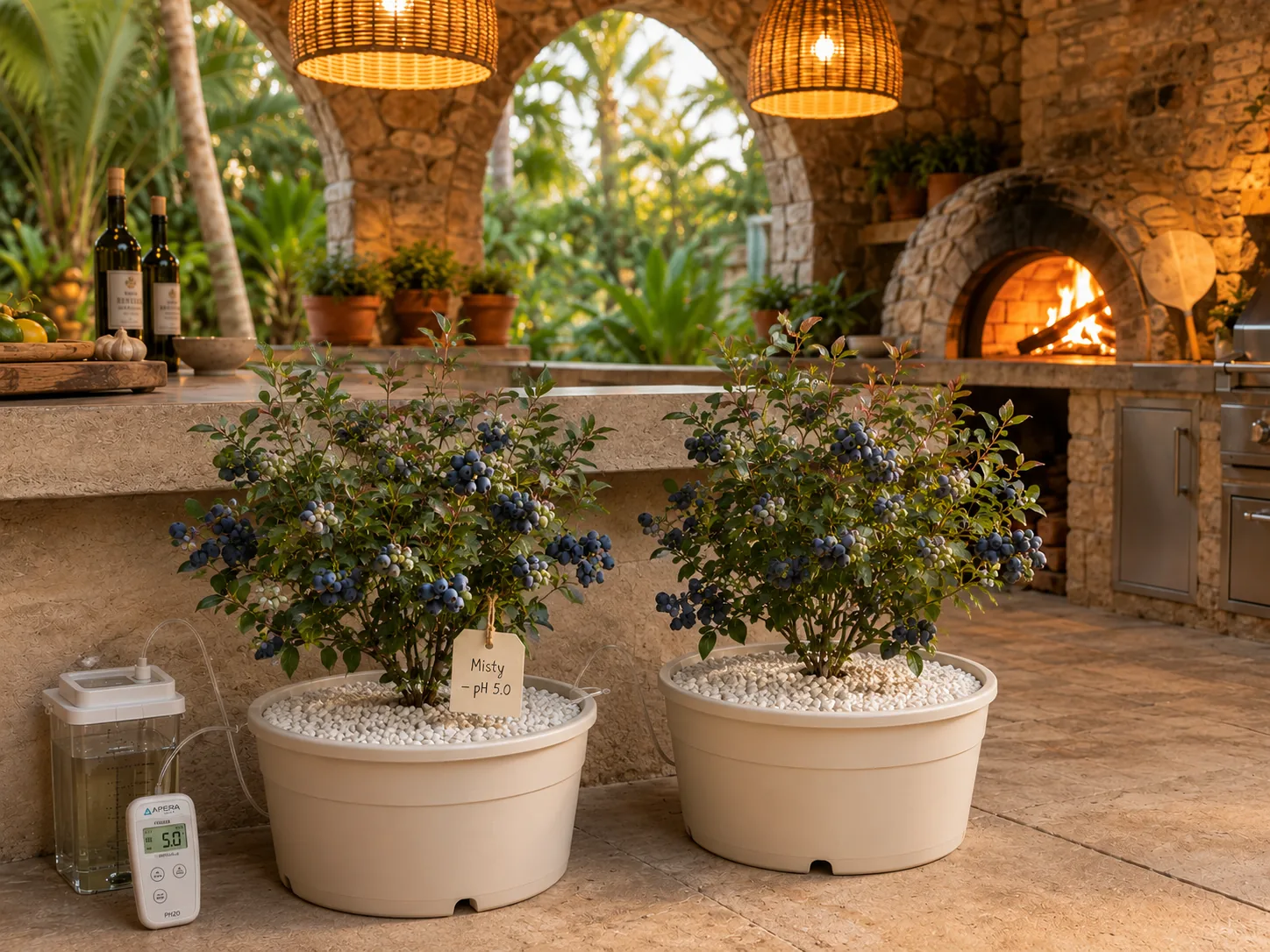
The one crop that cannot share a reservoir with anything else. Its required pH sits far below every other plant here, so it needs a dedicated acidic setup with peat or coco coir and sulfur supplementation. Expect most fruit to arrive in the second growing season.
pH: 4.5–5.5 · EC: 1.5–2.5 mS/cm · System: DWC or substrate · Harvest: Season 2
8. Grape
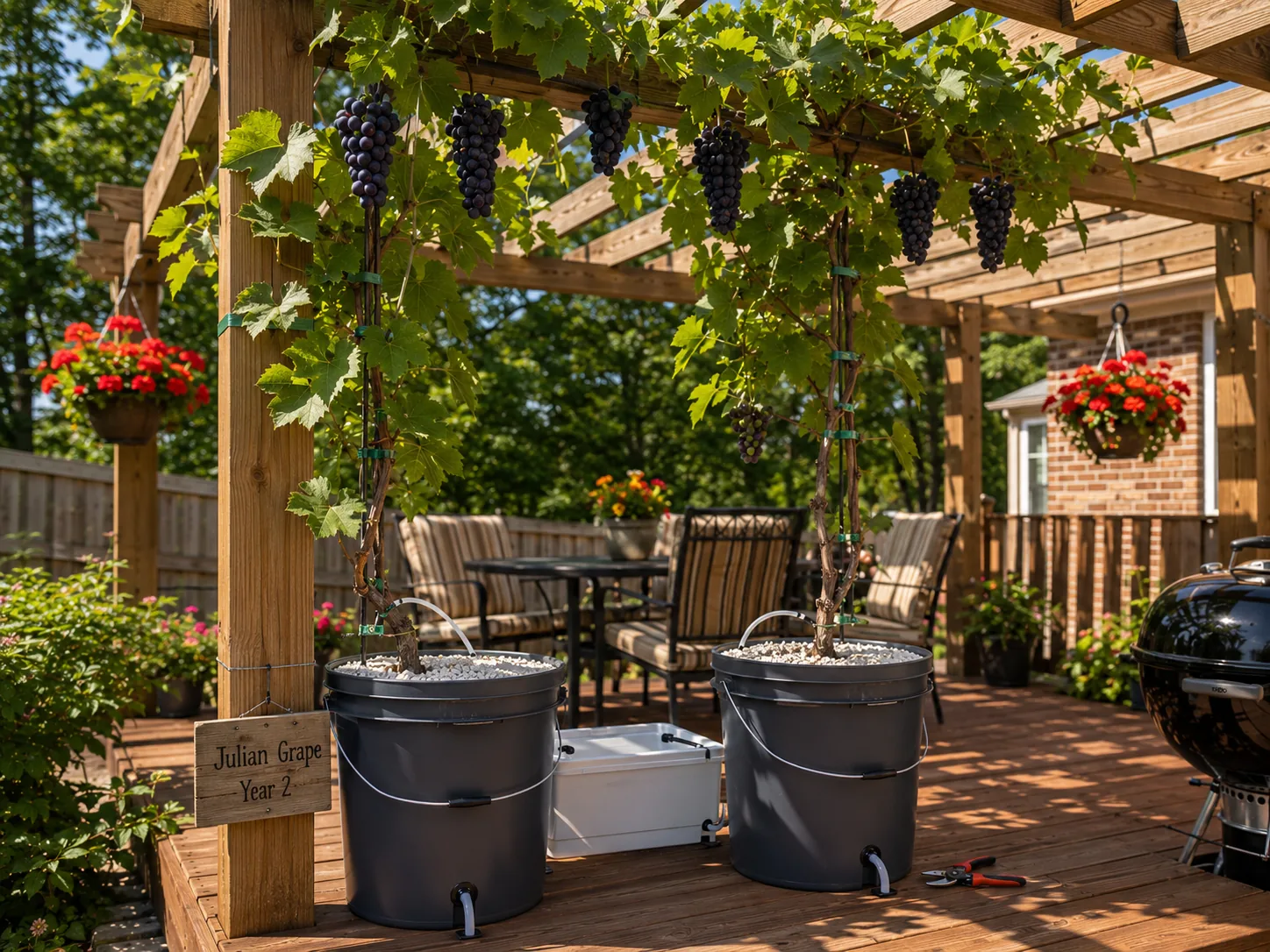
A woody perennial, and the longest game on this list. It needs annual cold dormancy and deliberate pruning to trigger the next season’s fruit, plus years of establishment before consistent yields. Expert level only.
pH: 5.5–6.5 · EC: 1.5–3.0 mS/cm · System: Dutch Bucket · Harvest: 1–2 years
Frequently Asked Questions
Do all hydroponic fruits need hand pollination?
Not all. Parthenocarpic cucumber varieties set fruit without any pollination. Chili peppers self-pollinate with good airflow in most indoor setups. Tomatoes, bell peppers, watermelon, and grape all benefit from manual help indoors where insects are not present.
Can I grow fruiting crops in the same reservoir as my leafy greens?
Not easily. Fruiting crops need EC of 2.0 to 3.5 mS/cm while leafy greens perform best at 1.2 to 2.0. Running a shared reservoir at fruiting-crop levels causes tip burn in lettuce. Blueberries cannot share water with anything due to their extreme pH requirement.
Why do my hydroponic tomatoes have dark spots at the base of the fruit?
That is blossom end rot, a calcium deficiency symptom. It appears when calcium cannot reach developing fruit fast enough, caused by pH above 6.3, EC swings that stress the roots, or insufficient airflow for transpiration-driven calcium transport. Check pH first, then EC consistency.
How much light do fruiting crops need?
More than leafy greens. Leafy greens grow well at 12 to 14 hours of moderate light. Fruiting crops need 14 to 18 hours with higher intensity during flowering and fruiting stages. Insufficient light is the most common reason indoor fruiting crops flower but fail to produce usable fruit.
What to Grow Next
Start with chili peppers to learn how fruiting crops respond to EC changes and nutrient stage management. Move to cherry tomatoes once you have a feel for the system. For the leafy green foundation that runs alongside your fruiting setup, see the guide to 8 best leafy greens for hydroponics. For troubleshooting stress symptoms in fruiting crops, see root rot vs nutrient deficiency.
Sources (5)
- Chandra, S., et al. (2014). Assessment of Total Phenolic and Flavonoid Content, Antioxidant Properties, and Yield of Aeroponically and Conventionally Grown Leafy Vegetables and Fruit Crops: A Comparative Study. Journal of Agricultural and Food Chemistry (PMC), retrieved 2026-07-22, https://pmc.ncbi.nlm.nih.gov/articles/PMC3980857/
- Frontiers in Plant Science (2025), University of Georgia. Substrate system outperforms water-culture systems for hydroponic strawberry production. Retrieved 2026-07-22, https://www.frontiersin.org/journals/plant-science/articles/10.3389/fpls.2025.1469430/full
- University of Massachusetts Amherst Extension. Hydroponic Systems. Retrieved 2026-07-22, https://ag.umass.edu/greenhouse-floriculture/fact-sheets/hydroponic-systems
- Penn State Extension. Hydroponics Systems and Principles of Plant Nutrition: Essential Nutrients, Function, Deficiency, and Excess. Retrieved 2026-07-22, https://extension.psu.edu/hydroponics-systems-and-principles-of-plant-nutrition-essential-nutrients-function-deficiency-and-excess
- University of Minnesota Extension. Small-scale hydroponics. Retrieved 2026-07-22, https://extension.umn.edu/how/small-scale-hydroponics