Micro-Dwarf vs. Cherry Tomatoes: Indoor Hydroponics Guide
Micro-dwarfs stay under 12 inches. Compact cherry tomatoes yield more but need up to 4 feet. Six varieties compared by height, days to harvest, and system size.
In this guide
You want to grow your own tomatoes indoors. You have a small space, a grow light, and the motivation. But then you hit the first wall: do you go with a micro-dwarf variety that stays under 12 inches, or a compact cherry tomato that promises bigger harvests?
The wrong choice means months of effort in a plant that outgrows your setup or barely produces. This guide breaks down exactly which one fits your space, your system, and your goals.
Some links in this article may be affiliate links. We earn a small commission if you purchase through them, at no extra cost to you.
The short version
- Micro-dwarfs stay genuinely tiny. 6 to 12 inches, no pruning, no staking, no trellis. A half-gallon Kratky jar is enough.
- "Compact cherry" is a range, not a size. Baby Boomer stays at 20 to 25 inches, but Husky Cherry Red reaches 3 to 4 feet and needs a stake.
- Micro-dwarfs win on speed (Red Robin fruits in 55 days), cherry types win on total yield (300 or more fruits per Baby Boomer plant).
- Both need the same care: pH 5.8 to 6.3, EC 2.0 to 2.8 at fruiting, and hand pollination from the first open flower.
Quick comparison
| Micro-dwarf | Compact cherry tomato | |
|---|---|---|
| Plant height | 6–12 inches | 20 inches to 4 feet |
| Days to harvest | 50–65 days | 55–65 days |
| Yield per plant | Several dozen fruits per cycle | High and continuous |
| Container / system size | 0.5–1 gallon / Kratky jar | 3–5 gallon / DWC bucket |
| Support needed | None | Stake or cage |
| Light needed | 14–16 hours per day | 14–16 hours per day |
| Difficulty | Beginner | Intermediate |
Days to harvest are counted from transplant, not from seed. Micro Tom, for example, runs 50 to 60 days from transplant or 70 to 90 days from seed.
Micro-dwarfs are the only tomato class that genuinely works in a passive Kratky jar. A full-size tomato transpires up to two gallons a day at peak fruiting and empties the reservoir before harvest.
Micro-dwarf tomatoes: the ultimate space-savers
Micro-dwarf tomatoes are a specific class of determinate tomato bred to stay extremely compact, typically between 6 and 12 inches tall. Unlike standard tomatoes, they do not need pruning, staking, or a trellis. They grow, fruit, and finish their cycle within a single container that could sit comfortably on a desk or windowsill.
Because they are determinate, they produce fruit in one concentrated wave rather than continuously, which means each plant has a defined harvest window. The trade-off for that compactness is yield. They will not produce as many tomatoes as a larger cherry plant, but what they lack in volume they make up for in simplicity and space efficiency.
1. Red Robin
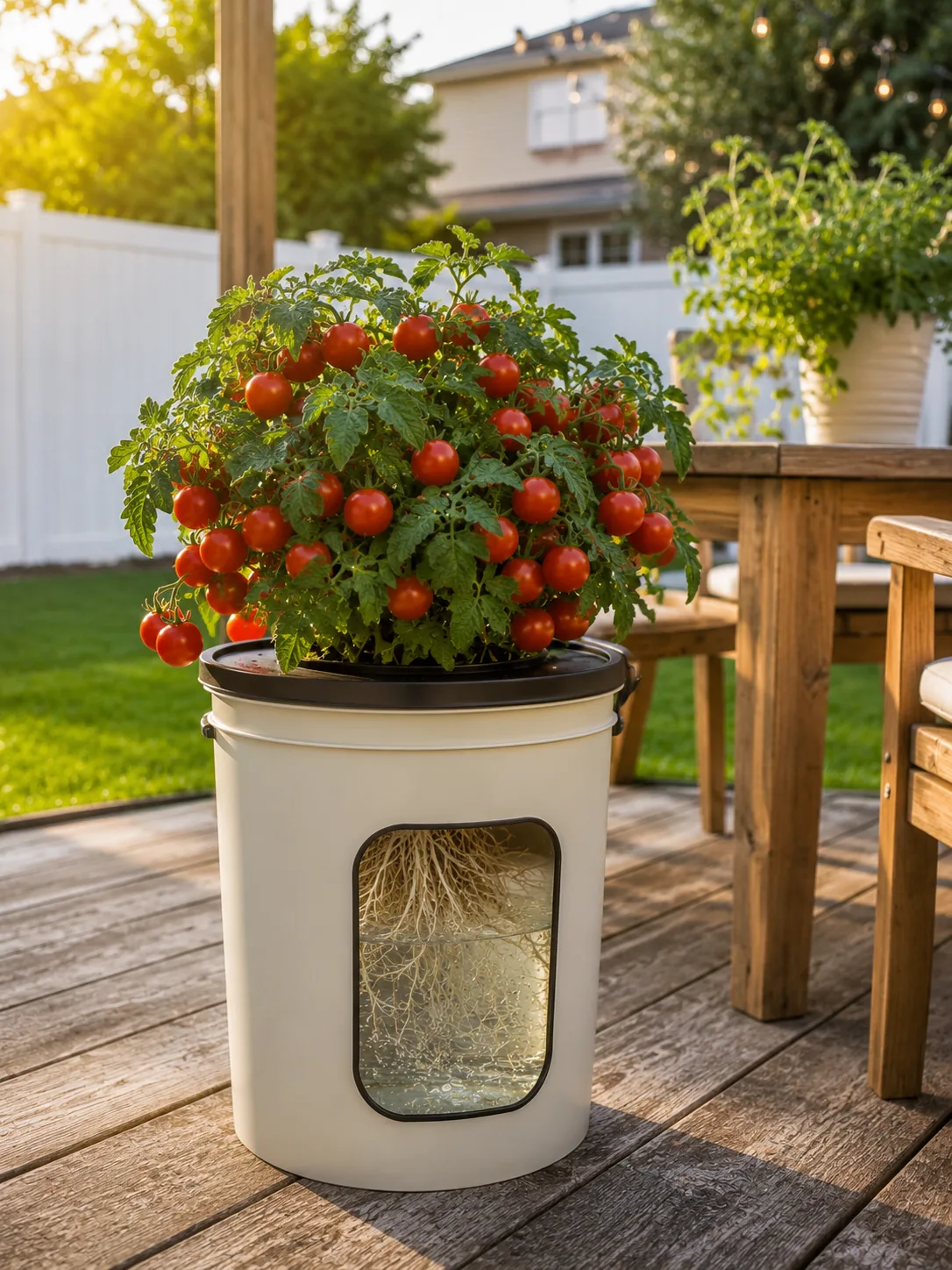
An open-pollinated heirloom that reaches 8 to 12 inches tall and delivers clusters of sweet, slightly tart red cherry tomatoes in 55 days from transplant (True Leaf Market). That makes it one of the fastest and most reliable micro-dwarfs for indoor Kratky setups.
2. Orange Hat
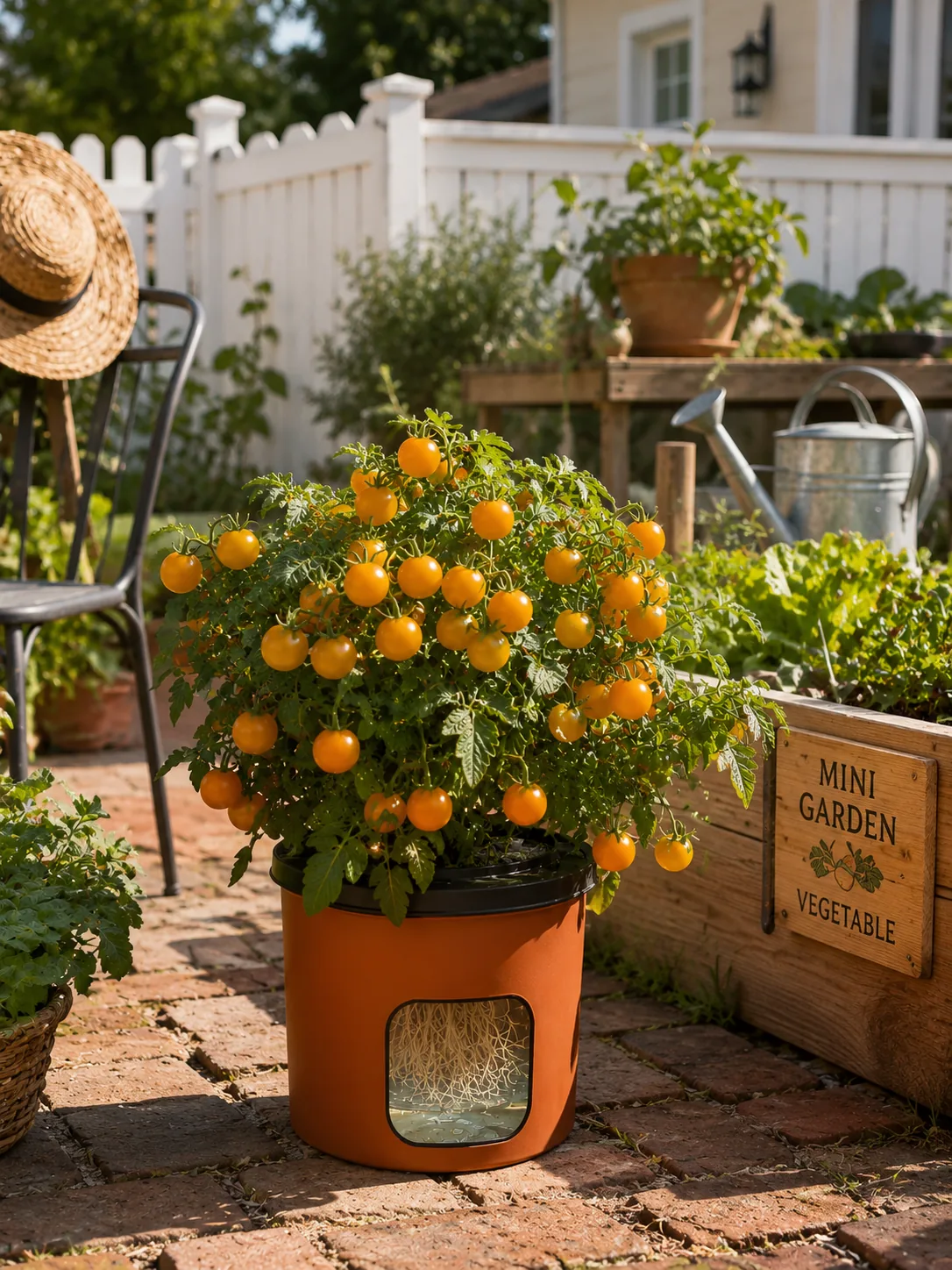
A Russian heirloom variety that stays around 6 to 9 inches and produces small, mildly sweet orange fruits in 55 to 65 days (Victory Seeds). Unlike true determinate micro-dwarfs, Orange Hat is semi-determinate, meaning it continues triggering new flowers and setting fresh fruit after each harvest as long as nutrients stay consistent.
3. Micro Tom
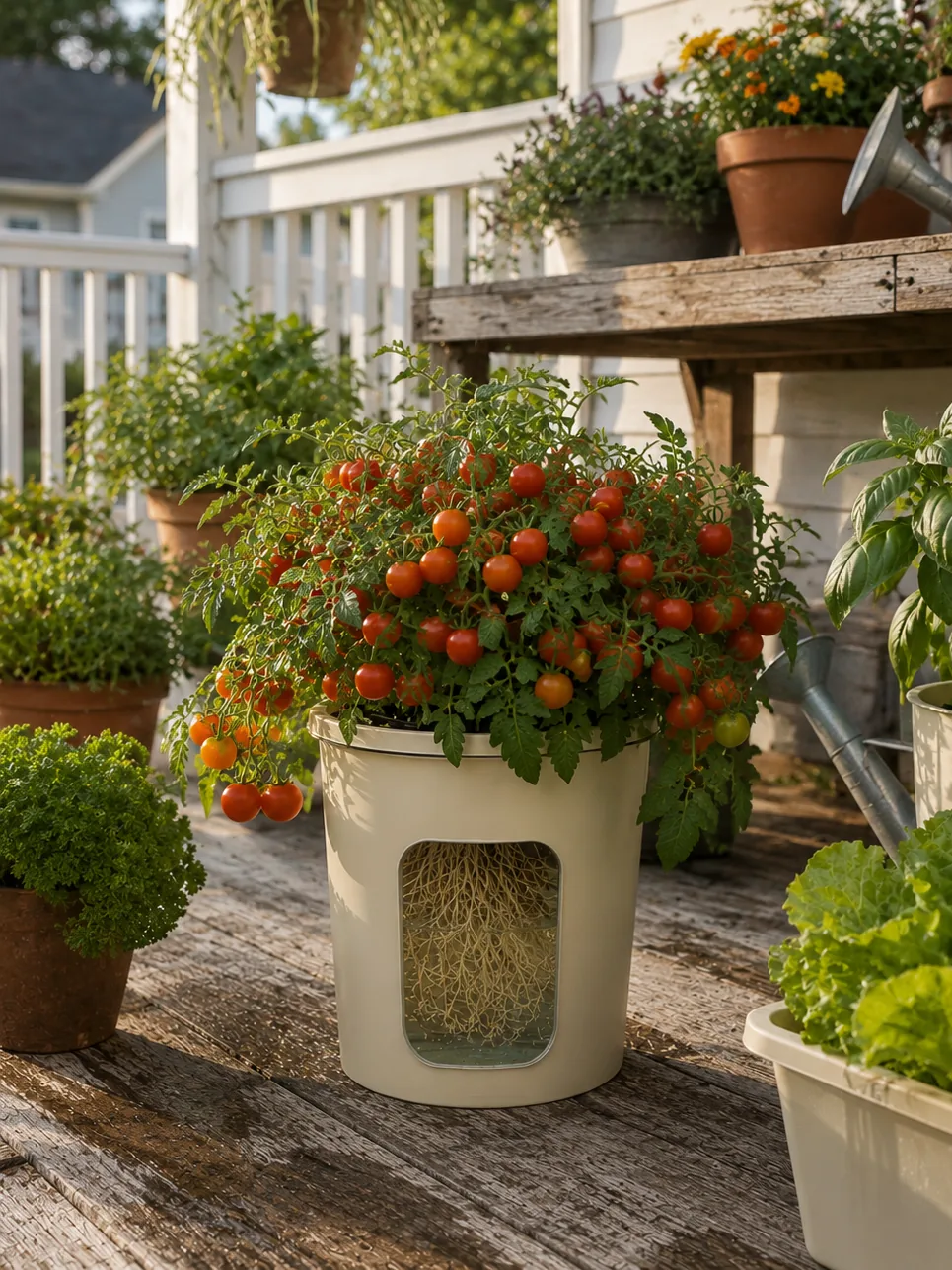
One of the smallest tomato plants in the world at roughly 20 cm (8 inches) tall (NParks Singapore FloraFaunaWeb), Micro Tom is the ultimate desk plant for hydroponic growers with extremely limited space. Expect small red fruits in 50 to 60 days from transplant, or 70 to 90 days if you count from seed.
Hydroponic cherry tomatoes: the high-yield classic
Compact cherry tomato varieties occupy the middle ground between micro-dwarfs and full-sized indeterminate tomatoes. They grow taller and produce more, but the height range is wider than most seed labels suggest: Baby Boomer stays at 20 to 25 inches, while Husky Cherry Red reaches 3 to 4 feet.
Growth habit varies too. Husky Cherry Red is indeterminate and keeps producing fruit continuously rather than stopping after one wave, which is the biggest advantage for anyone who wants a steady weekly harvest. Tumbling Tom and Baby Boomer are determinate, so they fruit heavily and then slow down.
The trade-offs are real. They need a larger container, stronger light, a mini trellis or stake for support, and occasional pruning to keep them manageable indoors. For growers with a grow tent, a balcony, or at least 3 to 5 gallons of growing space, compact cherry tomatoes deliver a return that micro-dwarfs simply cannot match.
1. Husky Cherry Red
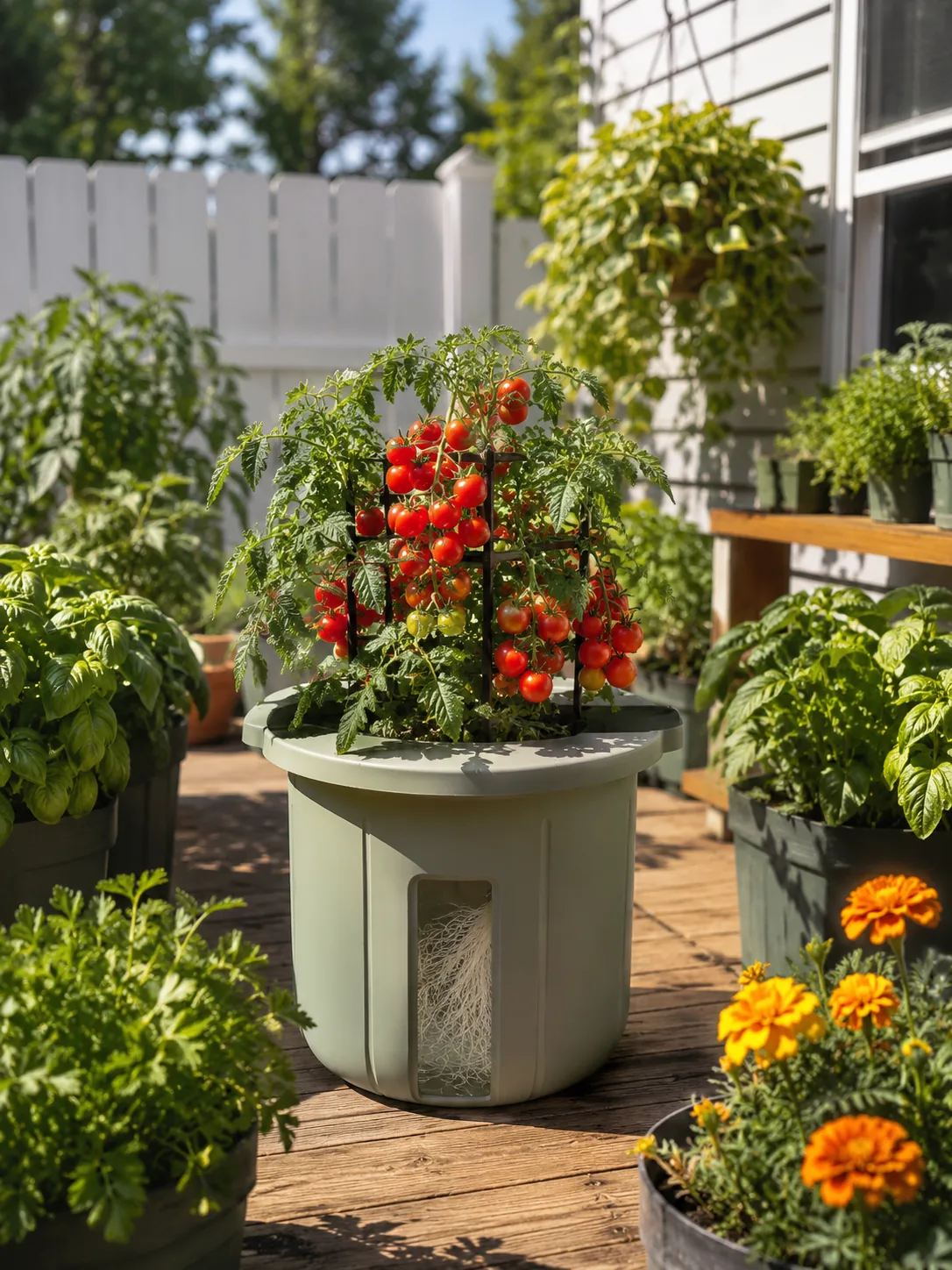
A dwarf indeterminate hybrid that produces big clusters of sweet, 1-inch red cherry tomatoes all season long in 65 days (Totally Tomatoes). It is one of the most popular varieties in the US for home DWC and Dutch bucket setups.
The part usually left out: it reaches 3 to 4 feet and needs a stake or cage to stay upright (Bonnie Plants). Give it the headroom and it out-yields any micro-dwarf several times over.
2. Tumbling Tom
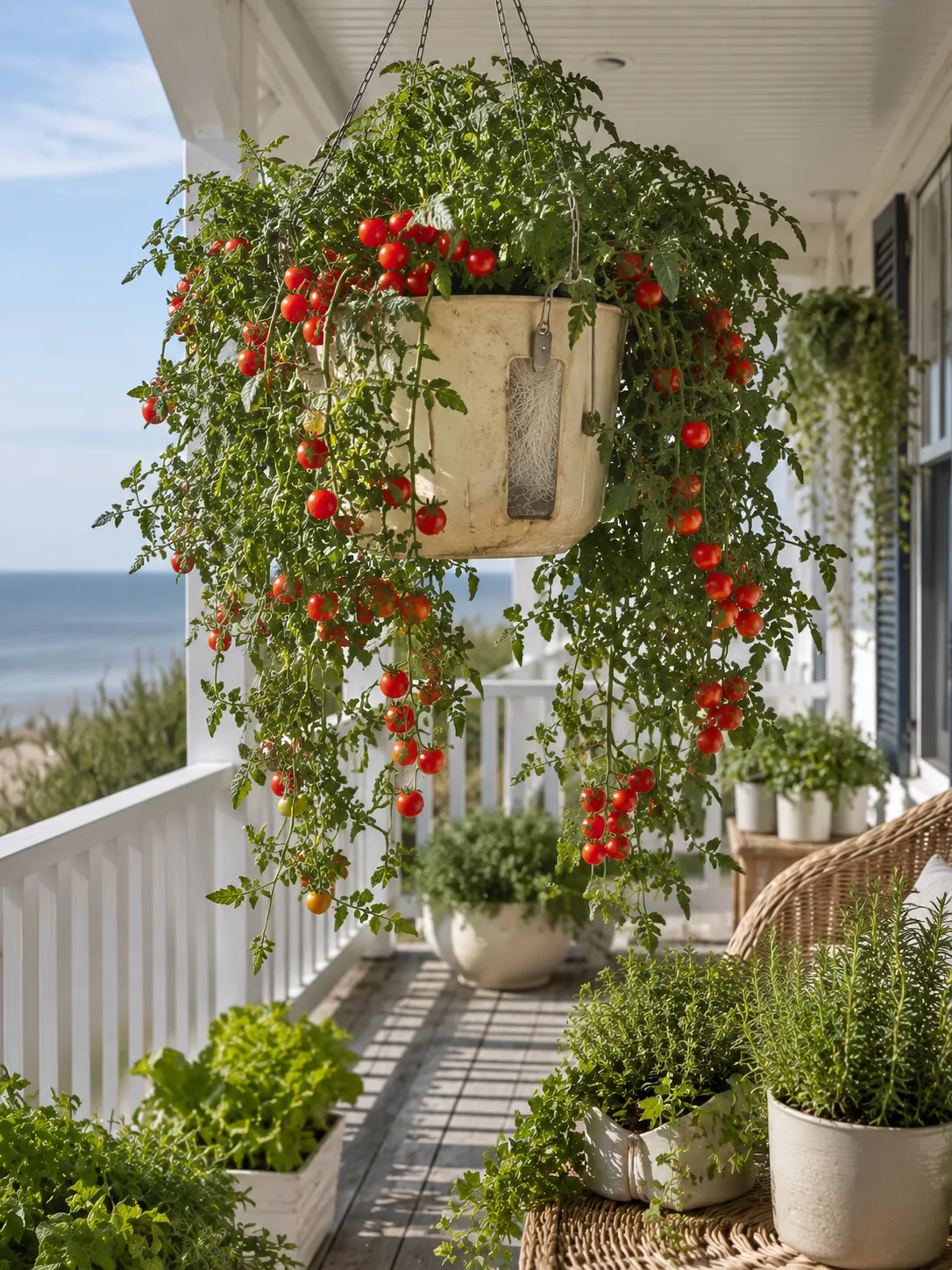
A trailing determinate variety whose vines cascade 20 inches or more over the edge of a container, ripening 1 to 2 inch fruit around 63 days (Totally Tomatoes). Tumbling Tom is ideal for hanging baskets or elevated hydroponic shelves where its natural growth habit becomes part of the display.
3. Baby Boomer
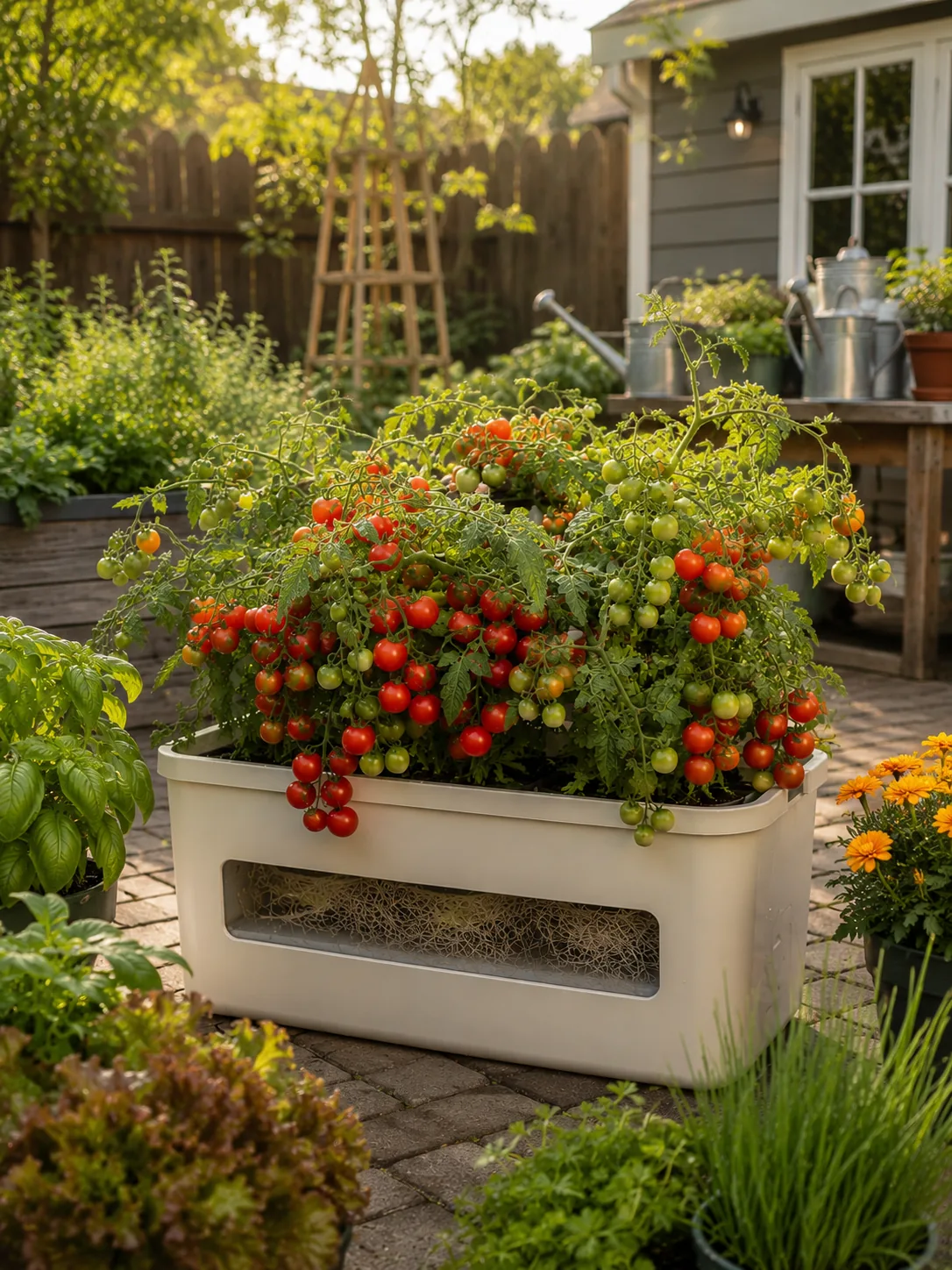
A small but relentlessly productive plant that fills up fast with 1-inch cherry tomatoes and keeps going, carrying 300 or more fruits right up until frost. At 20 to 25 inches tall and 24 to 36 inches wide (Ball Seed), the width matters more than the height indoors, so plan on a shelf roughly a yard across.
Head-to-head comparison
Space and equipment requirements
Micro-dwarfs are purpose-built for small setups. A half-gallon Kratky jar or a 1-gallon container is all they need, and their shallow root systems do not demand air stones, pumps, or active circulation. A simple passive Kratky system on a windowsill is genuinely enough.
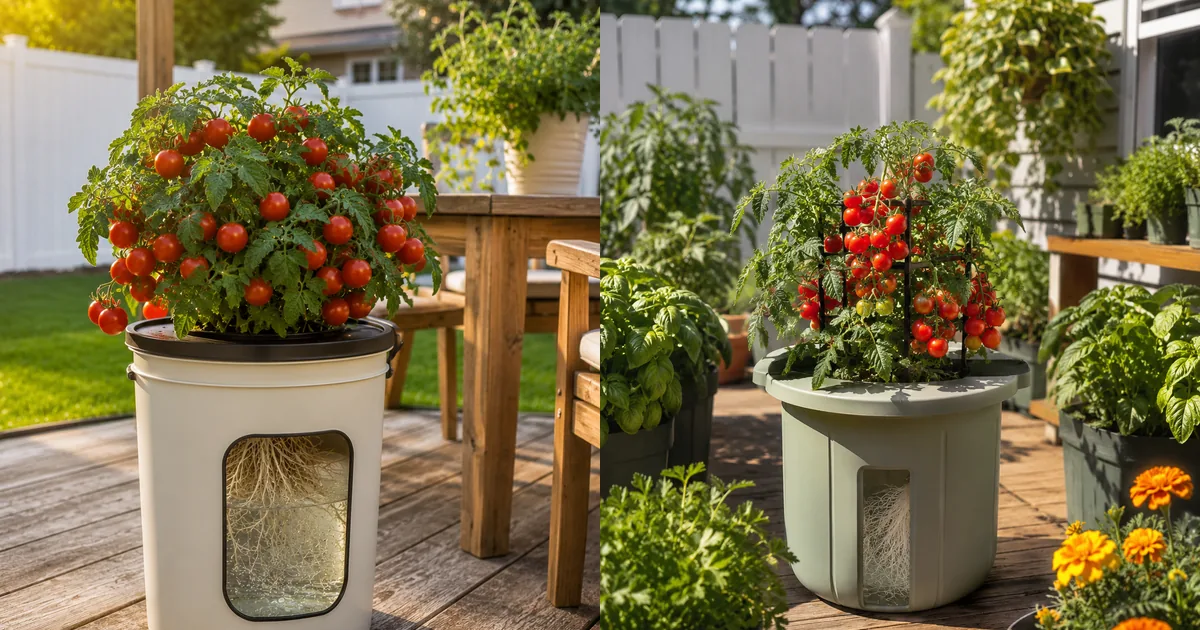
Compact cherry tomatoes need more. A 3 to 5 gallon DWC bucket kit or Dutch bucket gives their more aggressive root systems room to develop. Add a small air pump and air stone for oxygenation, a stake or trellis for vertical support, and 14 to 16 hours of strong full-spectrum LED grow light per day.
The setup cost is higher, but so is the harvest.
Yield vs. time
Micro-dwarfs win on speed. Red Robin and Micro Tom can deliver harvestable fruit in 50 to 60 days from transplant.
The catch is that because most micro-dwarfs are determinate, the harvest window is short. Once that cycle ends, you start a new plant. Orange Hat is the exception: its semi-determinate nature means it keeps setting new fruit after each harvest without restarting from seed.
Husky Cherry Red takes slightly longer to first fruit but keeps producing for months. A single well-maintained plant can supply tomatoes weekly for an entire growing season, making the total yield over time significantly higher than any micro-dwarf.
Flavor and fruit size
Both categories produce cherry-sized fruit, but flavor profiles differ by variety more than by category. Red Robin is sweet-tart, Orange Hat is mild and honeyed, Micro Tom leans more acidic. Among compact cherry varieties, Husky Cherry Red delivers sweet, rich flavor in clusters, while Baby Boomer is known for consistent snackable flavor that holds up all season long.
Fruit size ranges from under half an inch for Micro Tom up to 2 inches for Tumbling Tom. None of these varieties are bred for size, they are bred for flavor, productivity, and compactness.
Hydroponic care and nutrition
Both categories share the same fundamental hydroponic requirements for tomatoes. Keep your nutrient solution between pH 5.8 and 6.3. Letting pH drift above 6.5 causes nutrient lockout even when the right elements are present in the water.
At a glance: pH and EC by growth stage
| Stage | EC (mS/cm) | pH | Nutrient focus |
|---|---|---|---|
| Seedling | 1.2–1.6 | 5.8–6.2 | Nitrogen-forward |
| Vegetative | 2.0–2.5 | 5.8–6.2 | Prioritize nitrogen |
| Flowering | 2.0–2.5 | 5.8–6.3 | Raise P and K as flowers appear |
| Fruiting | 2.0–2.8 | 5.8–6.3 | High K and Ca, plus Cal-Mag |
Source: Ohio State University Extension, which recommends starting at EC 2.0 dS/m in early vegetative growth and raising to 2.4 dS/m at peak fruiting.
Tomatoes are heavy feeders. During the vegetative stage, prioritize nitrogen, then switch to higher phosphorus and potassium once flowers appear. Always add a Cal-Mag supplement to prevent blossom end rot, one of the most common problems with hydroponic tomatoes.
Hitting these numbers means measuring them. A combined pH and EC meter is the one piece of gear you cannot substitute with guesswork.
Hand pollination is non-negotiable for indoor growers. Without wind or insects, flowers will not set fruit on their own. Use one of these from the first open flower:
- Electric toothbrush (most reliable). Hold it against the flower stem for a few seconds. The vibration dislodges pollen the same way a bumblebee does.
- Tap the clusters by hand. Gently tap each open flower cluster daily. Free, and effective on a plant or two.
- Small fan. Run it directed at the plants for 4 to 6 hours per day to simulate air movement. Useful as a supplement, unreliable on dense clusters by itself.
Which one should you grow?
Choose micro-dwarf if:
- Your growing space is a desk, windowsill, or small shelf
- You are a first-time hydroponic tomato grower
- You are using a passive Kratky system or a container under 1 gallon
- You want to harvest in under 60 days with minimal management
Choose compact cherry tomatoes if:
- You have a grow tent, balcony, or at least 3 to 5 gallons of growing space
- You want a continuous weekly harvest rather than a one-time cycle
- You are comfortable with basic pruning, staking, and a more hands-on growing routine
- Maximizing total yield over the entire season is more important than simplicity
What to fix next
Before your tomatoes hit the flowering stage, make sure your nutrient system and pH management are dialed in. A nutrient imbalance at that point is the fastest way to lose your entire fruit set.
Read the complete hydroponic tomato growing guide for a full walkthrough of system setup, nutrient schedules, and the most common problems home growers run into before their first harvest. If you are still learning the basics, start with the pH and nutrients primer.
Picking the right crop for your space is half the battle. The Hydroponic Crop Guide gives ten beginner-friendly crops their own spec card: exact pH range, EC target, light hours, and days to harvest, ranked by how forgiving each one is.
Can I grow micro-dwarf tomatoes without a grow light?
Only if your windowsill gets consistent direct sunlight for at least 6 to 8 hours a day. In most US apartments and homes, natural light alone is not enough to trigger flowering and fruit set. A full-spectrum LED grow light running 14 to 16 hours per day is the reliable option for consistent harvests year-round.
How often do I need to change the nutrient solution in a Kratky system for tomatoes?
Every 2 to 3 weeks for a full reservoir change. Between changes, top off with plain pH-adjusted water when levels drop. Tomatoes are heavy feeders and will deplete certain nutrients faster than others, so do not rely on EC readings alone to determine when to change the solution. If roots turn brown or slimy between changes, see the root rot guide.
Do micro-dwarf tomatoes need hand pollination indoors?
Yes. Both micro-dwarfs and compact cherry tomatoes need help with pollination indoors since there is no wind or insects. Gently tap each open flower cluster once a day, or hold a vibrating electric toothbrush against the flower stem for a few seconds. Do this whenever you see open yellow flowers.
What is the difference between determinate and semi-determinate micro-dwarf tomatoes?
A determinate micro-dwarf like Red Robin or Micro Tom grows, fruits in one wave, and then stops producing. A semi-determinate variety like Orange Hat continues triggering new flowers and setting new fruit after the first harvest, as long as the plant stays healthy and nutrients are maintained. For hydroponic growers who want more than one harvest cycle from the same plant, semi-determinate varieties are the better choice.
Can I grow Husky Cherry Red in a Kratky system?
Technically yes, but it is not the ideal setup for this variety. Husky Cherry Red is a dwarf indeterminate that reaches 3 to 4 feet and keeps producing all season, which means its roots and nutrient demands will outgrow a passive Kratky jar over time. A 3 to 5 gallon DWC bucket with an air stone is a much better match for its growth habit and yield potential.
Sources (9)
- Ohio State University Extension, Hydroponic Nutrient Solution for Optimized Greenhouse Tomato Production, retrieved 2026-07-25, https://cfaes.osu.edu/fact-sheet/hydroponic-nutrient-solution-optimized-greenhouse-tomato-production
- University of Georgia Extension, Blossom-End Rot and Calcium Nutrition of Pepper and Tomato (C-938), retrieved 2026-07-25, https://fieldreport.caes.uga.edu/wp-content/uploads/2025/08/C-938_4.pdf
- National Parks Board Singapore, FloraFaunaWeb, Solanum lycopersicum ‘Micro-Tom’ (height to 20 cm), retrieved 2026-07-25, https://www.nparks.gov.sg/florafaunaweb/flora/8/4/8412
- Bonnie Plants, Husky Red Cherry Tomato (3 to 4 feet, dwarf indeterminate, 65 days), retrieved 2026-07-25, https://bonnieplants.com/products/husky-red-cherry-tomato
- Totally Tomatoes, Husky Cherry Red (65 days, dwarf indeterminate, 1 inch fruit), retrieved 2026-07-25, https://www.totallytomato.com/product/T00357/82
- Ball Seed PlantInfo, Baby Boomer tomato (20 to 25 in tall, 24 to 36 in wide, 300+ fruits until frost), retrieved 2026-07-25, https://info.ballseed.com/PlantInfo/?phid=062000001016426
- Totally Tomatoes, Tumbling Tom (cascades to 20 in or more, 63 days, 1 to 2 in fruit), retrieved 2026-07-25, https://www.totallytomato.com/product/T00767/82
- True Leaf Market, Red Robin Tomato Seeds (8 to 12 in, 55 days, determinate, open-pollinated), retrieved 2026-07-25, https://trueleafmarket.com/products/tomato-seeds-red-robin
- Victory Seed Company, Orange Hat Micro Dwarf Tomato (6 to 9 in, 55 to 65 days, semi-determinate), retrieved 2026-07-25, https://victoryseeds.com/products/tomato-orange-hat