How to Prevent Algae in Hydroponics (and Get Rid of It Fast)
Algae grows wherever light hits your hydroponic reservoir. Block the light, keep water below 72°F, and treat with H2O2 when it appears. Full protocol inside.
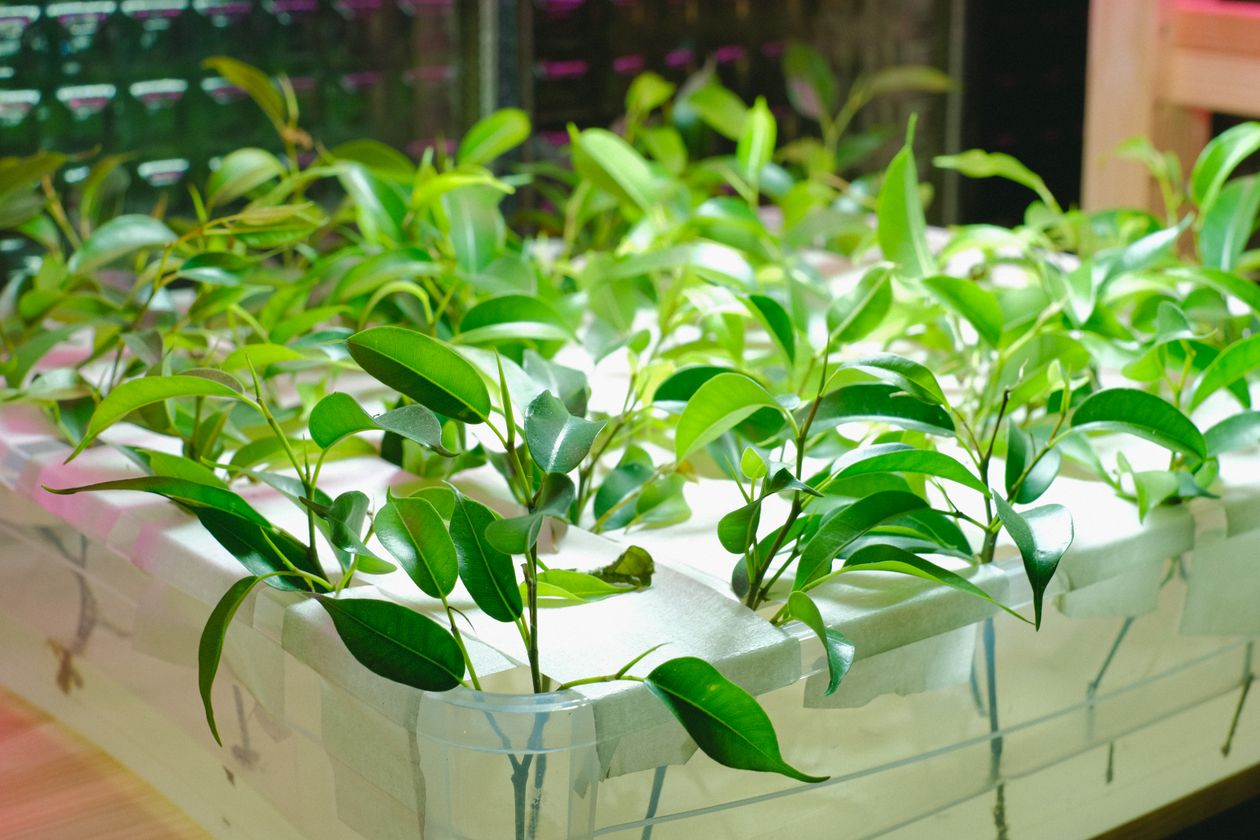
You open the reservoir lid and the water that was clear last week is now coated in a green film. It happened fast, and now you’re wondering if it’s just ugly or if it’s actually putting your plants at risk.
Most growers don’t know the answer until it’s too late. Cosmetic surface algae and a full-blown bloom are very different problems, and treating both the same way wastes time. Here’s what algae actually does to a hydroponic system, the exact conditions that let it grow, and a clear protocol for preventing it and clearing it out when it shows up anyway.
The short version
- Algae needs light, warm water, and dissolved nutrients to grow. Nutrients are always present in a hydroponic solution, so prevention comes down to blocking light and controlling temperature (PMC6323074).
- Dense blooms compete with roots for dissolved oxygen overnight, which stresses plants and raises the risk of root rot.
- Already there? Drain, scrub, disinfect, treat with H2O2 at 3 mL per gallon, then wait several hours before re-adding beneficial bacteria.
- Keep your reservoir below 72°F (22°C) and fully light-sealed, and algae rarely takes hold in the first place.
Is algae actually harmful to your hydroponic plants?
Algae is rarely fatal on its own, but a dense bloom can starve your root zone of oxygen overnight, once photosynthesis stops and respiration takes over (Singapore Food Agency, 2025). That distinction matters: a thin cosmetic film on the reservoir walls is a different problem than a thick, suspended bloom.
Low-density colonization, the kind you see as a faint green tint on rockwool or along the waterline, has minimal effect on dissolved oxygen. A heavy, planktonic bloom is the real concern. As algae cells die off, bacteria break down the biomass and consume even more oxygen in the process, and the decaying mat can produce musty, stagnant odors. That oxygen competition is also what makes algae a quiet risk factor for root rot: weakened, low-oxygen roots are far more vulnerable to Pythium infection.
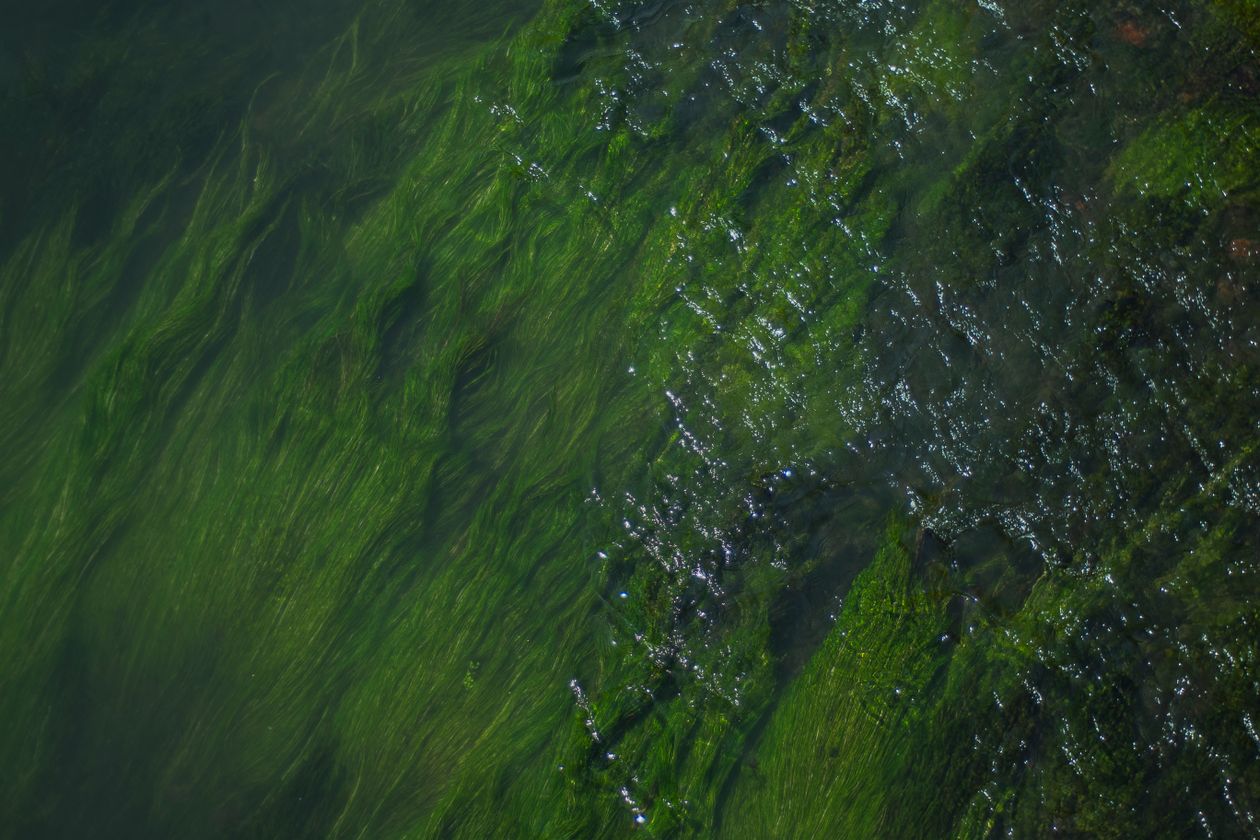
What causes algae to grow in hydroponics?
Algae growth in a hydroponic system requires three things at once: light, warm water, and dissolved nutrients (PMC6323074). Because hydroponic solutions are intentionally rich in nitrogen, phosphorus, and potassium, the nutrient piece is permanently checked off. You can’t starve algae without also starving your crop, so prevention has to focus on the two factors you can actually control.
Algae growth triggers, ranked by controllability
Source: PMC6323074, laser granulometry study of algae growth dynamics in hydroponic systems.
Most home reservoir blooms are made up of green algae and diatoms, not the harmful cyanobacteria associated with toxic pond blooms, according to laser granulometry research on algae in hydroponic-type water systems (PMC5587618).
System design also matters. Deep Water Culture (DWC) and Nutrient Film Technique (NFT) systems carry the highest risk because of large reservoir lids, multiple net pot penetrations, and shallow, exposed water channels. Kratky systems are most vulnerable late in the grow cycle, once the water level drops and exposes a humid, translucent headspace.
How do you prevent algae in a hydroponic system?
Complete light exclusion is the single most effective step you can take, since it removes the one trigger algae can’t grow without (PMC6323074).
Block all light from your reservoir
Wrap reservoirs, buckets, and channels in black polyethylene sheeting or double-sided reflective Mylar, black side facing in. Replace any clear vinyl tubing; light traveling down a clear line acts like fiber optic cable and fuels algae right at the airstone. To check your work, put a bright light inside the sealed, empty reservoir in a dark room. Any glow you see from outside is a gap you missed.
Keep water temperature below 72°F (22°C)
This is the same lever that protects against root rot, so keeping your reservoir below 72°F manages both risks with one habit. Insulated reservoir wraps, reflective white lids, or a small inline chiller all help in warm climates or during summer.
Consider a UV sterilizer for recirculating systems
For larger or commercial recirculating setups where light leaks are hard to fully eliminate, inline UV-C sterilization breaks down algae cell DNA as water passes through. Manufacturer specifications call for a minimum dose around 22 mJ/cm² to control common green algae species, with 30 to 40 mJ/cm² recommended for broader biosecurity against bacteria and oomycetes (X Flo Systems UV Information). Cloudy or high-turbidity water shields algae from the UV dose, so this only works well on relatively clear water.
Light isn’t just on/off, either. In 2019, a laser granulometry study found that supplemental nighttime LED lighting (a red-blue combination) measurably changed algae’s physical structure, reducing its fractal dimension by 33 to 43% over a 56-day trial (PMC6323074). That shifted algae from dense, clumping aggregates toward thinner, more dispersed particles, a detail worth knowing if your grow lights run on a schedule that leaves the reservoir lit at night.
How do you get rid of algae that’s already there?
If algae has already colonized your reservoir, do the full cleanout in one session rather than half-measures spread over days.
- Drain and isolate. Lift plants out, keep roots moist with a diluted nutrient spray, and drain the reservoir completely.
- Scrub and disinfect. Scrub all surfaces to break up the biofilm, then circulate a 1-part-bleach-to-9-parts-water solution (roughly 0.5% sodium hypochlorite) through the system for about 20 minutes (WHO, 2020). Rinse twice with clean water.
- H2O2 flush. Add 3% hydrogen peroxide at 3 mL per gallon and circulate for 12 hours. H2O2 is a non-selective oxidizer that breaks down into water and oxygen, leaving no residue (US EPA, 2007).
- Refill. Add fresh, pH-adjusted nutrient solution (5.5–6.5).
- Wait before re-inoculating. H2O2 kills beneficial bacteria as readily as it kills algae, so wait 4 to 6 hours minimum, ideally longer, before adding back beneficial bacteria like Bacillus amyloliquefaciens. Add it too early and you’ve just wasted an expensive inoculant.
Prevention by system type
Each system has its own weak points:
- DWC: Large lids and multiple net pot holes mean more light gaps. Use opaque foam collars around net pots, and swap clear aeration tubing for black.
- NFT: Shallow, slow-moving water in open channels is exposed if covers warp or don’t seal tightly. Check clips regularly and wrap junctions in opaque material.
- Kratky: The falling water level late in the Kratky cycle exposes a humid, often-translucent headspace. Paint container exteriors black, or use opaque containers from the start.
- Ebb-and-flow: Flood trays are wide open to overhead grow lights. Cover trays with dual-layer sheeting (white up, black down), slit only for stems, and time flood cycles for when lights are off.
Algae is mostly a prevention problem. Get light and temperature under control and most systems stay clear for an entire grow cycle without any further intervention.
Three things to take with you:
- Light, warm water, and nutrients all have to be present together; nutrients you can’t remove, so block the light and cool the water
- A heavy bloom competes with roots for oxygen overnight, which is the real risk, not the slime itself
- H2O2 clears an active bloom fast, but wait several hours before adding beneficial bacteria back
For the full disease prevention protocol covering every hydroponic problem, from nutrient deficiencies to algae outbreaks, the diagnosis and cure guide is available on Whop. Get it here →
If root rot is the problem you’re actually fighting, see our root rot causes, treatment, and prevention guide. And if algae keeps coming back no matter what you try, the root cause is often a gap in your broader routine, see our reservoir maintenance tips for the full schedule.
Does algae hurt my hydroponic plants?
Algae itself doesn’t feed on your plants, but a dense bloom competes with roots for dissolved oxygen overnight, once photosynthesis stops (Singapore Food Agency, 2025). That oxygen squeeze stresses roots and can open the door to Pythium. Cosmetic surface algae is a different story; it’s mostly harmless if you catch it early.
Can I use hydrogen peroxide to kill algae in hydroponics?
Yes. Hydrogen peroxide is a registered, EPA-reviewed sanitizer that oxidizes algae cells and pathogens on contact (US EPA, 2007). Dose 3% H2O2 at 3 mL per gallon and circulate for 12 hours. It’s non-selective, though, so it kills beneficial bacteria too if you add them too soon.
What's the difference between algae and root rot?
Algae is a photosynthetic organism that forms a green, slimy layer wherever light reaches water. Root rot is a disease, almost always caused by the water mold Pythium, that thrives in dark, low-oxygen conditions and turns roots brown and mushy. They can show up together since algae blooms drain oxygen and create the conditions Pythium needs.
Why does algae keep coming back after I clean it?
Algae spores are resilient, and a clean only resets the system; it doesn’t remove the triggers. If a single light gap or a reservoir running above 72°F (22°C) remains, a bloom re-establishes within days. Recheck every seam, lid, and clear tube, not just the obvious spots.
Is it safe to eat plants from a reservoir that has algae?
Algae itself isn’t toxic to humans, but algal mats and biofilms can harbor pathogens like Salmonella and E. coli that pose a real food safety risk in edible-crop systems (Singapore Food Agency, 2025; PMC12472353). If algae has reached the harvestable parts of the plant, wash thoroughly or discard that portion.
Sources (7)
- PMC, “Analysis of the Algae Growth Dynamics in the Hydroponic System with LEDs Nighttime Lighting Using the Laser Granulometry Method,” PMC6323074, retrieved 2026-06-16, https://pmc.ncbi.nlm.nih.gov/articles/PMC6323074/
- PMC, “Analysis of Granulometric Composition of Algal Suspensions in Wastewater Treated with Hydroponic Method,” PMC5587618, retrieved 2026-06-16, https://pmc.ncbi.nlm.nih.gov/articles/PMC5587618/
- PMC, “Microbial Quality of Leafy Greens Grown Under Soilless Production Systems,” PMC12472353, retrieved 2026-06-16, https://pmc.ncbi.nlm.nih.gov/articles/PMC12472353/
- Singapore Food Agency, “Managing Algae and Biofilm in Tropical Hydroponic Farms,” Best Practice Newsletter, April 2025, retrieved 2026-06-16, https://www.sfa.gov.sg/docs/default-source/food-science-and-technology/bestpracticenewsletter_algaebiofilmmanagement_apr2025.pdf
- US EPA, “Pesticide Fact Sheet: Hydrogen Peroxide,” retrieved 2026-06-16, https://www3.epa.gov/pesticides/chem_search/cleared_reviews/csr_PC-000595_12-Jul-07_a.pdf
- World Health Organization, “How to Dilute and Use Bleach,” WPRO, retrieved 2026-06-16, https://www.who.int/docs/default-source/wpro---documents/wpro---pdf-infographics/covid-19/bleach-dilution-and-guidance-for-visitors-20200622.pdf
- X Flo Systems, “UV Information,” retrieved 2026-06-16, https://www.xflo.com/uv-information.php