Root Rot: What It Looks Like, What Causes It, and How to Fix It
Root rot turns white hydroponic roots brown and slimy within days. Spot it early, treat with H2O2 at 2–3 mL per gallon, and stop it from coming back.
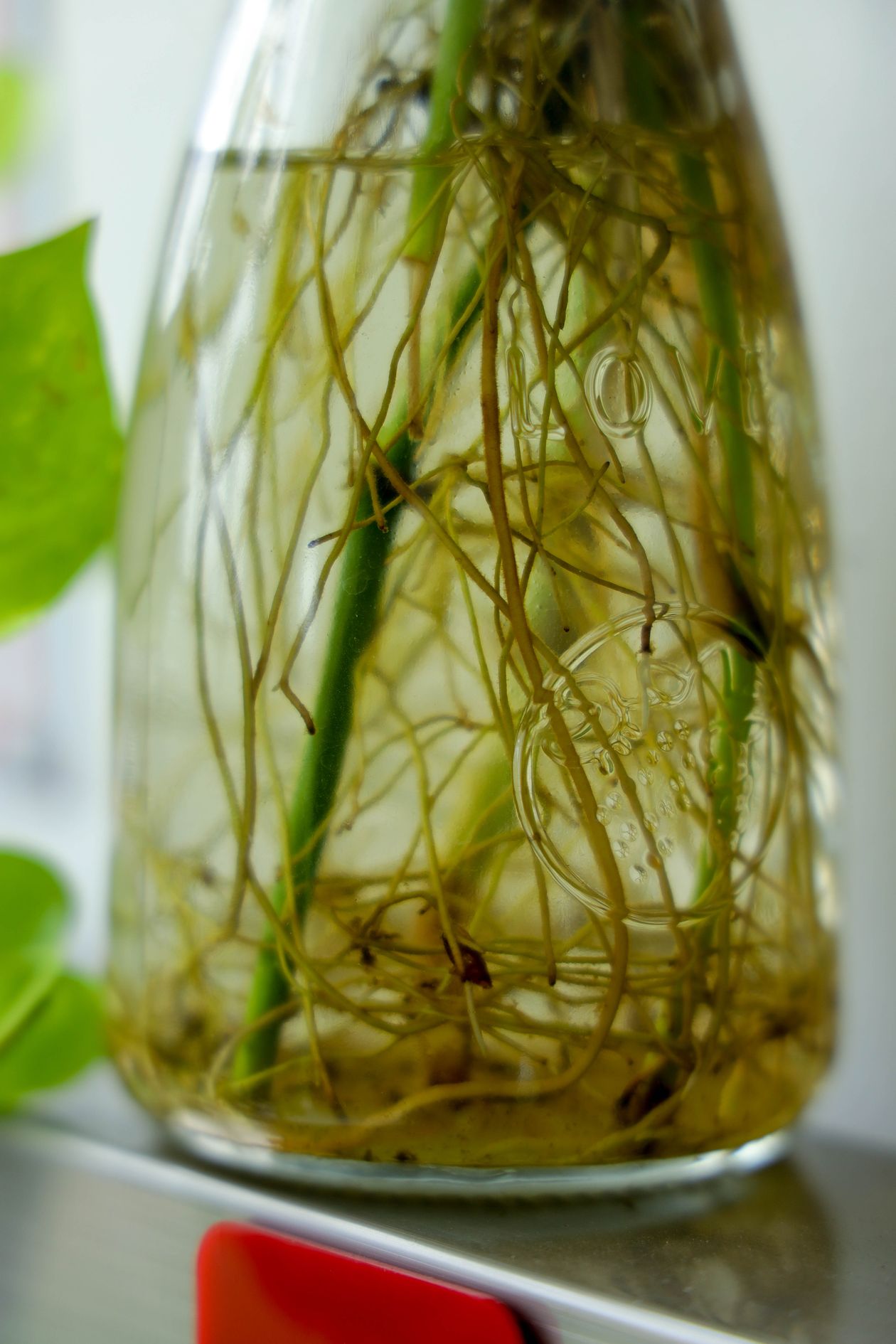
You open the reservoir lid and the smell hits you first. Then you see it: roots that were white a week ago are now brown, slimy, and falling apart. That’s root rot, and it can kill a plant within days.
Most growers don’t catch it at Stage 1. They assume some browning is normal, they wait, and by the time they act, the infection has spread through the entire root zone. In a recirculating system, it reaches every connected plant.
This guide will help you identify root rot at the earliest stage, treat it the same day you find it, and build conditions that make it structurally hard to come back.
The short version
- Root rot in hydroponics is almost always caused by Pythium, a water mold that thrives in warm, low-oxygen water. Standard fungicides won't work on it (Purdue Extension, BP-181-W).
- Healthy roots are white and firm. Root rot roots are brown, slimy, smell like decay, and the outer sheath slides off when touched.
- Treatment protocol: drop reservoir temperature to 65–68°F (18–20°C), add H2O2 at 2–3 mL per gallon, prune dead roots, then replace with fresh solution and add Bacillus amyloliquefaciens (Hydroguard) at 2 mL per gallon.
- Prevention comes down to three levers: water temperature, dissolved oxygen, and light. Fix all three and root rot becomes rare.
What does root rot look like?
Healthy roots are white or cream-colored, firm to the touch, and slightly fuzzy with fine root hairs. Root rot roots are the opposite: dark brown to gray-black, soft and slimy, and they smell like rotten eggs or swamp water. According to Purdue University Extension, a defining sign of oomycete infection is cortical sloughing: when you handle the root gently, the outer sheath slides off, leaving only a thin white vascular strand behind. If you see that, you have active root rot.
Root rot in hydroponics progresses through three stages. A definitive diagnostic sign is cortical sloughing: the outer root sheath slides off easily when touched, exposing the thin white vascular strand underneath. Stage 1 shows tan, slightly soft root tips. Stage 2 presents full brown or gray-black slime with a sour odor. Stage 3 involves complete root collapse and paradoxical wilting despite a full reservoir (Purdue University Extension, BP-181-W).
The stages in detail:
Stage 1: Root tips turn tan or light brown. Texture is slightly soft. The plant still looks healthy above the water line. This is the best time to act. Roots can fully recover with prompt treatment.
Stage 2: Full brown or gray-black slime covers the root mass. Roots mat together and fall apart under light pressure. The smell is strong. Leaves may start to yellow or look dull. Still treatable, but urgent.
Stage 3: Root collapse. The plant wilts despite a full reservoir, because there’s no functional root tissue left to absorb water. Leaves drop. At this stage, the plant rarely survives.

What causes root rot in hydroponics?
Root rot is almost always caused by Pythium, a water mold that is more closely related to algae than to true fungi. This distinction matters for treatment: standard fungicides designed for true fungi do not work on Pythium at all (Purdue Extension, BP-181-W). Pythium survives as dormant spores and activates when conditions turn favorable. In a hydroponic system, four factors give it what it needs.
Primary root rot risk factors in hydroponic systems
Ranked by pathogenic mechanism. Source: Purdue University Extension BP-181-W; University of Kentucky Extension E706.
Warm water
Pythium aphanidermatum, the species most commonly found in recirculating hydroponic systems, reproduces aggressively above 77°F (25°C). Warm water also holds less dissolved oxygen, which compounds the problem. The target reservoir temperature to suppress Pythium is below 65°F (18°C). At that point, reproduction and zoospore motility drop significantly (Purdue Extension). In practice, keeping the reservoir below 72°F (22°C) is a reasonable goal for most home growers.
Low dissolved oxygen
When oxygen levels in the root zone drop, roots switch from aerobic respiration to anaerobic fermentation. That process produces ethanol and other byproducts that damage root cell membranes and leak into the water. Those leaking compounds act as a chemical signal that Pythium zoospores follow directly to the weakened roots (University of Kentucky Extension, E706). Higher water temperature, poor aeration, and overcrowding all reduce DO levels.
Light in the reservoir
Light hitting the nutrient solution fuels algae growth. Algae compete with your roots for dissolved oxygen, especially overnight. A fully covered, light-tight reservoir is one of the simplest preventative steps you can take, and one of the most often skipped.
Stagnant or low-flow water
Passive systems like the Kratky method become vulnerable in the later stages of a grow cycle when the water level drops, flow is minimal, and temperature rises. The combination of low movement and warm water creates a perfect Pythium environment. A small airstone can break this cycle without converting to active aeration.
How to treat root rot (step by step)
Act the same day you find it. Delaying action by even 24 hours can result in irreversible root collapse (University of Kentucky Extension, E706). The protocol is: cool the reservoir, oxidize the pathogens, prune the damage, then recolonize with beneficial biology. H2O2 and beneficial bacteria work sequentially, not simultaneously: add H2O2 first to clear the active infection, wait for it to fully dissipate, then add Bacillus amyloliquefaciens at 2 mL per gallon to colonize and protect the root zone (e-GRO Alert, E3-01).
Step 1: Drop the temperature. Immediately lower your reservoir to 65–68°F (18–20°C). This slows Pythium reproduction and raises oxygen-carrying capacity. Use ice packs wrapped in a plastic bag, an insulated reservoir, or a water chiller if you have one.
Step 2: Add hydrogen peroxide. Add 3% food-grade H2O2 to the reservoir at 2–3 mL per gallon (0.5–0.8 mL per liter). For severe Stage 2 infections, you can go up to 10 mL per gallon. H2O2 breaks down into water and a reactive oxygen radical that destroys zoospore cell walls on contact (e-GRO Alert, E3-01). Let it circulate for 12–24 hours.
Step 3: Prune and rinse the roots. Remove affected plants. Using scissors sterilized with 70% isopropyl alcohol, cut away all brown, slimy, or structurally compromised roots. Leave only firm, white tissue. Rinse the remaining root system under cool, clean water. Don’t skip the sterilization step. Contaminated scissors reinfect the roots you’re trying to save.
Step 4: Replace the reservoir. Drain completely. Refill with fresh nutrient solution, pH-adjusted to 5.5–6.5.
Step 5: Add beneficial bacteria. Once the peroxide has fully broken down (give it a few hours after refilling), add Bacillus amyloliquefaciens (sold under brand names like Hydroguard) at 2 mL per gallon. This bacterium colonizes root surfaces and forms a biological barrier that blocks Pythium from re-establishing.
Step 6: Block all light. Check every surface of your reservoir for light gaps. Tape, opaque lids, or dark containers. No exceptions.
How to prevent root rot from coming back
Prevention works on three structural levers: temperature, dissolved oxygen, and light. Pythium reproduction and zoospore motility are significantly suppressed below 65°F (18°C), while oxygen-carrying capacity is maximized at those same cool temperatures (Purdue Extension, BP-181-W). Fix all three levers and root rot becomes rare, even across many back-to-back grow cycles.
Preventing hydroponic root rot requires controlling three variables: water temperature below 72°F (22°C), adequate dissolved oxygen through properly sized airstones, and complete light exclusion from the reservoir. A maintenance dose of Bacillus amyloliquefaciens every 2–4 weeks colonizes root surfaces against future Pythium reinfection. Fix all three structural levers and root rot becomes rare across many consecutive grow cycles.
Temperature: Keep your reservoir below 72°F (22°C) consistently, not just when you remember to check. In warm climates or during summer, this may require an insulated reservoir, a dedicated water chiller, or running your grow lights on a schedule that avoids peak afternoon heat. Check temperature at the same time each day.
Dissolved oxygen: Size your air pump properly for your reservoir volume. A pump rated for 10 gallons won’t adequately oxygenate a 20-gallon reservoir. Add more airstones if the pump is already running. Surface agitation from a small powerhead is another option. The goal is visible, active bubbling across most of the water surface.
Light: Cover every reservoir completely. Use opaque lids, black paint, dark-colored containers, or reflective tape over any clear surfaces. Even a small gap lets in enough light to start an algae cycle.

Beyond the three structural levers, two maintenance habits matter:
Beneficial bacteria maintenance: Add a half-dose of Bacillus amyloliquefaciens every 2–4 weeks, not just after a root rot event. A colonized root zone is a defended root zone.
Clean between every cycle: Sterilize your entire system between crops. Rinse all surfaces with a 10% bleach solution (1 part bleach to 9 parts water), let sit for 10–30 minutes, then rinse thoroughly with fresh water before refilling. Pythium oospores can survive in system residue and re-activate the next cycle if you leave them behind.
Root rot is a serious problem, but it’s also a solvable one. Catch it early, act with the right protocol, and fix the underlying conditions.
Three things to take with you:
- Slimy brown roots and a foul smell mean act today, not next week
- H2O2 first to clear the active infection, Bacillus amyloliquefaciens after to prevent reinfection
- Temperature, dissolved oxygen, and light are the three structural levers. Fix all three.
For the full disease prevention protocol covering every hydroponic problem, from nutrient deficiencies to algae outbreaks, the diagnosis and cure guide is available on Whop. Get it here →
If algae is the problem you’re actually fighting, see our algae prevention and treatment guide.
Can a plant recover from root rot?
Yes, if you catch it at Stage 1 or 2. Trim the dead roots, treat with hydrogen peroxide, then add beneficial bacteria. Stage 3 (wilting despite a full reservoir, root collapse) is usually fatal. The earlier you act, the better the odds.
Is hydrogen peroxide safe to use on plant roots?
Yes, at the right dilution. Use 3% hydrogen peroxide at 2–3 mL per gallon (0.5–0.8 mL per liter) of reservoir water. H2O2 breaks down into water and oxygen, leaving no harmful residues. Too high a concentration damages healthy tissue, so don’t exceed 10 mL per gallon even for severe infections.
Does Pythium spread to other plants in the same system?
Yes, and fast. Pythium releases motile zoospores that swim freely through shared reservoir water. In a DWC or NFT system, one infected plant can reach every connected root zone within hours. Isolate affected plants the moment you spot symptoms.
Can root rot happen in a Kratky system?
Yes. Late-stage Kratky is particularly vulnerable when the water level drops, the air gap shrinks, and the reservoir sits warm and still. Low flow combined with rising temperatures creates ideal conditions for Pythium. Check reservoir temperature regularly, and consider a small airstone if you’re in a warm climate.
What beneficial bacteria work against root rot?
Bacillus amyloliquefaciens (sold under brands like Hydroguard) has strong evidence for suppressing Pythium in hydroponic systems. Apply at 2 mL per gallon after the H2O2 has fully dissipated. Add a maintenance dose every 2–4 weeks to keep the root zone colonized and protected.
Sources (4)
- Purdue University Extension, “Pythium Root Rot of Herbaceous Plants,” BP-181-W, retrieved 2026-06-15, https://www.extension.purdue.edu/extmedia/bp/bp-181-w.pdf
- University of Kentucky Cooperative Extension Service, “Root Disease Management in Hydroponic Systems,” E706, retrieved 2026-06-15, https://greenhousehort.mgcafe.uky.edu/sites/greenhousehort.ca.uky.edu/files/E706.pdf
- e-GRO Edible Alert, “Pythium Root Rot on Hydroponically Grown Basil and Spinach,” E3-01, retrieved 2026-06-15, https://e-gro.org/pdf/E301.pdf
- MDPI Horticulturae, “Understanding Root Rot Disease in Agricultural Crops,” Vol. 7, No. 2, 2021, retrieved 2026-06-15, https://www.mdpi.com/2311-7524/7/2/33