Hydroponic Leaves Turning Brown: Causes, Diagnosis, and Fixes
Hydroponic leaves turning brown? Four causes look similar but need opposite fixes. Learn which leaves to check, then apply the right correction.
In this guide
Brown, crispy leaves on hydroponic plants look like a feeding problem, so the reflex is to add more calcium or a CalMag supplement. In most hydroponic systems that’s the wrong move, and it can make things worse. The most common cause of brown tips on new growth is tipburn, which is a calcium transport failure, not a calcium shortage in your reservoir. Other brown-tip causes (salt burn, potassium, water quality) look similar but need opposite fixes. The trick is reading which leaves are affected, then correcting the right thing.
Some links in this article may be affiliate links. We earn a small commission if you purchase through them, at no extra cost to you.
The short version
- Brown tips on new inner leaves are almost always tipburn: a localized calcium shortage at the growing tip caused by poor transpiration, not a lack of calcium in the tank.
- The real fix is airflow and a lower EC to slow growth, not dosing more calcium.
- Brown margins on older, outer leaves point to salt burn from too-strong solution; older lower leaves point to potassium.
- Brittle brown tips on every leaf usually mean tap-water chemistry or dry air, not nutrients.
Most brown tips are tipburn (and it’s not a calcium shortage)
When brown, dried margins show up only on the newest, innermost leaves, you’re almost certainly looking at tipburn. University research treats tipburn as a localized calcium deficiency in fast-growing tissue, and the key word is localized: it happens even when the reservoir has plenty of calcium (UC IPM; Agriculture Victoria).
Here’s why. Calcium is an immobile nutrient. Once it’s built into a mature leaf’s cell walls, the plant can’t move it back out to feed new growth (NASA Technical Reports). So young leaves depend entirely on a fresh stream of calcium arriving through the xylem, and that stream is powered by transpiration, the plant pulling water up and out through its leaves (ASHS Journals).
The catch is that the newest leaves at the center of a lettuce head are enclosed. They sit in still, humid air and barely transpire, so very little calcium-carrying water reaches them. Meanwhile the big outer leaves transpire fast and grab most of the supply. Add intense light and warm temperatures that push rapid growth, and demand at the tip outruns delivery. The starved cells collapse, and the margin turns brown and crispy (ASHS Journals).
How to actually stop tipburn
Because tipburn is a transport problem, the fix is to move more calcium to the tip or to slow growth down, not to pour calcium into the tank.
The most reliable fix in controlled-environment research is airflow, specifically downward air moving over and into the canopy. Horizontal fans that just stir the room aren’t enough; they don’t break into the still pocket of air around the enclosed inner leaves, which is what a clip-on circulation fan aimed down at the canopy is for. Vertical airflow disrupts that stagnant layer, drives transpiration in the young leaves, and pulls calcium-bearing sap into them (ASHS Journals).
Humidity is where it gets counterintuitive. For hydroponic lettuce, keeping humidity high at night actually helps. When the lights are off and the leaves stop transpiring, a humid environment builds root pressure that pushes water and calcium up into the non-transpiring inner leaves (NASA Technical Reports; ASHS Journals). A 2025 peer-reviewed trial even found a calcium-mobilizing biostimulant added to the nutrient solution controlled tipburn about as well as airflow fans (PMC).
You can also just slow the plant down. Lowering the solution’s EC (lettuce does well at a fairly low EC, roughly 0.8 to 1.2 mS/cm, which takes an EC meter to hit reliably) eases growth so calcium delivery can keep pace (Purdue Extension).
Is it nutrient burn instead? (High EC)
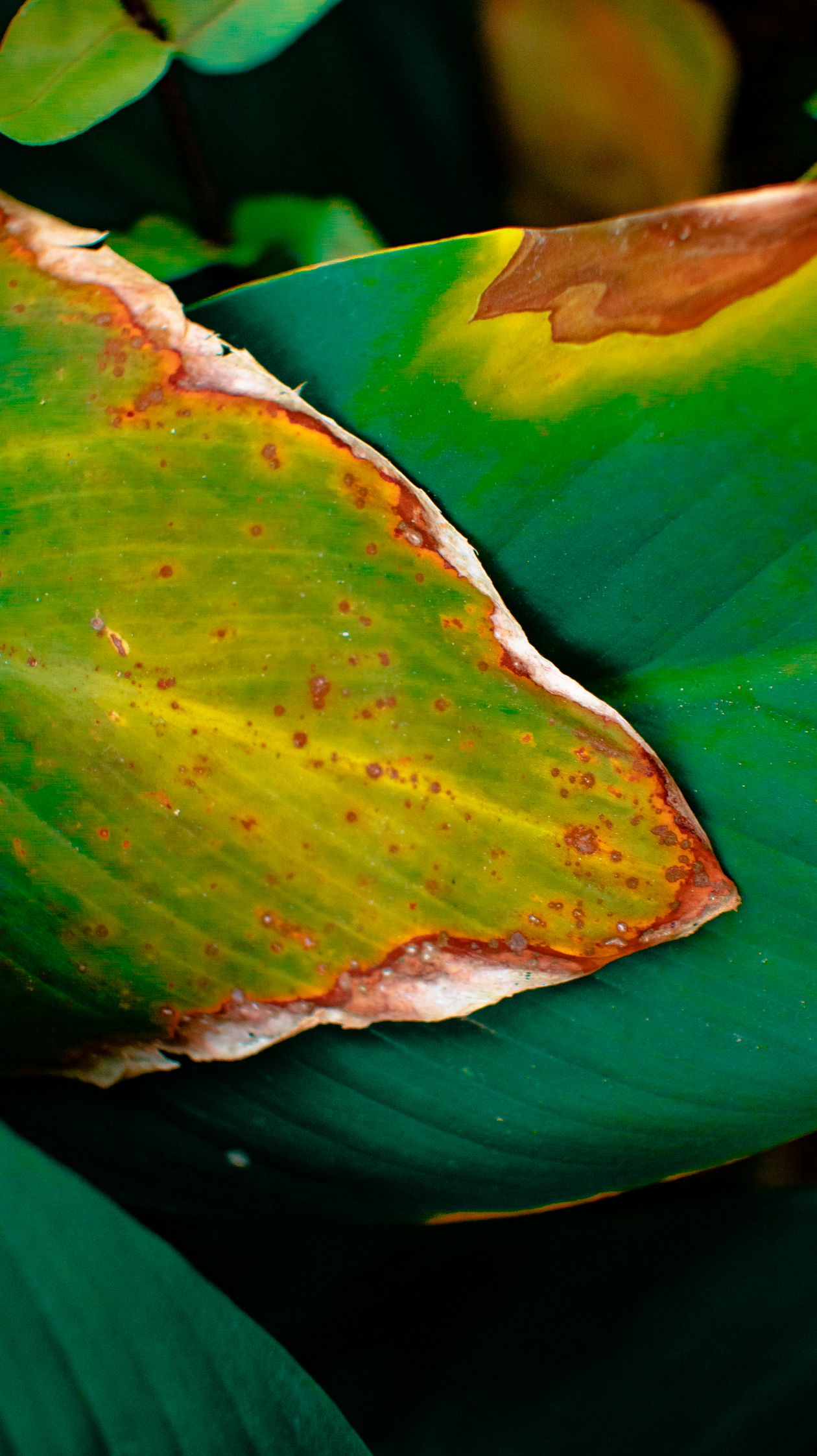
If the brown margins are on the older, fully grown outer leaves instead of the new inner ones, the more likely cause is nutrient burn from an over-concentrated solution. Running a high EC puts the roots under osmotic stress and limits water uptake (UF/IFAS). As water moves out toward the leaf edges, fertilizer salts ride along and pile up at the margins until they reach toxic levels, leaving a dry brown rim that creeps inward.
The fix is to flush the system and remix at a lower concentration. This is the same salt-stress mechanism behind general overfeeding damage, covered in our guide to salt buildup and overfeeding; for target numbers, see EC targets and how to mix solution.
Is it potassium? (Brown edges on older leaves)
Potassium deficiency also scorches leaf edges brown, but it shows a different signature: it starts on the oldest, lowest leaves. Potassium is mobile, so when the plant runs short it pulls potassium out of old leaves to feed new growth, and the old leaves pay the price (UC IPM; Iowa State Extension). The damage begins as yellowing at the leaf margin and tip, then turns into a scorched, curled brown edge while the new growth stays green. That’s the spatial opposite of calcium tipburn, which hits the young inner leaves.
There’s a twist that ties the two together: running potassium too high relative to calcium can block calcium uptake and worsen tipburn. In a peer-reviewed hydroponic lettuce trial, lowering the potassium-to-calcium ratio from 3.5:1 to 1.25:1 reduced the number of tipburned leaves, and lowering the solution’s EC reduced it far more sharply (Australian Journal of Agricultural Research). Keep the two in balance rather than pushing potassium hard.
Brown tips from water and dry air
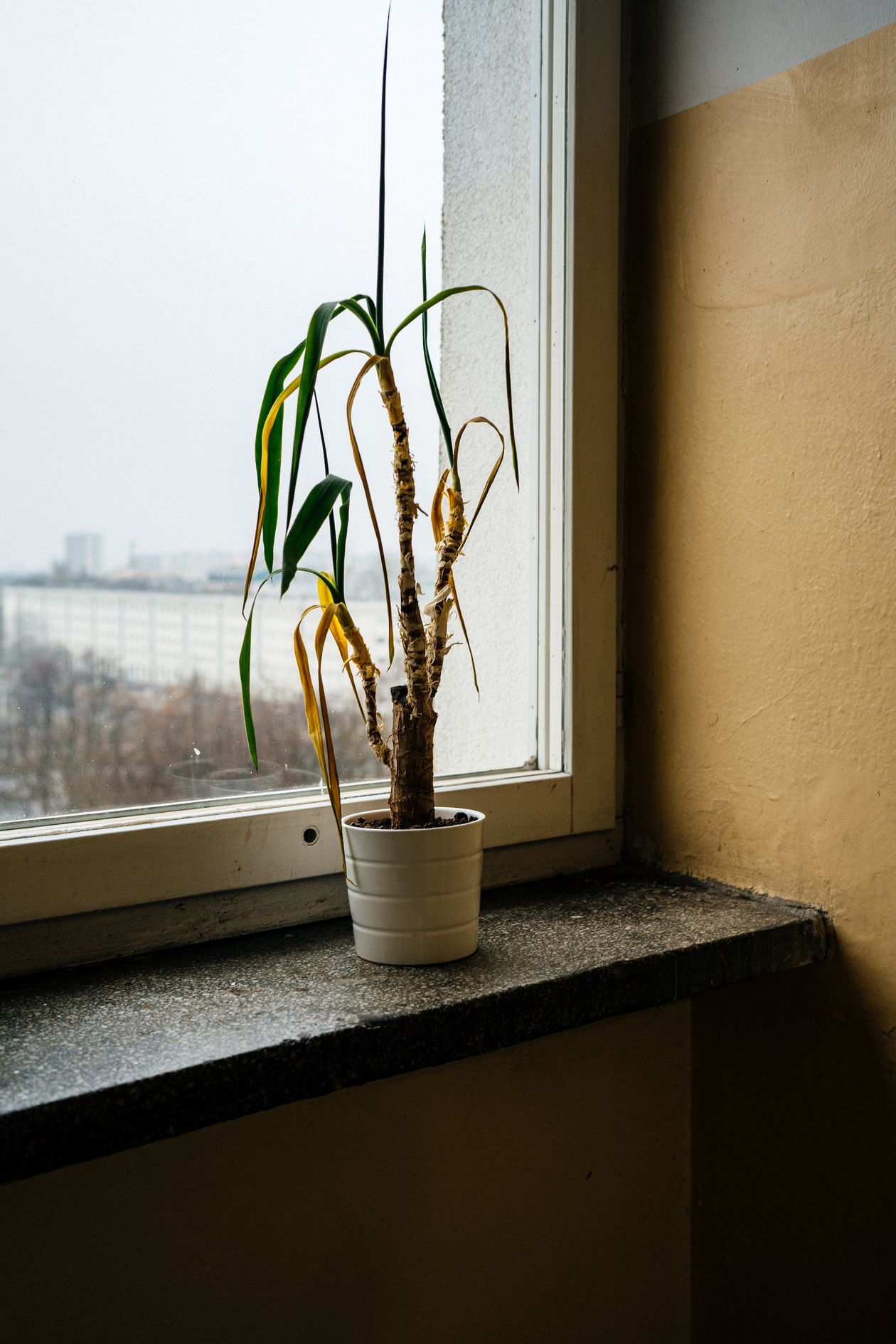
If you’re growing indoor plants in soil or coco rather than a recirculating hydro system, brown tips often trace back to tap water and dry air instead. Municipal water carries fluoride and chlorine, and a few sensitive species (spider plants, dracaenas, calatheas) accumulate those ions and deposit them at the leaf tips, where they burn the tissue (Iowa State Extension; University of Missouri IPM; NC State Extension).
Dry air makes it worse. Low humidity speeds up transpiration, which pulls even more mineral-laden water to the tips, where it evaporates and leaves the salts behind (Colorado State Extension). The fix here is the reverse of the hydroponic advice: flush the pot with rainwater or reverse-osmosis water, and raise humidity for sensitive plants with a cool-mist humidifier. That contradiction is exactly why a single humidity rule doesn’t fit every brown tip. It depends on whether the real problem is calcium transport or tissue desiccation.
Quick diagnostic chart
Brown tips aren’t one problem, they’re four, and the location on the plant tells you which. Match what you see to the row below before you change anything.
| Where the browning is | Most likely cause | What it looks like | First fix |
|---|---|---|---|
| New inner leaves | Calcium tipburn (transport) | Crisp brown margins on emerging leaves | Add downward airflow, lower EC, raise night humidity |
| Older outer leaves | Nutrient burn (high EC) | Even dry brown rim creeping inward | Flush, remix at lower concentration |
| Older lower leaves | Potassium deficiency | Yellow-then-brown scorched, curling edges | Rebalance potassium against calcium |
| Tips of all leaves | Tap water or dry air | Brittle brown tips, sometimes a yellow halo | Switch to RO or rainwater, raise humidity |
Brown tips are one of eight failure patterns that keep coming back until the underlying routine changes. The full diagnosis and prevention guide covers all eight, each with its fix, plus the 5-minute daily check that catches them before the leaf shows it.
The bottom line
Brown tips fool a lot of growers into dosing more nutrients when the real fix is usually physical. Before you touch the reservoir, read the plant.
- New inner leaves browning is tipburn: fix it with airflow and a lower EC, not more calcium.
- Older outer leaves point to salt burn from too-strong solution; flush and dilute.
- Older lower leaves point to potassium, and brittle tips on every leaf point to water quality.
Necrotic tissue never greens back up, so judge any fix by the new leaves that grow in afterward. Pair this with our yellow-leaf diagnosis guide and you’ve got most leaf symptoms covered.
Will brown leaf tips turn green again?
No. Once the tip tissue dries out and dies, it can’t recover or turn green again. Trim it off for looks if you want, but watch the new leaves coming in: those should grow without brown margins once you’ve fixed the cause. Judge your fix by the new growth, not the damaged leaves.
Should I add calcium or CalMag for brown tips?
Usually not as a first step. Most hydroponic fertilizers already carry plenty of calcium, and if the browning is on new inner leaves the problem is transport, not supply. Adding more calcium just raises your EC and can push the plant toward salt burn. Fix airflow and EC first.
Why does my fast, healthy lettuce get tipburn?
Because tipburn is a disorder of fast growth. Strong light, warmth, and a rich solution make the plant grow so quickly that calcium delivery to the newest leaves can’t keep up with demand. The healthiest-looking, fastest crops are often the most prone to it.
Can I just cut the brown tips off?
You can, with clean scissors, but it’s cosmetic only. Trimming doesn’t fix the airflow, EC, or water issue behind the browning, so it will come back on the next leaves unless you correct the underlying cause.
Sources (15)
- UC IPM (University of California), “Tipburn / Lettuce / Agriculture: Pest Management Guidelines,” retrieved 2026-06-18, https://ipm.ucanr.edu/agriculture/lettuce/tipburn/
- Agriculture Victoria, “Tipburn in Lettuce,” Vegetable Diseases, retrieved 2026-06-18, https://agriculture.vic.gov.au/biosecurity/plant-diseases/vegetable-diseases/tipburn-in-lettuce
- NASA Technical Reports Server, “Calcium-Related Leaf Injuries,” retrieved 2026-06-18, https://ntrs.nasa.gov/api/citations/19870012970/downloads/19870012970.pdf
- ASHS Journals, “Effects of Relative Humidity and Root Temperature on Calcium Concentration and Tipburn Development in Lettuce,” JASHS 109(2), retrieved 2026-06-18, https://journals.ashs.org/downloadpdf/view/journals/jashs/109/2/article-p128.pdf
- ASHS Journals, “Optimizing Downward Airflow to Prevent Lettuce Tipburn in Vertical Farms,” HortScience 60(12), retrieved 2026-06-18, https://journals.ashs.org/view/journals/hortsci/60/12/article-p2354.xml
- PMC (NCBI), “A Calcium-mobilizing Biostimulant Provides Tipburn Control Comparable to Vertical Airflow Fans in Greenhouse Hydroponic Lettuce ‘Rex’,” PMC12699602, retrieved 2026-06-18, https://pmc.ncbi.nlm.nih.gov/articles/PMC12699602/
- Purdue Extension, “Optimal Fertilizer Solution Concentration for Hydroponic Lettuce Production,” HO-309-W, retrieved 2026-06-18, https://www.extension.purdue.edu/extmedia/HO/HO-309-W.pdf
- UF/IFAS, “How Efficient Are Hydroponic Lettuce Production Systems in Nutrient Usage Under Low and High Salinity?” AE610, retrieved 2026-06-18, https://ask.ifas.ufl.edu/publication/AE610
- Huett, D. O. (1994), “Growth, Nutrient Uptake and Tipburn Severity of Hydroponic Lettuce in Response to Electrical Conductivity and K:Ca Ratio in Solution,” Australian Journal of Agricultural Research 45:251-267, retrieved 2026-06-18, https://doi.org/10.1071/AR9940251
- UC IPM (University of California), “Potassium Deficiency,” retrieved 2026-06-18, https://ipm.ucanr.edu/PMG/GARDEN/PLANTS/DISORDERS/potassiumdeficiency.html
- Iowa State University Extension, “Identifying Plant Nutrient Deficiencies: Potassium,” Yard and Garden, retrieved 2026-06-18, https://yardandgarden.extension.iastate.edu/identifying-plant-nutrient-deficiencies/older-leaves/effects-mostly-localized/potassium
- Iowa State University Extension, “Why Does My Houseplant Have Brown Leaf Tips and Edges?” Yard and Garden, retrieved 2026-06-18, https://yardandgarden.extension.iastate.edu/faq/why-does-my-houseplant-have-brown-leaf-tips-and-edges
- University of Missouri IPM, “Leaf Tipburn on Houseplants,” retrieved 2026-06-18, https://ipm.missouri.edu/meg/index.cfm?ID=599
- NC State Extension, “Chlorophytum comosum (Spider Plant),” Extension Gardener Plant Toolbox, retrieved 2026-06-18, https://plants.ces.ncsu.edu/plants/chlorophytum-comosum/
- Colorado State University Extension, “Leaf Scorch,” retrieved 2026-06-18, https://extension.colostate.edu/resource/leaf-scorch/