6 Sweet Breakfast Ideas That Feel Like Dessert
6 sweet breakfast ideas backed by science. Beta-glucan blunts blood sugar spikes; fisetin in strawberries fights aging. Healthy eating, zero sacrifice.
In this guide
Healthy eating has an image problem. The food that’s actually good for you often looks beige, tastes like effort, and feels like sacrifice. These six breakfasts push back on that. They taste like dessert. They’re grounded in peer-reviewed research. And every one of them uses ingredients you can grow on your kitchen counter with a basic hydroponic setup. If you’re already rotating through the savory high-protein breakfasts from our last guide, these pair naturally on alternate mornings.
Key Takeaways
- Just 3g of oat beta-glucan per serving blunts postprandial blood sugar spikes (EFSA, 2025).
- 7g of chia seeds in yogurt cuts subsequent meal energy intake by 25.4% in a clinical trial (PMC, 2017).
- Blueberry anthocyanins, converted by gut bacteria into brain-crossing metabolites, improve memory and executive function in both children and older adults.
- Fisetin in strawberries triggers apoptosis in senescent cells and cut LDL cholesterol in the ErdBEHR clinical trial.
- Hydroponic basil microgreens under high LED intensity carry 97% more phenolic compounds than soil-grown counterparts (PMC, 2025).
Why Do Sweet Breakfasts Get Such a Bad Reputation?
The problem isn’t sweetness. It’s glycemic load with no fiber or protein to slow it down. In 2025, the European Food Safety Authority confirmed a direct causal link between oat beta-glucan and reduced postprandial blood glucose peaks (PMC, 2025). A 2021 meta-analysis of 8 randomized controlled trials in 407 adults with type 2 diabetes found that just 3.25g of oat beta-glucan daily for 4.5 weeks cut HbA1c by 0.47% and lowered fasting glucose by 0.75 mmol/L (PMC, 2021). Same sweet oat base. Completely different metabolic outcome. Structure matters more than flavor.
These six recipes use that logic. Fruit delivers natural sugars alongside fiber, polyphenols, and minerals. Oats, chia, and yogurt slow digestion and blunt the glucose curve. The herbs add bioactive compounds most people don’t realize they’re missing at breakfast.
The 6 Sweet and Fruit-Forward Breakfasts
Primary Benefit by Breakfast
Relative primary benefit. All six target distinct body systems.
Recipe 1: Vanilla-Oat Custard Pudding
Herb used: Fresh mint or hydroponic basil leaves.
Why it works: Oat beta-glucan forms a viscous gel in your gut that slows starch digestion and delays glucose absorption. Clinical data shows the satiety hormone cholecystokinin (CCK) rises linearly with beta-glucan intake, and calorie intake at the next meal drops by over 400 kJ at doses above 5g (PubMed, 2009). One cup of rolled oats delivers roughly 4g.
Ingredients: 1 cup rolled oats, 1.5 cups milk or oat milk, 1 tsp vanilla extract, 1 tbsp honey, fresh berries and mint to serve.
Method: Mix oats and milk in a jar. Refrigerate overnight. Stir in vanilla and honey in the morning. Top with berries and mint.
Recipe 2: Chocolate-Chia Breakfast Parfait
Why it works: Chia seeds expand 5 to 6 times their original volume when hydrated, forming a thick gel in your gut (think of it as a natural slow-release valve for digestion). That gel slows glucose absorption and keeps you feeling full longer. A 2017 randomized crossover trial of 24 healthy subjects found that just 7g added to yogurt cut lunch calorie intake by 25.4% compared to plain yogurt (PMC, 2017). Longer-term, chia supplementation reduced systolic blood pressure by 3.27 mmHg and CRP by 1.18 mg/L in overweight adults (PMC, 2024).
Ingredients: 3 tbsp chia seeds, 1 cup oat milk or coconut milk, 1 tbsp cocoa powder, 1 tsp maple syrup, sliced strawberries and banana to serve.
Method: Whisk chia, milk, cocoa, and maple syrup. Refrigerate 4 hours or overnight. Layer with sliced fruit.
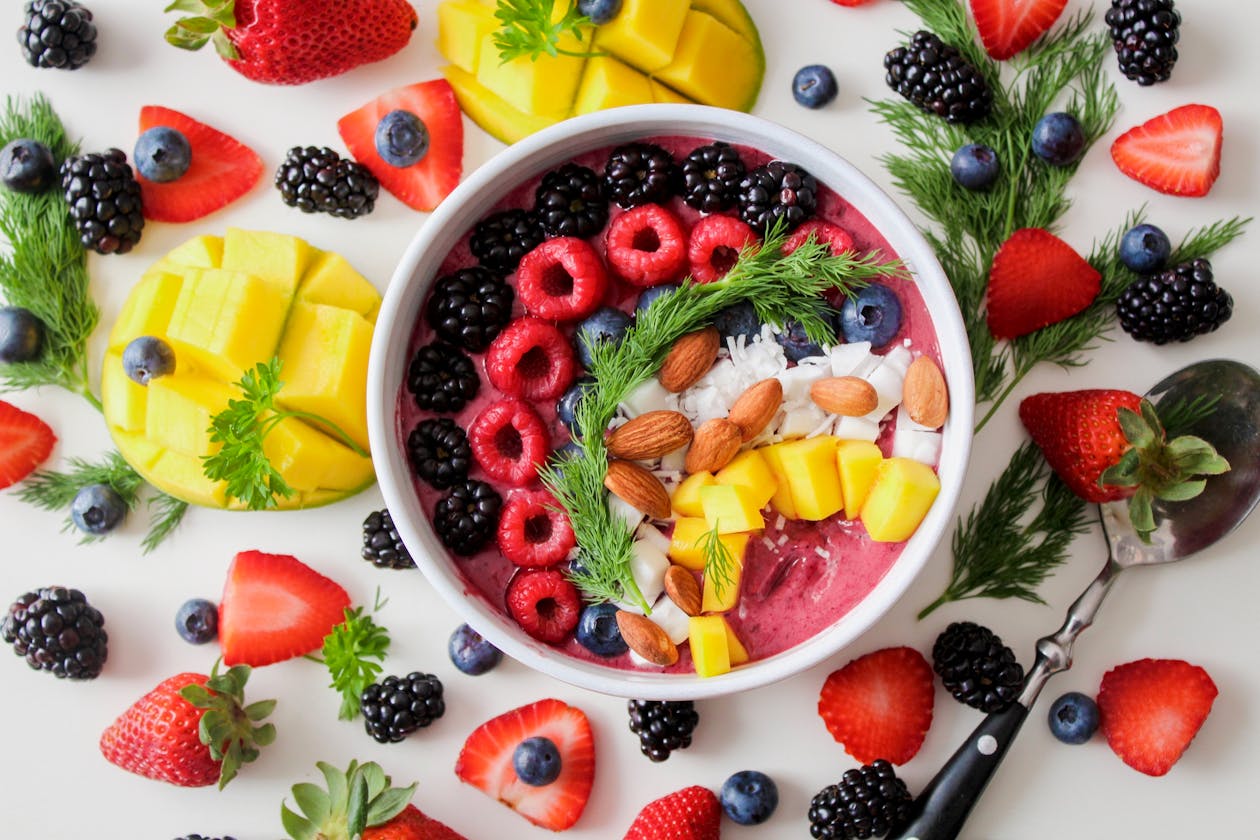
Recipe 3: Wild Blueberry Frozen Yogurt Whip
Why it works: Blueberry anthocyanins give the fruit its deep blue-purple color and represent up to 60% of its total polyphenols. They don’t work in their original form, your gut bacteria break them down into smaller compounds (like hydroxycinnamic acids and hippuric acids) that can actually cross into the brain. In plain terms: your microbiome converts blueberries into a brain-protective molecule. A 2024 double-blind RCT in adults with metabolic syndrome found that 1 cup of freeze-dried blueberries daily improved self-rated calmness by 11.6% (P=0.01), with those specific microbial metabolites correlating directly with better attention and memory (PMC, 2024). Higher daily anthocyanin intake is also associated with a 32% lower rate of myocardial infarction, independent of traditional risk factors.
Ingredients: 1 cup frozen blueberries, 3/4 cup Greek yogurt, 1 tsp freeze-dried blueberry powder (optional), drizzle of honey.
Method: Blend blueberries and yogurt until smooth. Serve immediately or freeze 30 minutes for a firmer, soft-serve texture.
Recipe 4: Fresh Strawberry Panna Cotta Parfait
Why it works: Strawberries contain fisetin, a natural compound that acts like a cellular cleaner: it selectively triggers the death of senescent cells (also called “zombie cells”, old, damaged cells that refuse to die and instead leak inflammation into surrounding tissue). The 2024 ErdBEHR clinical trial found that a high-polyphenol strawberry-based diet significantly lowered LDL cholesterol, total cholesterol, and CRP in healthy older adults. Gene expression analysis in the highest-dose group showed upregulation of genes involved in apoptotic signaling in circulating white blood cells (Aging Biology, 2024).
The senolytic dose from animal studies would scale to about 7g of fisetin for a 70kg human. A cup of fresh strawberries contains just 0.16 mg. The ErdBEHR food-based data still showed lipid and inflammatory benefits, suggesting cumulative polyphenol load across multiple pathways matters more than any single compound hitting a threshold dose.
Ingredients: 1 cup fresh strawberries (pureed), 1/2 cup coconut cream, 1 tsp agar-agar, 1 tsp vanilla extract, fresh sliced strawberries to serve.
Method: Warm coconut cream and dissolve agar-agar. Cool slightly. Layer with strawberry puree in jars. Refrigerate 2 hours until set. Top with fresh slices.
Recipe 5: Tropical Mango-Banana Nice Cream Bowl
Herb used: Fresh hydroponic mint.
Why it works: A medium banana provides 420mg of potassium, 32mg of magnesium, and 25% of your daily Vitamin B6. That B6 is a cofactor for converting tryptophan into serotonin and then melatonin. A 6-week clinical trial in primary insomnia patients found a bedtime banana snack improved Pittsburgh Sleep Quality Index scores from 9.3 to 4.7 (P=0.01) (PMC, 2024). Mango adds recovery support: 600g/day of mango puree in elite beach volleyball players cut CRP by 1.6 mg/L and creatine kinase by 290.1 U/L versus placebo (PMC, 2025).
Ingredients: 2 frozen bananas, 1 cup frozen mango chunks, splash of oat milk, fresh mint and granola to serve.
Method: Blend frozen fruit with oat milk until smooth and thick. Serve immediately topped with mint and granola.
Recipe 6: Hydroponic Basil and Watermelon Mocktail-Bowl
Why it works: Sweet basil grown in hydroponic systems carries higher leaf concentrations of potassium, calcium, magnesium, iron, and zinc than field-grown plants (PMC, 2024). Grown as microgreens under high LED intensity (300 μmol m-2 s-1) with moderate nutrient restriction, total phenolic content rises by 97% and DPPH antioxidant activity jumps by 54% (PMC, 2025). Watermelon adds 91.5% water content and lycopene for cardiovascular and skin support.
Ingredients: 3 cups cubed watermelon, juice of 1 lime, pinch of flaky salt, handful of fresh hydroponic basil microgreens, optional mint leaves.
Method: Toss watermelon with lime juice and salt. Top with basil microgreens and mint just before serving.
Why Growing the Herbs Yourself Changes These Recipes
Store-bought basil spends days in transit. Antioxidant activity declines fast after harvest. Hydroponic basil stored at 15°C lasts about 12.5 days. Drop to 0°C and that shrinks to 1.6 days because of chilling injury (PMC, 2023). Supermarket basil is almost always compromised before it reaches your kitchen.
Basil microgreens harvested directly and eaten immediately carry a phenolic punch that’s in a completely different category. And the setup is simpler than most people expect. The Kratky method is a passive hydroponic technique with no pumps, no timers, and minimal cost. Pair it with the beginner’s guide to pH and nutrients and you’ve got everything you need to start your first batch.
Our standard microgreen setup: a clear 1-litre jar, net cup, rockwool cube, and dilute Hoagland nutrient solution at EC 1.2. Basil microgreens from seed to harvest in 10 to 14 days. Total material cost under $5 per batch.
If you’re growing leafy greens alongside these herbs, the 8 best leafy greens for hydroponics covers which varieties need the least attention. Strawberries are the other ingredient worth growing yourself: you can grow them hydroponically indoors year-round for the freshest, most fisetin-rich berries in Recipe 4.
Does eating oats for breakfast really keep blood sugar stable?
Yes. The EFSA confirmed that 3g of oat beta-glucan per 30g of available carbohydrates blunts postprandial glucose peaks. A 2021 meta-analysis of 8 RCTs in 407 adults with type 2 diabetes found 3.25g/day over 4.5 weeks cut HbA1c by 0.47% and fasting glucose by 0.75 mmol/L (PMC, 2021).
How much chia seed do you need to feel full?
A 2017 randomized crossover trial found 7g of chia seeds in yogurt was the minimum effective dose. It reduced hunger scores (P=0.033) and cut ad libitum lunch energy intake by 25.4% compared to plain yogurt. The 14g dose offered no measurable additional benefit, so 7g is the sweet spot (PMC, 2017).
Can blueberries actually improve memory and focus?
Clinical evidence says yes. A 6-month double-blind RCT found 1 cup of freeze-dried blueberries daily improved self-rated calmness by 11.6% (P=0.01). fMRI scans in older adults showed increased blood-oxygen activation in the middle frontal gyrus, a region tied directly to working memory and executive function (PMC, 2024).
What is fisetin and why does it matter for healthy aging?
Fisetin is a natural flavonol found in strawberries that acts as a senolytic: it selectively triggers apoptosis in senescent (zombie) cells that accumulate with age and release inflammatory signals. The ErdBEHR clinical trial found a high-polyphenol strawberry diet significantly reduced LDL cholesterol, total cholesterol, and CRP in healthy older adults (Aging Biology, 2024).
Do I need a hydroponic setup to make these recipes?
No. Store-bought herbs work fine in all six recipes. The hydroponic advantage is potency: basil grown under optimized LED conditions carries up to 97% more phenolic compounds than soil-grown basil. A basic Kratky jar on a sunny windowsill gets you there with almost no cost or effort. The setup guide in our beginner’s hydroponics overview walks you through the basics.
Sources (18)
- EFSA NDA Panel, “Oat beta-glucans and reduction of postprandial glucose peak: Evaluation of a health claim pursuant to Article 13(5) of Regulation (EC) No 1924/2006,” retrieved 2026-06-15, https://pmc.ncbi.nlm.nih.gov/articles/PMC12921417/
- Lyly M. et al., “Oat beta-glucan increases postprandial cholecystokinin levels, decreases insulin response and extends subjective satiety in overweight subjects,” retrieved 2026-06-15, https://pubmed.ncbi.nlm.nih.gov/19753601/
- He L.X. et al., “The Metabolic Effects of Oats Intake in Patients with Type 2 Diabetes: A Systematic Review and Meta-Analysis,” retrieved 2026-06-15, https://pmc.ncbi.nlm.nih.gov/articles/PMC4690088/
- Hlebowicz J. et al., “Effect of muesli with 4g oat beta-glucan on postprandial blood glucose, gastric emptying and satiety in healthy subjects: a randomized crossover trial,” retrieved 2026-06-15, https://pubmed.ncbi.nlm.nih.gov/18978166/
- Wang Y. et al., “Effect of oats and oat beta-glucan on glycemic control in diabetes: a systematic review and meta-analysis of randomized controlled trials,” retrieved 2026-06-15, https://pmc.ncbi.nlm.nih.gov/articles/PMC9438016/
- Ullah R. et al., “Chia seeds (Salvia hispanica L.): A therapeutic weapon in metabolic disorders,” retrieved 2026-06-15, https://pmc.ncbi.nlm.nih.gov/articles/PMC9834868/
- Tavares Toscano L. et al., “Chia seed (Salvia hispanica L.) added yogurt reduces short-term food intake and increases satiety,” retrieved 2026-06-15, https://pmc.ncbi.nlm.nih.gov/articles/PMC5621364/
- Dos Santos Quaresma M.V. et al., “Effects of chia seed supplementation on cardiometabolic health in overweight subjects: a systematic review and meta-analysis of RCTs,” retrieved 2026-06-15, https://pmc.ncbi.nlm.nih.gov/articles/PMC11406937/
- Zhao Y. et al., “Enhanced Bioavailability and Health Benefits of Blueberry Anthocyanins: An Updated Review,” retrieved 2026-06-15, https://pmc.ncbi.nlm.nih.gov/articles/PMC12985910/
- Skrovankova S. et al., “Bioactive Compounds and Antioxidant Activity in Different Types of Berries,” retrieved 2026-06-15, https://pmc.ncbi.nlm.nih.gov/articles/PMC7442370/
- Khalid S. et al., “Chronic and postprandial effect of blueberries on cognitive function, alertness and mood in healthy young adults,” retrieved 2026-06-15, https://pmc.ncbi.nlm.nih.gov/articles/PMC10972710/
- Yousefzadeh M.J. et al., “Fisetin is a senotherapeutic that extends healthspan and lifespan,” EBioMedicine (2018), Vol. 28, pp. 209-218, retrieved 2026-06-15, https://pubmed.ncbi.nlm.nih.gov/30279143/
- Courtney R. et al., “High-Dose Polyphenol-Rich Nutrition Improves Lipid and Inflammation Profiles and Can Trigger Apoptotic Signaling in Healthy Older Adults: The ErdBEHR Study,” Aging Biology (2024), retrieved 2026-06-15, https://agingbiologyjournal.org/Archive/Volume3/20240020/agingbio.20240020.pdf
- Ramos-Lopez O. et al., “Bedtime banana and milk intake on sleep and biochemical parameters,” retrieved 2026-06-15, https://pmc.ncbi.nlm.nih.gov/articles/PMC11389809/
- Malek L. et al., “Impact of Mango Puree Supplementation on Inflammatory, Muscle Damage, and Selected T-Cell Biomarkers in Elite Beach Volleyball Players,” retrieved 2026-06-15, https://pmc.ncbi.nlm.nih.gov/articles/PMC12899351/
- Ibrahim M.H. et al., “Effects of Micronutrients on the Growth and Phytochemical Composition of Basil in the Field and Greenhouse (Hydroponics and Soil Culture),” retrieved 2026-06-15, https://pmc.ncbi.nlm.nih.gov/articles/PMC11397607/
- Modulation of Phytochemical Composition and Antioxidant Capacity in Basil Microgreens by Light Intensity and Nutrient Solution (2025), retrieved 2026-06-15, https://pmc.ncbi.nlm.nih.gov/articles/PMC12943826/
- Kasampalis D.S. et al., “Preharvest and postharvest techniques that optimize the shelf life of fresh basil: a review,” retrieved 2026-06-15, https://pmc.ncbi.nlm.nih.gov/articles/PMC10514919/