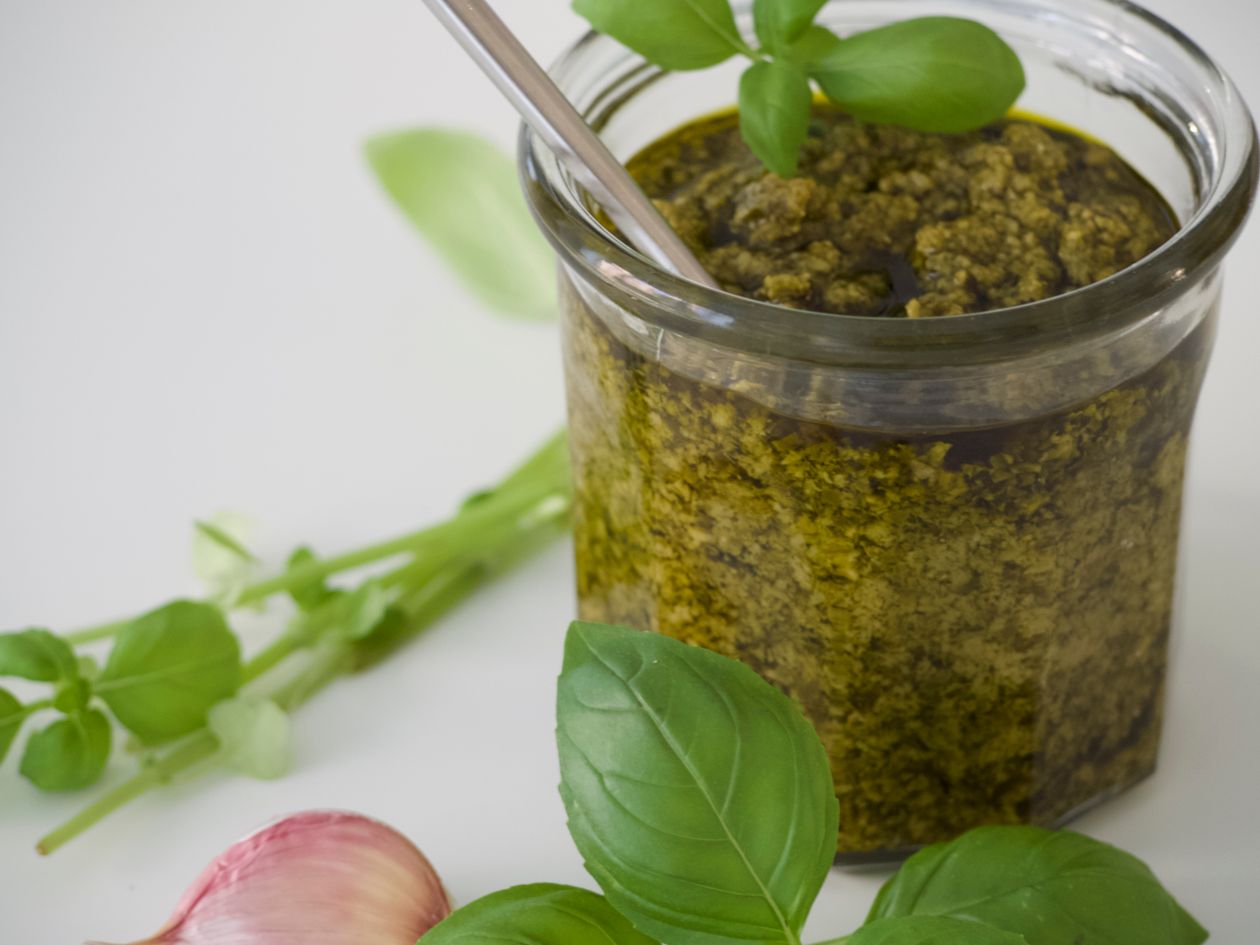
5 Best Hydroponic Pesto Recipes for Your Harvest
5 hydroponic pesto recipes using basil, kale, arugula, mint, and parsley, with the real enzyme science behind browning and a 3-day fridge storage limit.
In this guide
If you’re growing basil, kale, or arugula hydroponically and wondering what to do with a big harvest, pesto is the fastest path from grow light to plate. Hydroponic basil’s aroma compound levels shift measurably with light spectrum and intensity, which means what you’re growing under LEDs can taste noticeably different from a supermarket bunch (Walters & Currey, 2023, Frontiers in Plant Science, more on that below). Pair that with skipping soil-borne grit and pest pressure indoors, and pesto is one of the best ways to show off what you grew. Already growing your own basil? The beginner’s guide to hydroponics covers the setup basics if you’re not there yet.
This guide walks through five pesto recipes built entirely around what you can realistically grow at home, from the classic Genovese to a Tex-Mex-leaning mint-cilantro version. Along the way, we’ll cover the actual enzyme chemistry behind pesto browning (it’s not “heat,” it’s oxidation) and a corrected storage timeline, since most pesto advice online overstates how long it safely keeps.
Key Takeaways
- Basil's aroma volatile concentrations shift with light spectrum and growing season, so hydroponic basil under LEDs can taste meaningfully different from soil-grown basil (Walters & Currey, 2023).
- Pesto browns because crushing leaves exposes phenolic compounds to polyphenol oxidase and oxygen at once, the same enzymatic browning reaction seen in cut apples (Munoz-Pina et al., 2023).
- Blanching hard greens like kale or arugula for 30 seconds deactivates the enzymes that cause browning, the same principle used in commercial vegetable processing (UMN Extension).
- Homemade pesto keeps about 3 days refrigerated, not the 5-7 days many recipe sites claim (NCHFP).
How Do Hydroponic Herbs Change the Way Pesto Tastes?
Basil’s key aroma volatiles, including linalool and methyl eugenol, vary significantly depending on light spectrum, light intensity, and growing season, with some compounds shifting three to four times in concentration between treatments (Walters & Currey, 2023, Frontiers in Plant Science). That means the LED setup you’re growing under is doing real work on flavor, not just yield. Dialing in pH and nutrient levels is part of getting that flavor consistent harvest to harvest.
Indoor hydroponic setups also avoid most soil-borne pests, so many home growers use little to no pesticide, and there’s no soil grit to wash out of the leaves. That’s a real, practical difference for a sauce where the green ingredient is doing most of the work. It doesn’t mean hydroponic herbs are automatically “better” in every recipe, just that the variables you control (light, nutrients, harvest timing) translate more directly to what ends up in the jar.
🌿 Harvest in the Morning When You Can
Pick basil, kale, or other herbs before the day heats up. Leaves harvested earlier in the day tend to be crisper and more aromatic before heat and direct light cause them to wilt slightly. Once washed, dry your leaves completely. Leftover water dilutes the pesto, speeds up color loss, and gives bacteria a better environment to grow in. A salad spinner or a thorough pat-down with paper towels works fine.
🌿 Keep It Green: The Blanching Technique
Pesto turning brown within hours is an enzymatic browning reaction: crushing the leaves ruptures plant cells and exposes phenolic compounds to polyphenol oxidase (PPO) and oxygen at the same time (Munoz-Pina et al., 2023, Current Research in Food Science). For Kale, Arugula, or Parsley pesto, blanch the leaves in boiling water for 30 seconds, then plunge them into ice water. Heat denatures the PPO enzyme, the same mechanism used to stabilize color in commercially frozen vegetables (UMN Extension), so the green holds for days instead of going murky overnight. Basil is too delicate to blanch without losing flavor, so the oil-seal storage method below is the better defense for basil pesto specifically.
5 Pesto Recipes to Make With Your Hydroponic Herbs
Recipe 1: Sweet Basil Pesto (The Classic Genovese)
This is the one that started it all: rich, creamy, deeply savory, with the unmistakable sweet-basil aroma. If you’re growing Sweet Basil hydroponically, one of the easier herbs to grow indoors, this is the simplest way to use a big harvest.
Ingredients
- 2 cups fresh Sweet Basil leaves (hydroponic, morning-harvested)
- 1/3 cup pine nuts, lightly toasted for extra depth
- 1/2 cup freshly grated Parmigiano-Reggiano
- 3 garlic cloves
- 1/2 tsp salt
- 1/4 tsp black pepper
- 1/2 cup high-quality extra virgin olive oil
Add garlic, pine nuts, salt, and pepper to a food processor and pulse until coarsely chopped. Add the basil, then pulse a few times while slowly streaming in the olive oil until coarse and creamy. Fold in the Parmesan last, never blended at high speed.
âš ï¸ Why the Order Matters: Process the garlic, nuts, and salt first, before the basil goes in. Crushing basil ruptures its cells and exposes phenolic compounds to PPO and oxygen at the same time, which is what drives browning and bitterness, not “heat” from the blade as some recipes claim. Letting the harder ingredients take the first round of processing, then adding oil as soon as the basil joins, limits how long the leaves sit exposed before the oil coats and protects them.
How to Serve It
With pasta: Trofie, penne, or spaghetti are the classic matches. Toss the pesto with freshly cooked pasta off the heat, never on the stove, since heat dulls both the aroma and the color. Reserve a cup of pasta water before draining and use a splash to emulsify the sauce so it clings rather than pools.
As a spread: On ciabatta with tomatoes, mozzarella, and a drizzle of olive oil for a Caprese sandwich, or as a base sauce under chicken pizza.
💡 Pine Nuts Are Expensive: Here’s What to Swap In
Pine nuts run $20+ per pound and aren’t always easy to find. Cashews give the closest creamy texture, walnuts add a richer, earthier note, and unsalted roasted peanuts work surprisingly well at a fraction of the cost. Any of the three keeps the same smooth, sauce-like consistency.
Recipe 2: Kale Pesto (The Deep, Earthy Pesto)
Kale pesto is a different beast: deep forest green, denser in texture, with an earthy flavor that stands up to hearty dishes. The trick is managing kale’s natural bitterness. Walnuts mellow the sharpness and fresh lemon juice cuts through it. Don’t skip either.
Ingredients
- 2 cups Curly Kale or Tuscan Kale leaves, stems removed
- 1/3 cup walnuts, toasted
- 1/2 cup freshly grated Parmesan
- 2 garlic cloves
- 1-2 tbsp fresh lemon juice (not optional)
- 1/2 tsp salt
- 1/2 cup extra virgin olive oil
How to Serve It
With pasta: Zucchini noodles or whole-wheat pasta lean into the “hearty but healthy” angle kale pesto delivers best.
In a grain bowl: Spoon over quinoa or brown rice loaded with roasted vegetables. It works as both dressing and sauce.
In scrambled eggs: A tablespoon stirred in at the end upgrades a basic breakfast. If eggs are already part of your morning rotation, the savory high-protein breakfast ideas use the same fresh-herb-after-cooking approach.
Recipe 3: Mint-Cilantro Pesto (Fresh and Tex-Mex Leaning)
This one breaks the Italian pesto rulebook, and it’s better for it. Equal parts fresh mint and cilantro make a sauce that’s cooling, citrusy, and punchy. Both herbs grow well hydroponically and share a system easily if you’re running a multi-channel NFT or DWC setup.
Ingredients
- 1 cup fresh cilantro leaves
- 1 cup fresh mint leaves
- 1/3 cup toasted almonds or cashews
- 1/4 cup Cotija cheese, or 2 tbsp nutritional yeast for a vegan version
- 2 garlic cloves
- 1 jalapeno or green chili, seeds removed
- 2 tbsp fresh lime juice
- 1/2 tsp salt
- 1/2 cup extra virgin olive oil or avocado oil
How to Serve It
As a drizzle for grilled meats: Spoon over grilled steak, chicken thighs, or charred shrimp. The cooling mint against smoky char works well.
As a dipping sauce: Its looser consistency makes it a natural dip for pita, grilled flatbread, or tacos.
Over rice: Toss with warm rice and a squeeze of lime for a quick cilantro-lime side.
💡 One Combination to Skip: Don’t pair this with regular wheat pasta. The fresh, grassy flavor doesn’t sit well against heavy starches. It’s built for grilled or roasted applications.
Recipe 4: Arugula Pesto (Peppery and Bold)
Arugula pesto has a signature bite, peppery and slightly spicy in a way no other green replicates. It’s a practical, nearly-free sauce if you’re growing arugula in NFT channels, since it grows fast and abundantly.
Ingredients
- 2 cups fresh arugula
- 1/3 cup walnuts or pecans
- 1/2 cup Pecorino Romano or Parmesan (the saltiness balances arugula’s heat)
- 2 garlic cloves
- 1 tsp lemon zest
- 1/2 tsp salt
- 1/2 cup extra virgin olive oil
âš ï¸ Garlic Note: Arugula already brings its own peppery heat. Where basil pesto can handle 3 cloves easily, stick to 2 cloves max here. If raw garlic’s sharp bite bothers you, drop to 1.
How to Serve It
With gnocchi: The starchiness of potato gnocchi softens arugula’s edge just enough.
In warm potato salad: Toss roasted or boiled potatoes with arugula pesto instead of mayo for something lighter and more interesting.
On bruschetta: Spread on toasted sourdough and top with blistered cherry tomatoes for a two-minute appetizer.
With lamb: The peppery bite cuts through the richness of lamb chops or a rack of lamb.
Recipe 5: Parsley Pesto (Crisp and Herbaceous)
Parsley pesto is the unsung one. Where basil is aromatic and kale is earthy, parsley is simply clean, bright, and light enough to be the most versatile of the five. Italian flat-leaf parsley, not the curly decorative kind, is what you want, and it’s one of the easier herbs to grow hydroponically.
Ingredients
- 2 cups Italian flat-leaf parsley leaves, thick stems removed
- 1/3 cup toasted almonds or roasted peanuts
- 1/2 cup freshly grated Parmesan
- 3 garlic cloves
- 2 tbsp fresh lemon juice plus zest of 1 lemon
- 1/2 tsp salt
- 1/2 cup extra virgin olive oil
Parsley has less moisture than basil, so the mixture can turn thick and pasty fast. If it feels too dense, add 1-2 tablespoons of cold water and pulse again. That loosens the sauce without diluting flavor with extra oil.
How to Serve It
Over roasted vegetables: Toss roasted potatoes, carrots, or Brussels sprouts with parsley pesto right before serving. The brightness lifts the sweetness of the caramelization.
With fish: Salmon, cod, halibut: any white or fatty fish pairs naturally here.
Stirred into soup: A spoonful added to minestrone or vegetable soup just before serving gives it an instant lift.
In sandwiches: Spread inside a turkey or chicken sandwich instead of mayo for something lighter and brighter.
Which Pesto Should You Make, at a Glance
| Recipe | Fat base | Nut/seed swap if needed | Best pairing | Browning risk |
|---|---|---|---|---|
| Sweet Basil (Genovese) | Extra virgin olive oil | Cashews, walnuts, or roasted peanuts for pine nuts | Pasta, Caprese sandwich | High; basil can’t be blanched, use the oil seal |
| Kale | Extra virgin olive oil | Walnuts (already specified) | Zoodles, grain bowls, scrambled eggs | Low if blanched 30 seconds first |
| Mint-Cilantro | Avocado or olive oil | Cashews for almonds | Grilled meats, tacos, rice | Low; herbs are tender, used fast |
| Arugula | Extra virgin olive oil | Pecans for walnuts | Gnocchi, potato salad, bruschetta | Low if blanched 30 seconds first |
| Parsley | Extra virgin olive oil | Roasted peanuts for almonds | Roasted vegetables, fish, soup | Low if blanched 30 seconds first |
How Long Does Homemade Pesto Actually Last?
Fresh pesto without preservatives is perishable, and the storage advice repeated across most recipe sites is looser than what food-safety researchers actually recommend.
🧊 In the Refrigerator: About 3 Days, Not 5-7
The National Center for Home Food Preservation’s pesto storage guidance states plainly that fresh pesto “should be made fresh and stored in the refrigerator no more than” about 3 days, refrigerated continuously, in an airtight glass jar (NCHFP). That’s tighter than the 5-7 days you’ll see quoted elsewhere. Pesto is a low-acid mixture of basil, garlic, and oil, and an oil layer creates an oxygen-poor environment that can support Clostridium botulinum growth if the mixture sits too long or isn’t kept cold (Abouelhassan et al., 2014, Food Protection Trends). The oil-seal trick still helps with color, just don’t treat it as a reason to push past day 3.
🧊 In the Freezer: Glass Jars, Not the Fridge Door
NCHFP’s guidance is to package pesto in glass freezer jars or plastic freezer boxes, leaving half an inch of headspace, then label and freeze. For portioning, an ice cube tray works well in practice: freeze solid, then pop the cubes into a labeled freezer bag. Drop 1-2 cubes directly into hot, freshly drained pasta and they melt in about 30 seconds, no separate reheating step required.
Start With What You Grow
The five pestos here cover the full flavor range, from rich and creamy to fresh and fiery, and every one can be made with plants you’re already growing or can easily add to a hydroponic system. Basil, kale, arugula, mint, cilantro, and parsley all do well in NFT, DWC, or Kratky setups and give consistent indoor yields year-round.
The difference between store-bought pesto and one blended from leaves you cut this morning is real, especially once you’re dialing in light and nutrients for flavor rather than just growth. Pick the recipe that fits tonight’s dinner, and if you’re hunting for more ways to use a hydroponic harvest, the summer recipes using hydroponic herbs round out the rest of the cooking lineup. For a harvest bigger than any recipe needs, drying herbs in an apartment covers what keeps and what should go straight to the freezer.
Can I use a regular blender instead of a food processor to make pesto?
Yes, but pulse it rather than running it continuously. Crushing leaves ruptures plant cells and exposes phenolic compounds to polyphenol oxidase and oxygen at the same time, the same enzymatic browning reaction documented in cut apples and bruised produce (Munoz-Pina et al., Current Research in Food Science, 2023). Short pulses limit how long the basil sits exposed before the oil coats it.
My hydroponic herbs taste a bit milder than store-bought ones. How do I fix the pesto flavor?
Bump up the Parmesan slightly, since it amplifies savory depth, add an extra pinch of salt, and grate in more lemon zest. Zest is one of the most effective ways to lift aromatics without adding liquid. Basil’s aroma compound levels also shift with light exposure, so a few more hours under your grow light before harvest can help (Walters & Currey, Frontiers in Plant Science, 2023).
Can I substitute extra virgin olive oil with other oils?
Yes, depending on the recipe. EVOO suits Sweet Basil or Kale pesto’s Italian profile. For lighter options like Mint-Cilantro or Parsley pesto, avocado or grapeseed oil work well since they’re neutral enough to let the herbs lead. Avoid unrefined coconut oil and sesame oil, both of which clash with or override the herb flavors.
Why did my pesto turn brown even though I used the oil seal trick?
The most common reason is trapped air pockets inside the jar. Pouring oil on top only seals the surface; if air bubbles are trapped inside the pesto itself, oxidation continues from the inside out. Press the pesto flat with the back of a spoon to work out air pockets before adding the oil layer.
How long does homemade pesto actually last in the fridge?
About 3 days, according to the National Center for Home Food Preservation (NCHFP). That’s shorter than a lot of recipe sites claim. Pesto is a low-acid mixture of basil, garlic, and oil, and oil-sealed low-acid foods can support Clostridium botulinum growth if they sit too long, so refrigerate it promptly and don’t push past that window.
Sources (5)
-
Walters, K.J. & Currey, C.J. “Variation in supplemental lighting quality influences key aroma volatiles in hydroponically grown ‘Italian Large Leaf’ basil.” Frontiers in Plant Science, 2023. https://pmc.ncbi.nlm.nih.gov/articles/PMC10332322/ retrieved 2026-06-17
-
Munoz-Pina, S. et al. “Enzymatic browning: The role of substrates in polyphenol oxidase mediated browning.” Current Research in Food Science, 2023. https://pmc.ncbi.nlm.nih.gov/articles/PMC10637886/ retrieved 2026-06-17
-
University of Minnesota Extension. “Preserving food at home: Blanching vegetables.” UMN Extension. https://extension.umn.edu/preserve-your-own-food/blanching-vegetables retrieved 2026-06-17
-
National Center for Home Food Preservation. “Freezing Pesto.” University of Georgia. https://nchfp.uga.edu/how/freeze/vegetable/freezing-pesto/ retrieved 2026-06-17
-
Abouelhassan, Y. et al. “Acidification of Garlic and Herbs for Consumer Preparation of Garlic-in-Oil Mixtures.” Food Protection Trends, 2014. https://www.foodprotection.org/files/food-protection-trends/Jul-Aug-14-Abo.pdf retrieved 2026-06-17