PVC Pipe Kratky Wall: A $20 Build for 20 Plants
Build a vertical PVC Kratky wall for about $20 in materials. No pump, no electricity. Step-by-step cuts, spacing, and the algae mistake that kills most builds.
In this guide
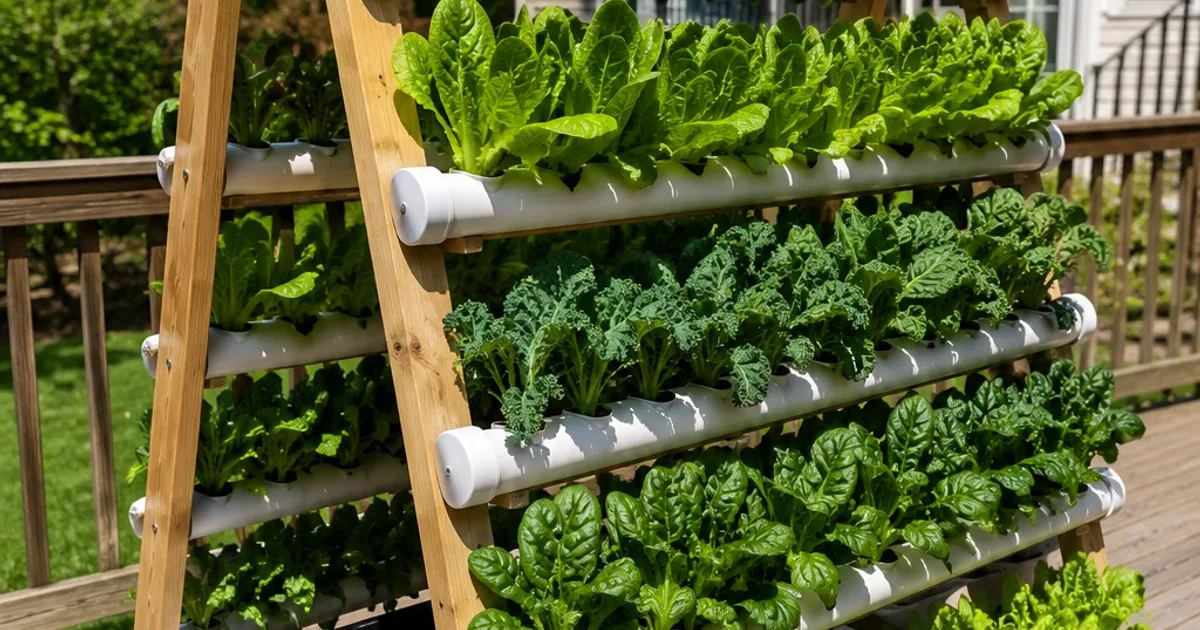
A 5-foot length of PVC pipe, some net cups, and a can of spray paint. That’s most of what this build needs. No pump, no timer, no electrical outlet anywhere near the wall. You drill a row of holes, seal the ends, and paint the pipe so it’s not see-through. Then you’re growing 20 plants on a fence or wall for around $20 to $34 in parts.
This isn’t a general explainer of how Kratky hydroponics works (we’ve already covered how the Kratky method works elsewhere). This is the literal build log: parts list with real prices, exact hole spacing, and how to mount it without it ripping off the wall. Including the one mistake that kills almost every first attempt.
Some links in this article may be affiliate links. We earn a small commission if you purchase through them, at no extra cost to you.
The short version
- A 5-foot, 4-inch Schedule 40 PVC pipe holds 20 plants at 3-inch hole spacing and costs roughly $20 to $34 in materials depending on hardware you already own.
- Use NSF/ANSI 61-certified pipe only. That standard governs health effects of materials in contact with drinking water (NSF International).
- No pump needed. The Kratky method relies on a shrinking air gap, not circulation, to oxygenate roots.
- Light leaking through the pipe wall causes algae, which is the single most common reason these builds fail.
What You Need (and What It Actually Costs)
A complete 20-plant build runs about $20 to $34, with Schedule 40 PVC pipe as the biggest line item. Pricing a single-tier, 5-foot build at a typical hardware store lands close to $34 when every part is bought new. It drops closer to $20 if you already own a drill, paint, or scrap brackets.
| Component | Spec | Qty | Cost |
|---|---|---|---|
| Schedule 40 PVC pipe | 4-inch diameter, NSF-61 certified, 5 ft | 1 | $16.00 |
| Slip socket end caps | 4-inch flat-bottom Schedule 40 | 2 | $3.98 |
| Net pots | 2-inch black mesh, UV-resistant | 20 | $3.00 |
| Opaque spray paint | UV-blocking, plastic-bonding | 1 | $4.50 |
| Mounting brackets | Steel 4-inch U-strap conduit hangers | 2 | $2.50 |
| PVC primer and cement | 4 oz, solvent weld | 1 | $4.00 |
| Total | $33.98 |
That total assumes buying everything new. Skip the paint if you already have leftover exterior paint, and the price drops fast. The one place not to cut corners: skip generic DWV (drain-waste-vent) pipe. It’s often made with recycled scrap and phthalate plasticizers that degrade under UV light. That’s exactly what you don’t want sitting full of nutrient solution for weeks (NSF International). Stick to Schedule 40, NSF-61 marked pipe from the plumbing aisle.
How to Cut and Drill the Pipe
A 5-foot run of 4-inch pipe fits 20 planting holes spaced 3 inches apart, with a 1.5-inch margin on each end for the end caps to seat properly. That spacing is tight, but it works for fast-growing, shallow-rooted crops like lettuce and herbs. For bigger plants like head lettuce, space holes 6 to 8 inches apart instead. That drops your count to 8 to 10 plants per run but gives the canopy room to spread.
Use a 2-inch bi-metal hole saw on a standard drill, running it in reverse. That keeps the teeth from grabbing the plastic and splitting the pipe, and leaves a smoother edge that needs almost no cleanup. Run a utility knife or medium-grit sandpaper around each hole afterward to clear shavings.
One detail that trips people up: a horizontal Kratky pipe has to sit dead level. Unlike an active NFT channel, which needs a slight slope to keep water flowing, a Kratky system is a static column. Tilt it and water pools at the low end, drowning roots there while the high end dries out.
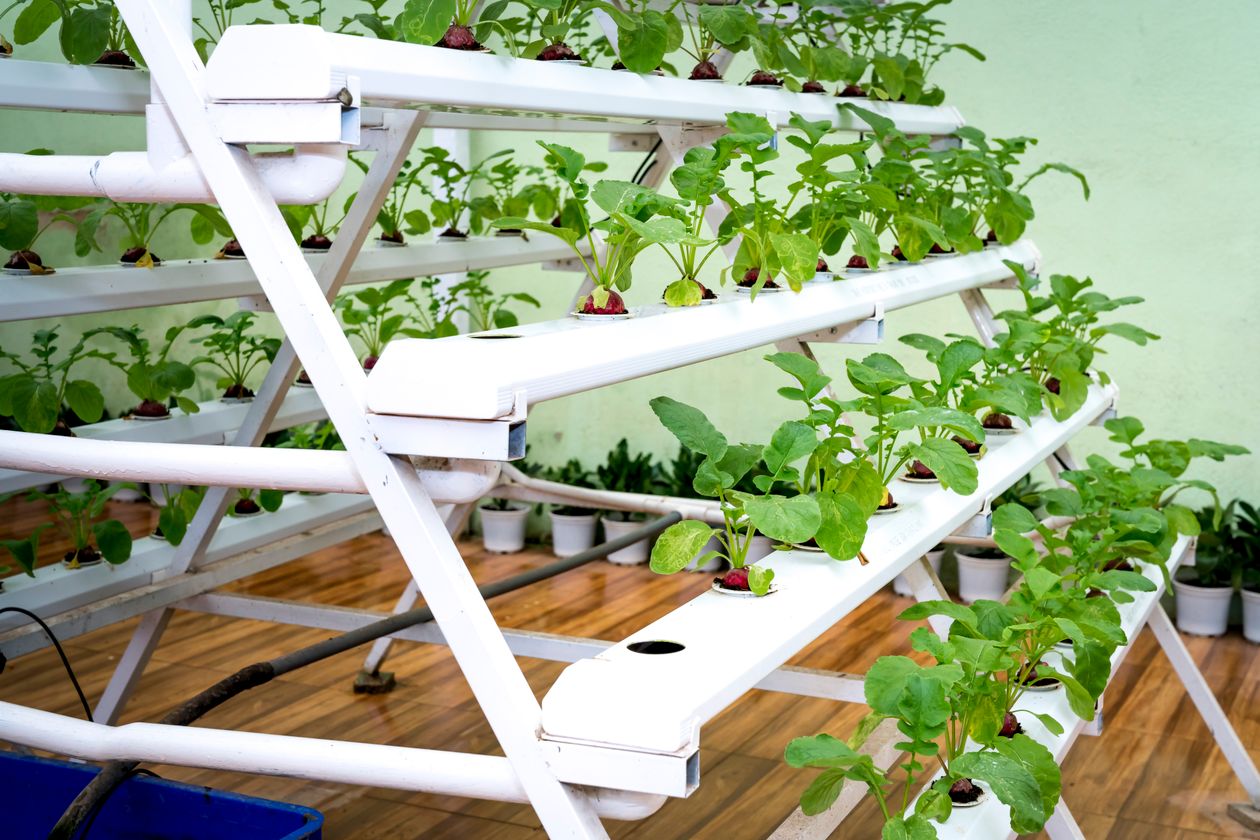
Mounting It Vertically (Without It Falling Off the Wall)
A water-filled 5-foot section of 4-inch pipe weighs more than it looks like it should. That’s why drywall anchors aren’t an option here. The pipe holds roughly 5 gallons of water at full capacity, adding about 40 pounds on top of its own weight. Stack two or three tiers on one wall and you’re easily over 100 pounds of static load.
Mount brackets into structural wood, fence posts, or wall studs with 2.5-inch lag screws, not drywall. Use heavy-duty steel U-strap brackets spaced no more than 3 feet apart so the pipe can’t sag out of level under the water’s weight.
If you ever automate top-offs with a small pump instead of refilling by hand, size it to the height of your tallest tier. A typical 6-foot vertical array needs a pump rated for at least 8 to 10 feet of head, around 350 to 400 GPH.
The Algae Mistake That Kills Most Builds
Light leaking through the pipe wall is the number one reason DIY Kratky builds fail within a few weeks. Standard white PVC isn’t actually opaque to the light wavelengths plants and algae both use (400 to 700 nm). Sunlight or grow lights passing through the wall trigger algae growth straight in your nutrient reservoir. Once algae takes hold, it eats up dissolved oxygen, throws off your pH, and sets the stage for root rot. For a full breakdown of fixes once it happens, see the complete algae prevention guide.
The fix is simple: make the outside of the pipe 100% opaque before you ever fill it with water. A coat of UV-blocking spray paint works, or wrap it in heavy-duty aluminum foil or a black vinyl sleeve if you’d rather skip painting. To check your work, stick a flashlight inside the pipe in a dark room. Any light leaking through a pinhole is a future algae spot.
The other failure mode is more about technique than light: overfilling. When you first transplant, the bottom third of the net cup should sit in the nutrient solution. As the plant drinks, the water drops and creates an air gap. Roots growing into that gap turn into “oxygen roots” that breathe directly from the humid air inside the pipe. Refill the reservoir past that air gap and you drown those roots, causing hypoxia and rot just as fast as algae does (UMN Extension). Never top off higher than 1 inch below the net cup base.
Is a Gutter System Better? (Quick Comparison)
A PVC Kratky wall and a vinyl gutter NFT system solve the same space problem differently. The right pick depends on whether you want zero electricity or faster growth. Gutters run as an active NFT system, meaning a constant-running pump and a higher build cost (commonly $100 to $150). They scale to commercial-volume growing better than a static pipe ever will.
| PVC Kratky wall | Vinyl gutter NFT | |
|---|---|---|
| Pump required | No | Yes, constant-run |
| Build cost | $20 to $34 | $100 to $150 |
| Power outage risk | None, water stays put | High, pump failure kills crops within hours |
| Best for | Leafy greens, herbs, off-grid setups | Higher-volume or commercial-style growing |
If you’re growing lettuce, spinach, or herbs for your own kitchen and want something that survives a power blip without losing your crop, the PVC Kratky wall is the simpler, cheaper choice. Scaling up production and need continuous monitoring anyway? Comparing hydroponic system types is worth doing before you commit to gutters. Not ready for a wall build yet? IKEA storage bins can get you growing for $15 to $20 with no power tools required.
Is PVC pipe safe for growing food?
Yes, as long as the pipe carries NSF/ANSI Standard 61 or NSF-PW certification. That certification confirms the material is unplasticized PVC without phthalates or lead stabilizers that could leach into your nutrient solution (NSF International). Standard Schedule 40 plumbing pipe with that certification is fine for food production.
Do I need a pump for a Kratky wall?
No. The defining trait of the Kratky method is that it’s passive and non-circulating. As the plant drinks the water, an air gap opens up inside the pipe, and roots growing into that gap absorb oxygen straight from the humid headspace (UH CTAHR). Adding a pump turns it into a different system entirely, and adds cost and complexity you don’t need.
How many plants can one wall section actually grow?
A single 5-foot run of 4-inch PVC pipe fits up to 20 plants at 3-inch center-to-center spacing, with a 1.5-inch margin on each end for the caps. That density works well for smaller leafy greens and cut-and-come-again herbs. For head lettuce or bigger brassicas, space holes 6 to 8 inches apart instead, which drops capacity to 8 to 10 plants but gives the canopy room.
What's the biggest mistake beginners make with this build?
Overfilling the reservoir during a top-off. Refill past the established air gap and you submerge the oxygen roots, which causes hypoxia and rapid root rot (UMN Extension). Never refill higher than 1 inch below the base of the net cup.
Building one of these isn’t complicated, but it rewards getting three things right: food-safe pipe, a dead-level mount, and a fully light-blocked exterior. Most build guides treat this as a flat, horizontal pipe project and stop there, but the moment you stack tiers vertically on a wall, you’re dealing with real structural load and, if you ever add a pump, real head height. Plan for that from the start instead of discovering it after the first bracket pulls loose.
Next step: pick a spot with full sun or grow lights, grab a tape measure, and mark your holes before you touch a drill.
Sources (6)
- NSF International, Certification of Plastic Piping Products: NSF/ANSI 14 and NSF/ANSI/CAN 61, retrieved 2026-06-18, https://www.nsf.org/knowledge-library/certification-of-plastic-piping-products-nsf-ansi-14-and-nsf-ansi-can-61
- University of Hawaii CTAHR, Three Non-Circulating Hydroponic Methods for Growing Lettuce, retrieved 2026-06-18, https://www.ctahr.hawaii.edu/hawaii/downloads/three_non-circulating_hydroponic_methods_for_growing_lettuce.pdf
- UMN Extension, Small-Scale Hydroponics, retrieved 2026-06-18, https://extension.umn.edu/how/small-scale-hydroponics
- Oklahoma State University Extension, Building a Vertical Hydroponic Tower, retrieved 2026-06-18, https://extension.okstate.edu/fact-sheets/building-a-vertical-hydroponic-tower
- Ask IFAS (UF/IFAS), “Set It and Forget It” Hydroponic Lettuce (HS1488), retrieved 2026-06-18, https://ask.ifas.ufl.edu/publication/HS1488
- PMC (NCBI), A Simplified Non-Greenhouse Hydroponic System for Small-Scale Soilless Urban Vegetable Farming, retrieved 2026-06-18, https://pmc.ncbi.nlm.nih.gov/articles/PMC9596717/