Best Plants to Grow Hydroponically (Beginner-Friendly Guide)
Lettuce, basil, and strawberries top the easiest hydroponic crops. This guide ranks 11+ plants by difficulty, EC range, and system fit, with grow guide links.
In this guide
- What makes a plant easy to grow hydroponically?
- Which kitchen crops are easiest to grow hydroponically?
- What should beginners avoid growing hydroponically?
- Which wellness and medicinal herbs grow well hydroponically?
- Which ornamental plants can you grow hydroponically?
- Which system fits which crop?
- Frequently Asked Questions
- Where to start
Most “best hydroponic plants” lists are just 20 names dumped in a row with no guidance on what to actually plant first. That’s how beginners end up putting lettuce and tomatoes in the same reservoir, wondering why one of them always looks miserable.
The real answer comes down to root structure and EC tolerance. Crops with fine, fibrous roots and a wide nutrient-strength comfort zone forgive beginner mistakes. Crops with thick taproots or narrow EC windows punish them. This guide ranks the plants worth starting with, flags the ones to leave for later, and matches each crop category to the system that actually supports it, with links to a full grow guide wherever one exists.
The short version
- Leafy greens, herbs, and microgreens are easiest: fast cycles, fibrous roots, and an EC tolerance of 1.0-1.8 mS/cm that forgives drift.
- Fruiting crops and strawberries need a tighter 1.8-4.0 mS/cm range and stricter system control, pushing their beginner difficulty to 7-8 out of 10.
- Large taproots (carrots, potatoes) and sprawling vines (melons, pumpkins) are the two crop types to skip entirely on your first build.
- Never mix crop categories in one reservoir. The EC that keeps lettuce happy will starve a tomato, and the EC a tomato needs will burn lettuce.
What makes a plant easy to grow hydroponically?
The easiest hydroponic crops share two traits: fibrous root systems and a wide EC forgiveness margin. Fibrous roots branch directly off the stem in a dense network, giving a huge surface area for absorbing dissolved nutrients straight from the water. Taproots, by contrast, evolved to push down through soil, and they don’t adapt well to constant submersion.
EC, or electrical conductivity, measures how concentrated your nutrient solution is. A “forgiving” crop tolerates a broad EC range without complaint. That matters because small reservoirs concentrate fast: water evaporates and leaves are transpired off continuously, so dissolved salts get more concentrated by the day. A crop with a narrow EC window hits its osmotic limit quickly and shows it through tip burn and crispy leaf margins.
Root morphology is the single best predictor of which crops succeed in a shared NFT channel and which clog it. Fine-rooted leafy greens and herbs anchor fast and form a clean, self-filtering root mat. Anything with a bulky or woody root starves the channel of oxygen and invites root rot within weeks.
| Crop Category | Representative Crops | Optimal EC (mS/cm) | Forgiveness Margin |
|---|---|---|---|
| Microgreens | Radish, broccoli | 0.5–1.0 | Very high |
| Leafy greens | Lettuce, kale | 1.2–1.8 | High |
| Culinary herbs | Basil, parsley | 1.0–1.6 | High |
| Fruiting crops | Tomato, pepper | 2.0–4.0 | Low |
| Soft fruits | Strawberry | 1.0–1.8 | Low |
| Root crops | Radish, turnip | 1.6–2.2 | Very low |
Which kitchen crops are easiest to grow hydroponically?
Kitchen crops dominate hydroponic beginner guides for good reason: short cycles, small footprints, and a high yield for the space they take up. Days-to-harvest stretches from one week for microgreens to three months for tomatoes, and that range alone tells you where to start. For per-crop timings rather than category averages, see the days-to-harvest chart for 19 crops.
Average days to harvest, by crop category
Ranges are counted from transplant, not from seed.
Leafy greens. Lettuce, kale, and spinach stay vegetative their whole life, so their nutrient needs barely shift: a steady, nitrogen-leaning 1.2–1.8 mS/cm gets you from seed to harvest in 30–45 days. They’re the most tolerant of minor environmental swings of any crop on this list. For variety-by-variety detail, see the 8 best leafy greens for hydroponics.
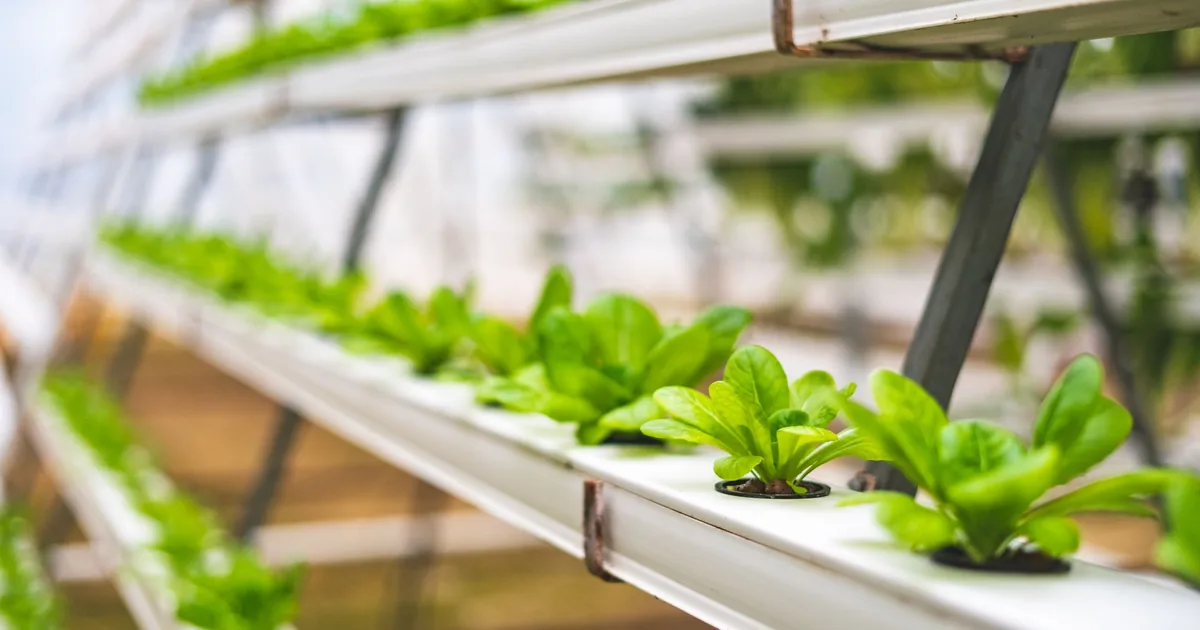
Romaine lettuce. Worth calling out on its own because its upright, rigid growth habit makes it the textbook crop for the Kratky method. As the reservoir drains, the upper roots develop “air roots” that pull oxygen straight from the humid air pocket left behind, while the lower roots keep drinking. No pump needed. Walk through it in growing romaine with the Kratky method.
Basil and culinary herbs. Fast, continuous-harvest, and forgiving on EC (1.0–1.6 mS/cm), but watch magnesium. Basil is unusually prone to magnesium deficiency, which shows up as yellowing between the leaf veins on older growth. Keep a 2:1 calcium-to-magnesium ratio and at least 40 ppm elemental magnesium to avoid it. Full nutrient breakdown in the basil and herb grow guide.
Microgreens. The fastest crop on this list at 7–21 days, because the seedling runs on stored seed energy rather than a balanced long-term nutrient program. Grow them on inert fiber or coco mats soaked in diluted, low-EC water. The short cycle also limits the window for pests, algae, or equipment failure to do damage. Step-by-step in microgreens in 7-21 days.
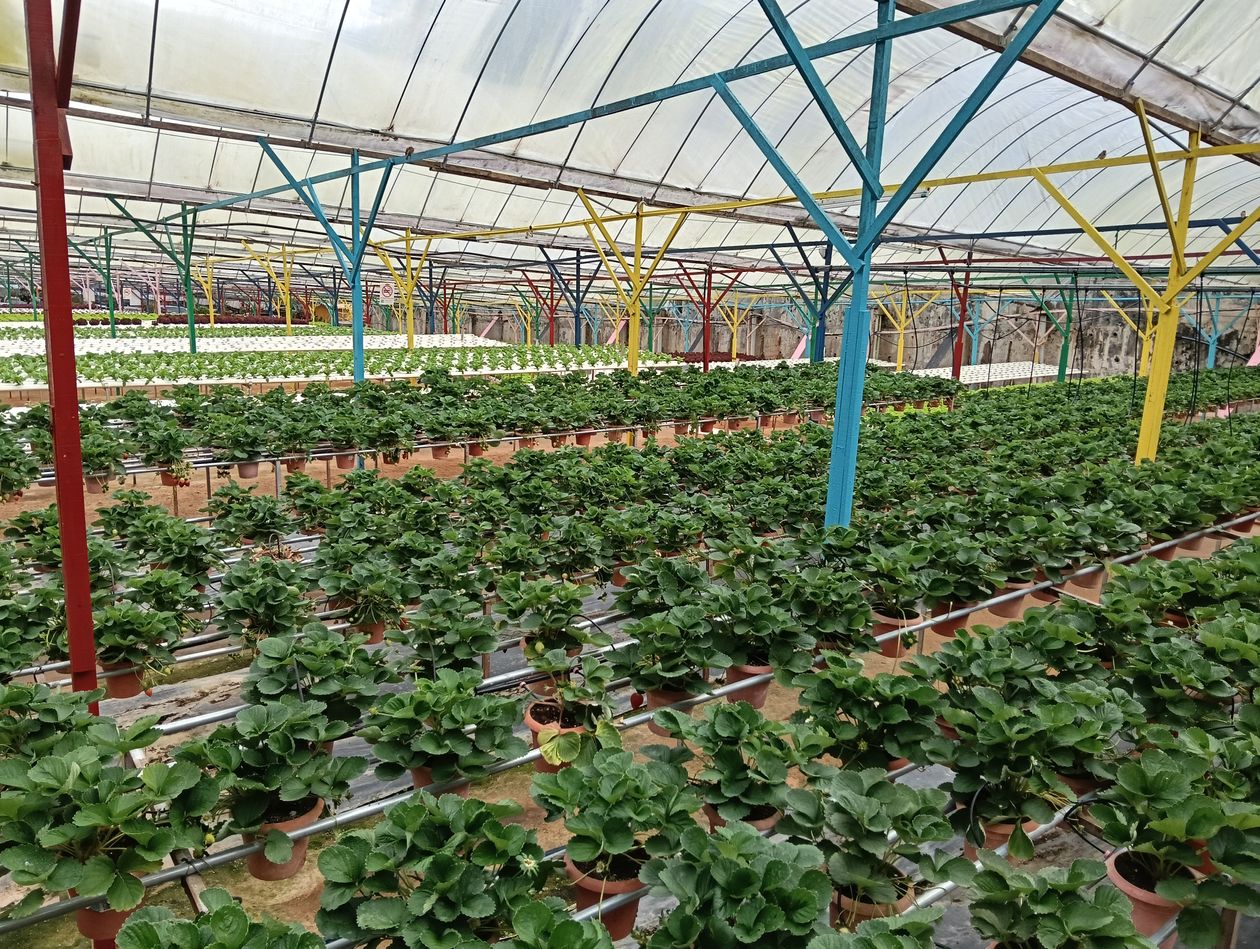
Strawberries. A step up in difficulty. Strawberries are perennial, transitioning through vegetative and reproductive stages rather than staying in one mode, and they’re sensitive to salt buildup at the root crown. Run EC low near transplant and step it up to 1.4–1.8 mS/cm by fruiting; expect first fruit in 50–60 days from transplanting. Full guide: growing strawberries hydroponically.
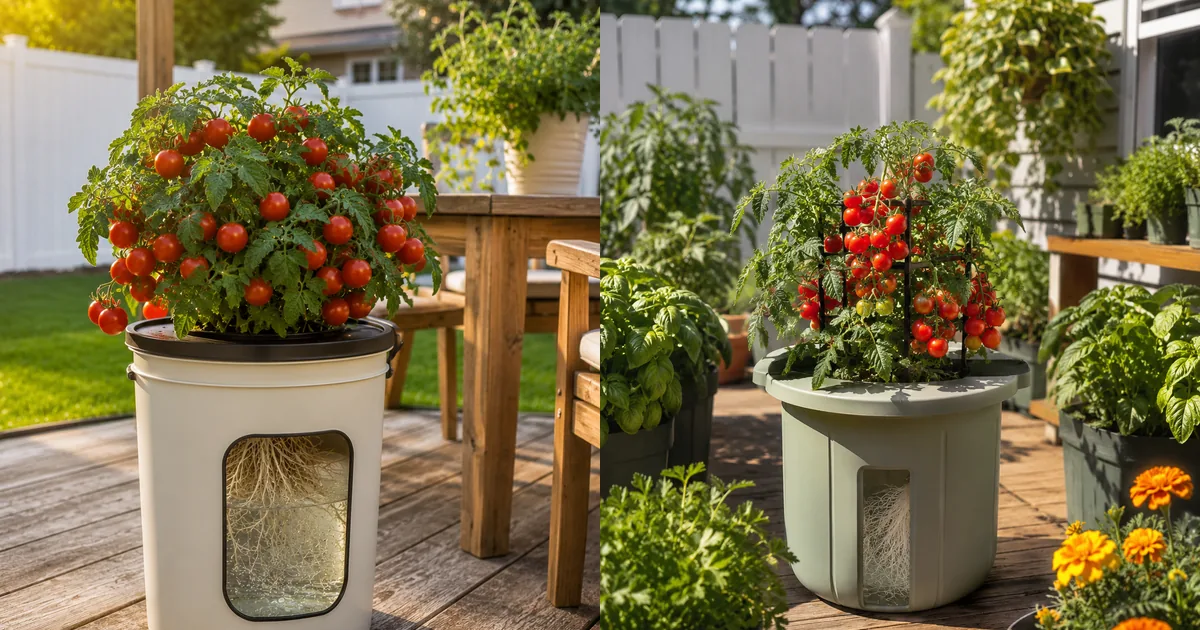
Tomatoes. The hardest kitchen crop on this list. Pick an indeterminate cherry variety like Sungold or Sweet 100 for a home DWC or Dutch bucket setup, or Tiny Tim dwarf if you’re tight on space. Run EC at 2.0 mS/cm through vegetative growth, then step it up to 2.5–3.5 at fruit set. Since there are no pollinators indoors, you’ll hand-pollinate every flower truss daily with an electric toothbrush or a small fan. First harvest at 60–75 days from transplant. Full guide: growing hydroponic tomatoes.
| Crop | EC Range (mS/cm) | pH Range | Days to Harvest | Beginner Difficulty (1-10) | Best System |
|---|---|---|---|---|---|
| Lettuce | 1.2–1.8 | 6.0–7.0 | 30–45 | 1 | Kratky, DWC, NFT |
| Basil | 1.0–1.6 | 5.5–6.0 | 21–28 | 2 | DWC, NFT, Kratky |
| Microgreens | 0.5–1.0 | 5.5–6.5 | 7–21 | 1 | Shallow mat trays |
| Strawberries | 1.0–1.8 | 6.0 | 50–60 | 7 | Drip/coir bags, NFT |
| Tomatoes | 2.0–4.0 | 6.0–6.5 | 60–75 | 8 | Dutch bucket, DWC |
| Spinach | 1.8–2.3 | 6.0–7.0 | 40–45 | 5 | NFT, DWC |
Days-to-harvest figures are counted from transplant, not from seed. Seed-to-transplant adds 2 to 4 more weeks, most noticeably for tomatoes. See why "days to harvest" means two different things.
What should beginners avoid growing hydroponically?
Two crop types consistently wreck a beginner’s first system: large taproot vegetables and sprawling vining crops. Both fail for anatomical reasons that no amount of nutrient tuning fixes.
Root and tuber crops like carrots, potatoes, and large radishes need the physical resistance of packed soil to form a uniform, swollen storage organ. In a liquid-only system, that resistance doesn’t exist. The taproot branches erratically, splits, or never bulks up at all, and constant water-logged exposure raises the risk of crown rot. Deep wicking beds with coarse sand or perlite can support tubers, but the footprint and slow cycle make them a poor first project.
Sprawling vines like pumpkins, watermelons, and giant indeterminate tomatoes have aggressive, woody root networks built to anchor a massive field plant. Inside a standard 4-inch NFT channel, that root mass bridges the channel and dams the nutrient flow, which floods the upstream end and starves everything downstream of oxygen.
This isn’t theoretical. Growing bell peppers next to loose-leaf lettuce on a shared NFT table is a documented failure mode: pepper roots can completely fill the shallow channel within six weeks, flooding it and starving the lettuce downstream of dissolved oxygen, often ending in a localized Pythium outbreak. Mint causes the same kind of damage a different way, sending stolons straight through the plumbing to choke out neighboring parsley. Both point to the same fix: anything woody, vining, or aggressively spreading gets its own dedicated container, never a shared channel.
Which wellness and medicinal herbs grow well hydroponically?
Mint and lemon balm, chamomile, and lavender share a similar nutrient and pH profile to culinary herbs, which makes them just as approachable for a beginner. Mint in particular is nearly impossible to kill. It’s also the reason it needs its own pot: the same aggressive stolons that make it hard to kill will invade and choke out anything growing nearby, as the channel-clogging example above made clear. Keep mint isolated in a single DWC bucket or Kratky jar, never a shared channel. Lavender is the outlier of the three: it wants dry roots and real drainage, not the constantly moist setup the other two thrive in.
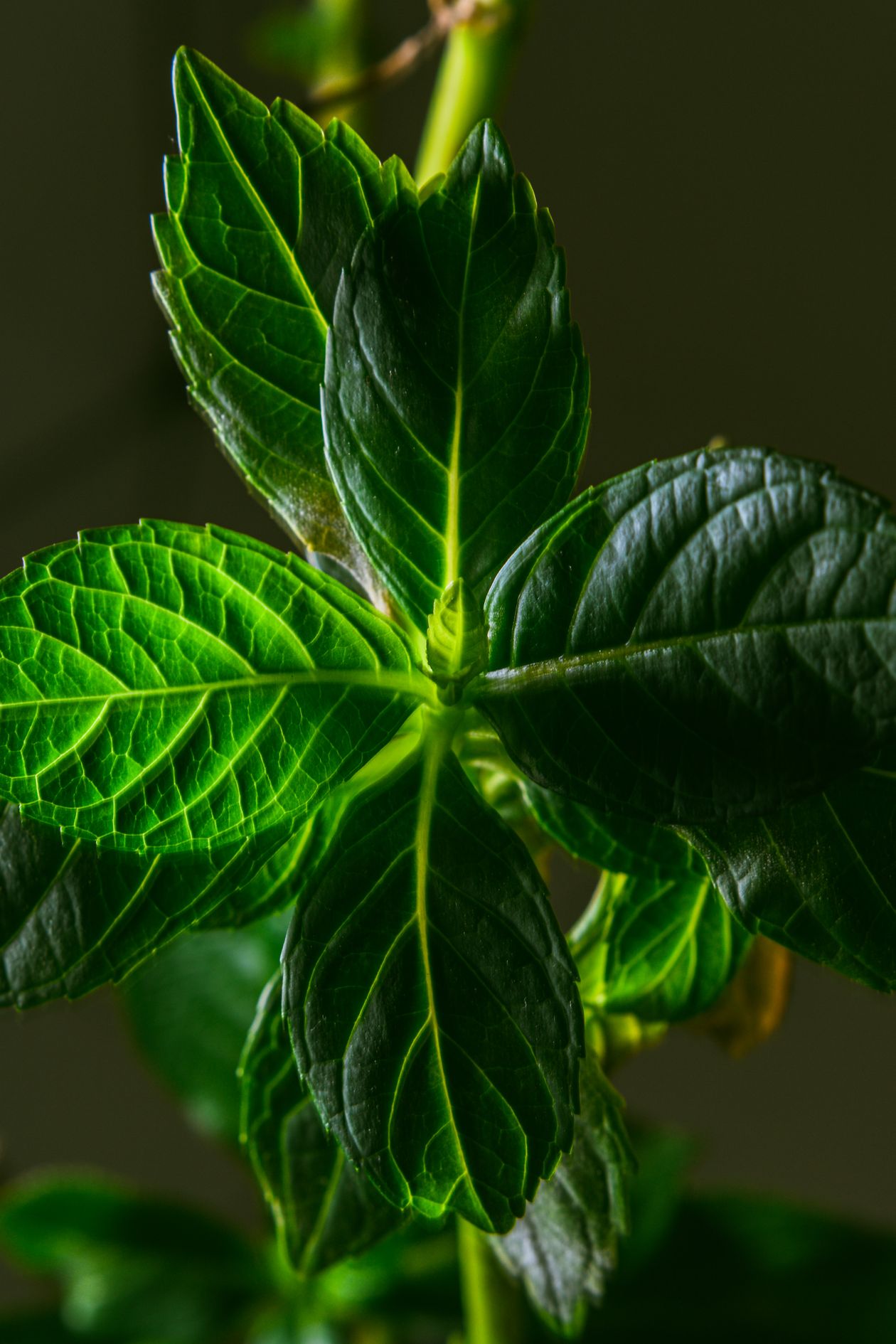
The harder part with wellness herbs isn’t keeping them alive, it’s harvesting at the right moment. Essential-oil concentration peaks right before flower initiation, so timing the cut matters more here than with culinary herbs you just pinch and use fresh. After harvest, careful drying protects the compounds you grew the plant for in the first place: linalool in lavender, chamazulene in chamomile. Get that step wrong and you’ve grown a beautiful plant with none of the payoff.
Which ornamental plants can you grow hydroponically?
Hydroponics isn’t only about food. Edible flowers like violas, pansies, nasturtiums, calendula, and French marigolds grow cleaner indoors than they ever do outside, with no wind tearing the petals and no soil splashing onto the bloom.
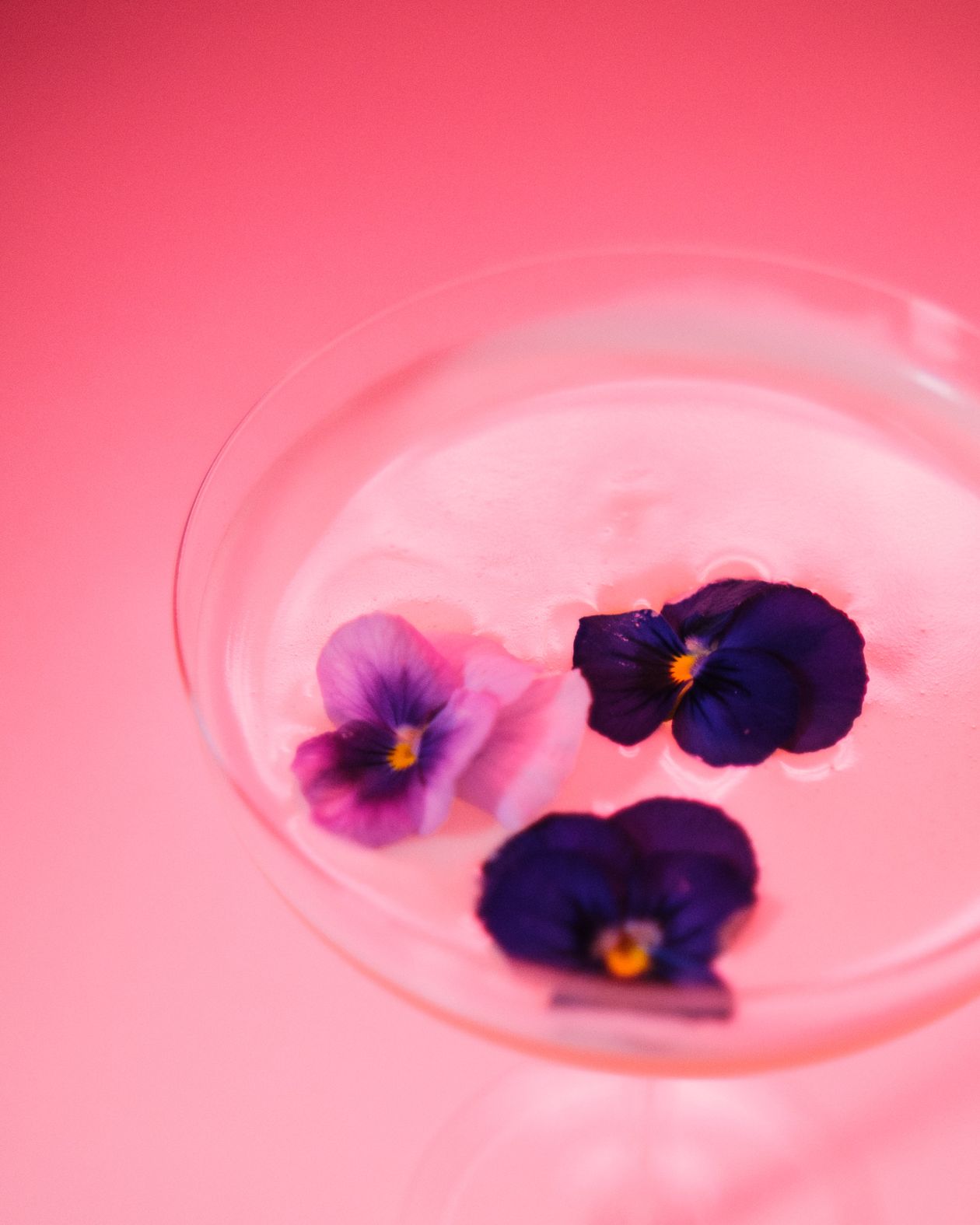
Growing for blooms instead of leaves means flipping your nutrient strategy. A high-nitrogen feed that’s perfect for lettuce keeps a flowering plant locked in leafy growth and delays buds. Once the plant has a healthy vegetative canopy, shift to a low-nitrogen, high-phosphorus, high-potassium formula to trigger flowering. pH needs vary by species too: African marigolds prefer 6.0–6.8 to avoid iron and manganese toxicity, while pansies want a lower 5.4–5.8 to avoid boron and iron deficiency. Supplemental LED lighting and end-of-day far-red light both accelerate flowering and boost the antioxidant compounds that give these blooms their color. For the popular foliage houseplants that live happily with their roots in water, from pothos to monstera, see 19 houseplants you can grow hydroponically.
Which system fits which crop?
The system you pick has to match the crop’s root anatomy, or you’re fighting physics. Here’s the short version, with a full breakdown if you haven’t settled on hardware yet in choosing your first hydroponic system.
Kratky is entirely passive: no pump, no air stone, no electricity. As the water level drops, it exposes part of the root system to air. That makes it ideal for small, rapid-cycle vegetative crops like lettuce, romaine, and soft herbs, but stagnant water can’t support heavy-drinking fruiting crops, which deplete dissolved oxygen and rot fast. Full mechanics in the Kratky method, step by step.
Deep Water Culture (DWC) floats plants on rafts over an actively aerated reservoir, with an air pump keeping dissolved oxygen above roughly 6.0 mg/L at the root zone. That active aeration makes it stable and forgiving of temperature swings, and it stretches from leafy greens up to micro-dwarf fruiting crops.
Nutrient Film Technique (NFT) recirculates a thin, shallow film of nutrient solution down a sloped channel. It’s the commercial standard for scaling greens and herbs, but the film is thin enough that it has zero buffering: a pump failure or a clogged channel (see the pepper example above) can desiccate a crop within hours.
Dutch buckets and drip systems deliver pressurized nutrient solution to individual pots filled with clay pebbles, perlite, or coco coir. That gives the structural support and drainage that woody-rooted, long-term fruiting crops like tomatoes and peppers actually need, but it’s overkill for fast-cycle leafy greens.
| Crop Category | Kratky | DWC | NFT | Drip / Dutch Bucket |
|---|---|---|---|---|
| Leafy greens | Highly compatible | Highly compatible | Highly compatible | Moderately compatible |
| Culinary herbs | Highly compatible | Highly compatible | Highly compatible | Moderately compatible |
| Microgreens | Discouraged | Discouraged | Discouraged | Highly compatible (tray format) |
| Fruiting crops | Discouraged | Moderately compatible | Discouraged (clogging) | Highly compatible |
| Root crops | Discouraged | Discouraged | Discouraged | Moderately compatible (deep media) |
| Ornamentals | Moderately compatible | Highly compatible | Highly compatible | Highly compatible |
"Match the system to the root, not the root to the system."The rule behind most beginner clogged-channel failures
Frequently Asked Questions
What's the easiest plant to grow hydroponically for a total beginner?
Loose-leaf lettuce. It’s ready in 30–35 days from seed, tolerates EC swings between 1.2 and 1.8 mS/cm, and its shallow fibrous roots suit a passive Kratky jar with zero pumps or electricity.
Can you grow tomatoes hydroponically as a beginner?
Yes, but only with micro-dwarf or determinate cultivars like Tiny Tim in a Dutch bucket or DWC system. You’ll also need to hand-pollinate flowers daily since indoor systems have no pollinators.
Can you mix different plants in the same hydroponic reservoir?
Only within the same EC category. Lettuce and basil share a similar 1.0–1.8 mS/cm range and coexist fine. Mixing lettuce with tomatoes (2.0–4.0 mS/cm) burns the lettuce or starves the tomato, whichever EC you pick.
What hydroponic plants grow the fastest?
Microgreens, ready in 7–21 days because they’re harvested at the cotyledon stage on stored seed energy. Loose-leaf lettuce is the fastest full-sized crop, reaching a complete head in 30–45 days.
What vegetables should you avoid growing hydroponically at first?
Large taproot crops like carrots and potatoes, which split or rot without soil’s physical resistance, and sprawling vines like pumpkins and melons, whose root mats clog standard NFT channels and trigger root rot within weeks.
Where to start
Pick one crop category, not a mixed reservoir, and let the EC range guide you: leafy greens and herbs first, fruiting crops once you’ve got a few harvests under your belt. When you’re ready for fruit, the 8 best fruits to grow hydroponically ranks them from beginner to expert with the exact pH and EC for each. If you haven’t settled on a system yet, the beginner’s guide above will match your space and budget to the right hardware before you buy seeds.
Sources (9)
- Oklahoma State University Extension. “Electrical Conductivity and pH Guide for Hydroponics.” https://extension.okstate.edu/fact-sheets/electrical-conductivity-and-ph-guide-for-hydroponics retrieved 2026-06-19
- UC Agriculture and Natural Resources. “Hydroponics.” https://ucanr.edu/media/293032 retrieved 2026-06-19
- UC Agriculture and Natural Resources. “Simple Outdoor Hydroponics.” https://ucanr.edu/media/246328 retrieved 2026-06-19
- UF/IFAS AE610. “How Efficient Are Hydroponic Lettuce Production Systems in Nutrient Usage Under Low and High Salinity?” https://ask.ifas.ufl.edu/publication/AE610 retrieved 2026-06-19
- e-GRO. “Magnesium Deficiency of Hydroponic and Container Grown Basil.” https://www.e-gro.org/pdf/E303.pdf retrieved 2026-06-19
- Virginia Cooperative Extension. “Hydroponic Production of Edible Crops: Deep Water Culture (DWC) Systems.” https://www.pubs.ext.vt.edu/SPES/spes-464/spes-464.html retrieved 2026-06-19
- MDPI, Agronomy (2025). “Development of Edible Flower Production and the Prospects of Modern Production Technology.” https://www.mdpi.com/2073-4395/15/9/2159 retrieved 2026-06-19
- PMC, peer-reviewed (2025). “Effect of Far-Red Light and Nutrient Solution Formulas on Calendula Production in a Plant Factory.” https://pmc.ncbi.nlm.nih.gov/articles/PMC12189887/ retrieved 2026-06-19
- PMC, peer-reviewed. “Chemical, Nutritional and Sensory Characteristics of Six Ornamental Edible Flowers Species.” https://pmc.ncbi.nlm.nih.gov/articles/PMC8472405/ retrieved 2026-06-19