Plant Wilting in Hydroponics: Why It Happens and What to Do
Hydroponic plants wilt even in water when roots can't absorb oxygen fast enough. Here are the 4 causes of wilting and the exact steps to fix each one.
In this guide
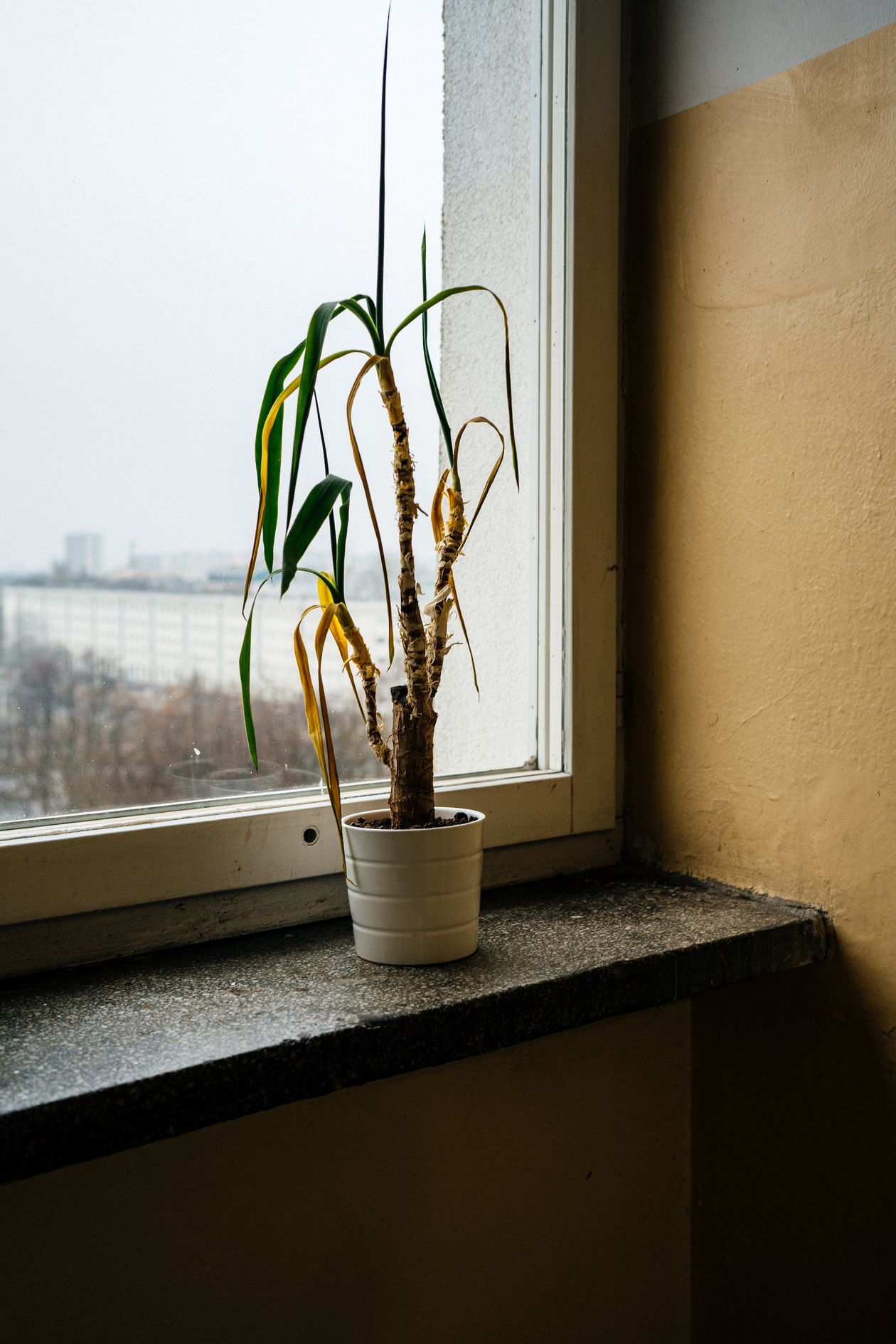
Finding your hydroponic plant drooping while its roots sit in a full reservoir is one of the most disorienting things a new grower runs into. In soil gardening, a wilting plant is a thirsty plant. In hydroponics, that logic breaks down completely. The water is right there, so why isn’t the plant drinking?
The answer isn’t more water and it isn’t more nutrients. Wilting in hydroponics is almost always a failure of the plant’s internal transport system. Understanding what’s breaking down is the only way to fix it.
Some links in this article may be affiliate links. We earn a small commission if you purchase through them, at no extra cost to you.
The short version
- Hydroponic plants wilt when roots can't pump water fast enough, usually from low dissolved oxygen, warm water, root rot, or heat and light stress.
- Dissolved oxygen drops as temperature rises: water at 65°F holds 9.40 mg/L of O₂, but at 85°F that falls to 7.63 mg/L (USGS DOTABLES, 2024).
- Check reservoir temperature first. If it's above 72°F, that's the most likely cause. Target 65 to 72°F for most crops.
Why Do Hydroponic Plants Wilt Even in Water?
Water doesn’t seep passively into roots. It moves through protein channels in root cell membranes called aquaporins, and those channels need energy to stay open. That energy comes from aerobic respiration: root cells burning dissolved oxygen to produce ATP (Plant Water Transport and Aquaporins in Oxygen-Deprived Environments, 2018). When oxygen runs out, root cells switch to inefficient anaerobic fermentation, the aquaporins close, water uptake stops, and the plant loses turgor pressure and wilts, despite sitting in nutrient solution.
The main driver of dissolved oxygen is water temperature. A 2025 review confirmed that oxygen-deprived roots experience the same metabolic shutdown whether the cause is flooded soil or an oxygen-depleted hydroponic reservoir (Dichio et al., 2025, Plant Physiology and Biochemistry). As the reservoir warms, the water’s oxygen-carrying capacity falls, and the root suffocation sequence begins.
Dissolved Oxygen in Water by Temperature
Source: USGS DOTABLES (Benson and Krause solubility equations, standard atmospheric pressure)
The 4 Most Common Causes of Wilting in Hydroponics
Low dissolved oxygen is behind the majority of unexplained wilting cases where nutrient levels look normal. Keeping reservoir temperature below 72°F (22°C) essentially eliminates it as a risk, since oxygen capacity stays high enough for root function (University of Kentucky Cooperative Extension, E706, 2020). The other three causes are rarer but follow predictable patterns.
1. Low Dissolved Oxygen (Root Suffocation)
When the reservoir gets too warm or has no aeration, dissolved oxygen falls below what roots need for active water uptake. The plant droops even though it’s surrounded by liquid because the liquid itself can’t deliver enough oxygen to keep the transport system running. Stagnant, warm water is the classic setup: everything looks normal on the surface, but the roots are slowly suffocating.
2. Heat and Light Stress
Sometimes the roots are white, the water is cool, and the plant still droops in the afternoon. That’s an atmospheric problem, not a root problem. High temperatures and intense light drive transpiration sharply upward. Research published in PMC shows that when vapor pressure deficit rises, water loss through leaf stomata can outpace root uptake capacity entirely, causing a temporary but real loss of turgor pressure (Transpiration response to soil drying versus increasing VPD in crops, 2023). Most plants recover overnight once temperatures drop.
3. Root Rot
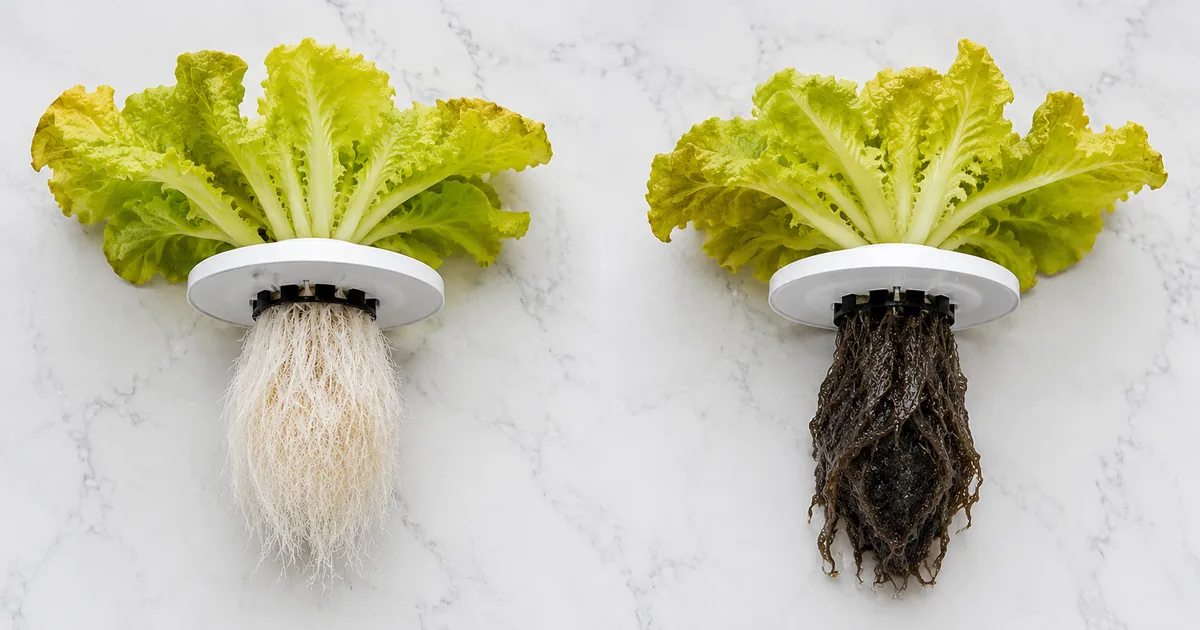
Brown, slimy roots with a sulfurous smell mean a biological cause is driving the wilt. A 2024 CABI Compendium entry shows Pythium aphanidermatum, the most common root pathogen in hydroponics, thrives at water temperatures around 34°C (93°F) and produces enzymes that break down root tissue until absorption becomes impossible (CABI Compendium, 2024). This one doesn’t resolve on its own. See the full root rot treatment guide for the full protocol.
4. Oxygen Gap Collapse (Kratky Systems Only)
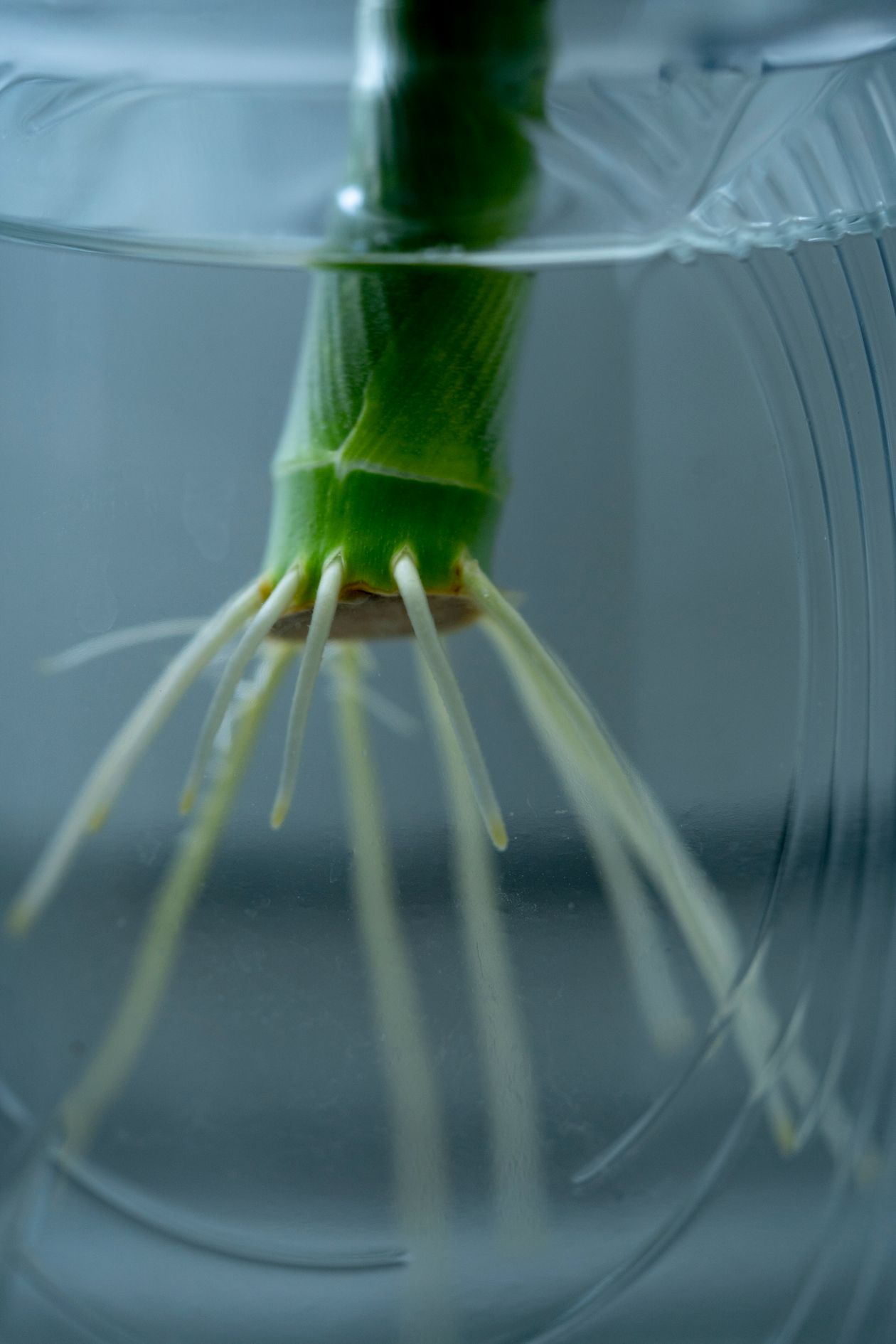
Passive Kratky setups rely on a humid air gap between the net pot and the water surface. Plants grow specialized air roots in this space that pull oxygen directly from the atmosphere, an adaptation well-documented in root hypoxia research (PLOS ONE, 2019). A 2022 FAO publication on non-circulating hydroponic methods confirms the air gap is essential for passive root oxygenation (FAO STI Portal, 2022). Topping off the reservoir too high submerges those roots instantly. Wilting can follow within hours.
How Do You Tell Which Cause You Have?
Two signals narrow it down fast: when the wilting happens and what the roots look like. Plants showing afternoon-only wilting with overnight recovery have an atmospheric problem, a pattern consistent with vapor pressure deficit stress documented across transpiration studies (PMC, 2023). Plants that droop all day need a root check before anything else.
| Primary Symptom | Time of Day | Root Appearance | Diagnosis |
|---|---|---|---|
| Wilts in afternoon, recovers overnight | Worst during peak heat and light | White, firm | Heat and light stress |
| Droops continuously | All day | White, firm | Low dissolved oxygen or warm water |
| Droops continuously | All day | Brown, slimy | Root rot (pathogen) |
| Sudden wilt after adding water | Immediately post-refill | Fully submerged | Oxygen gap collapse (Kratky) |
Don’t adjust nutrient concentration while diagnosing. Raising EC when roots are already stressed makes water absorption harder. If you’re also seeing yellow leaves, that’s a separate issue worth diagnosing on its own after you address the wilting.
How Do You Fix a Wilting Hydroponic Plant?
Work through these steps in order. Most wilting cases resolve at step one or two. A 2020 University of Kentucky Cooperative Extension guide sets 65 to 72°F (18 to 22°C) as the operating range where dissolved oxygen stays sufficient and Pythium remains relatively suppressed (UK Extension, E706, 2020).
Step 1: Check and Lower Water Temperature
Measure the reservoir first with a floating or probe thermometer. If it’s above 72°F, that’s likely the root cause. Float a frozen water bottle in the reservoir for an immediate drop. For long-term control in a warm room, wrap the reservoir with reflective bubble insulation, move it away from heat-emitting grow lights, or invest in a dedicated water chiller if ambient temperatures are consistently high.
Step 2: Add Dissolved Oxygen
For DWC and other aerated systems, an air pump with a fine-pore air stone pushes the most oxygen into solution. Smaller bubbles create more gas-exchange surface area, which raises dissolved oxygen faster than a coarse stone at the same flow rate. Check that the stone isn’t clogged with mineral deposits. Include aeration inspection in your regular reservoir maintenance schedule.
Step 3: Inspect the Roots
Lift the net pot and look. White, branching roots with no smell are healthy; the problem is environmental. Brown or gray roots that fall apart when touched, or that smell like sulfur, mean active pathogen damage. Don’t prune aggressively or add products until you’ve confirmed which situation you’re dealing with.
Step 4: Restore the Kratky Oxygen Gap
If you run a Kratky system, drain the reservoir until there’s at least a 2 to 3 inch (5 to 7 cm) gap between the bottom of the net cup and the water surface. Check the Kratky method guide if you’re unsure how this gap should look at different plant growth stages.
Step 5: Reduce Heat and Light
If the roots are clean and the water is cool but the plant still wilts in the afternoon, the atmosphere is the problem. Raise the grow lights a few inches to cut the radiant heat load on the canopy. Shade cloth works well for outdoor or greenhouse setups. Both reduce the vapor pressure deficit driving excess transpiration.
Can a Wilting Plant Recover?
Wilting while surrounded by water is counterintuitive, but it makes sense once you see it as a turgor failure rather than a thirst problem. Low dissolved oxygen, usually caused by warm water, is the most common cause and the easiest to fix. Get the reservoir into the 65 to 72°F range, keep aeration running, and check the roots.
If the roots are already brown and slimy, move straight to the root rot guide. That’s a different protocol and the earlier you start it, the better the recovery odds.
If the leaves are cupping or clawing rather than going limp, that’s a different signal with its own diagnosis. Work through plant leaves curling instead.
Can a plant recover from wilting in hydroponics?
Yes, if you catch the cause early. Plants wilting from heat stress or low dissolved oxygen often recover within hours once the environment is corrected. Root rot recovery is harder and depends on how much healthy root tissue remains after treatment.
How long can a hydroponic plant stay wilted before it dies?
It depends on the cause. Heat stress usually resolves overnight on its own. Acute oxygen starvation, like completely submerging Kratky air roots, can cause irreversible cell damage within 24 to 48 hours if the oxygen gap is not restored.
Why does my hydroponic plant wilt during the day but recover at night?
That’s the pattern for atmospheric stress. High daytime temperatures and intense light drive transpiration faster than roots can absorb water, causing temporary turgor loss. Once temperatures drop at night, stomata close, transpiration halts, and the plant rehydrates.
Does wilting mean I need more nutrients?
No. Wilting is a water transport failure, not a nutrition problem. Adding more fertilizer raises EC, which increases salt concentration and makes it physically harder for roots to pull water in, making the wilting worse.
What is the ideal water temperature to prevent wilting in hydroponics?
65 to 72°F (18 to 22°C) for most leafy greens and herbs. Above 75°F, dissolved oxygen capacity drops and Pythium root rot becomes significantly more active. Keep a thermometer in your reservoir and check it daily.
Sources (9)
- Plant Water Transport and Aquaporins in Oxygen-Deprived Environments, ResearchGate, retrieved 2026-06-29, https://www.researchgate.net/publication/325109482_Plant_Water_Transport_and_Aquaporins_in_Oxygen-Deprived_Environments
- Dichio et al., Physiological and Biochemical Mechanisms of Waterlogging Tolerance in Plants, Plant Physiology and Biochemistry, 2025, retrieved 2026-06-29, https://service.unibas.it/utenti/sofo/2025%20-%20Dichio%20et%20al%20-%20PPL.pdf
- USGS DOTABLES, Dissolved Oxygen Solubility Tables, U.S. Geological Survey, retrieved 2026-06-29, https://water.usgs.gov/water-resources/software/DOTABLES/
- Transpiration response to soil drying versus increasing vapor pressure deficit in crops, PMC/NCBI, 2023, retrieved 2026-06-29, https://pmc.ncbi.nlm.nih.gov/articles/PMC10474596/
- Pythium aphanidermatum (damping-off), CABI Compendium, 2024, retrieved 2026-06-29, https://www.cabidigitallibrary.org/doi/full/10.1079/cabicompendium.46141
- Root Disease Management in Hydroponic Systems, University of Kentucky Cooperative Extension, publication E706, retrieved 2026-06-29, https://greenhousehort.mgcafe.uky.edu/sites/greenhousehort.ca.uky.edu/files/E706.pdf
- Simple non-circulating hydroponic method for vegetables, FAO Science Technology and Innovation Portal, 2022, retrieved 2026-06-29, https://sti-portal.fao.org/innovations/simple-non-circulating-hydroponic-method-vegetables
- Stable expression of aquaporins and hypoxia-responsive genes in adventitious roots, PLOS ONE, 2019, retrieved 2026-06-29, https://journals.plos.org/plosone/article/file?id=10.1371/journal.pone.0212059&type=printable
- Dissolved Oxygen and Water, U.S. Geological Survey, retrieved 2026-06-29, https://www.usgs.gov/water-science-school/science/dissolved-oxygen-and-water