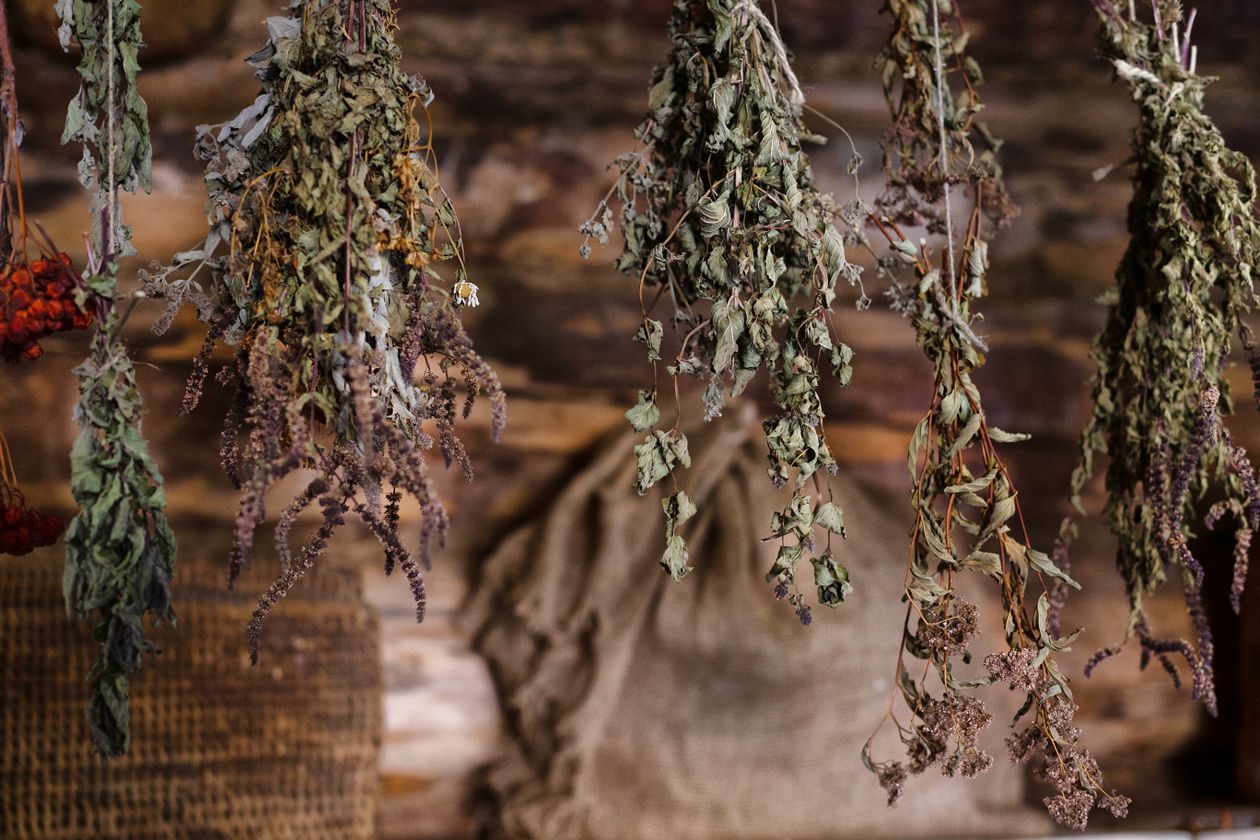
What a Windowsill Herb Garden Actually Saves in a Year
Most herbs want around eight hours of direct light, more than most windows give. The honest math on what an indoor herb garden saves you, and what it will not.

In this guide
Every article about growing herbs indoors promises you a number. A hundred dollars a year, two hundred, pays for itself in ten weeks. None of them agree with each other, and none of them say where the figure came from.
There is a reason for that, and it is the most useful thing to know before you buy a single pot. Here is what a windowsill herb garden actually takes off your grocery bill, what caps it, and the point where it stops being free. If you are still working out what a small space can hold, start there first.
Some links in this article may be affiliate links. We earn a small commission if you purchase through them, at no extra cost to you.
The short version
- No agency publishes a price for fresh herbs on their own. They are bundled into "other fresh vegetables, including fresh herbs" (BLS), so any national savings figure you read was invented.
- The saving comes from waste you stop creating, not from the weight of what you grow.
- Most herbs want around eight hours of direct light a day, and light is the most limiting factor indoors (Iowa State Extension).
- Basil, mint, and chives carry almost all of the return. Rosemary and thyme are lovely and barely move the bill.
- The moment you plug in a grow light, this stops being a free garden and becomes an equipment purchase.
So What Does a Windowsill Herb Garden Actually Save?
It saves you the part of the packet you throw away. That is the honest answer, and it is smaller and more reliable than the promises.
Think about how a recipe uses herbs. It asks for a tablespoon of chopped basil. The shop sells you a sealed plastic tray holding far more than that, because a tray is the only unit it has. You use your tablespoon, put the rest in the fridge, and find it black and wet four days later.
That gap is where the money is. The average American household throws away 31.9% of the food it buys, and fresh herbs are among the fastest things in the fridge to turn. A plant on the sill sells you a tablespoon, because a tablespoon is what you cut.
There is a second thing worth knowing, and it is why this article will not hand you a dollar figure. No United States agency prices fresh herbs on their own. The Bureau of Labor Statistics folds them into a single basket labelled “other fresh vegetables, including fresh herbs”, and the USDA tracks tomatoes, lettuce, and potatoes by name but never basil or parsley. Grocery prices are certainly climbing, with retail fresh vegetables running 6.3% higher in July 2026 than a year before. Herbs are simply not counted separately inside that number.
So anyone quoting you an average yearly saving on herbs is guessing. Your own receipt, though, is real data.
Work out your own number in three questions
- Which fresh herbs did you actually buy in the last three months? Not which ones you like. Which ones came home in a plastic tray.
- How much of each one did you use before it went off? Half is a common answer. A third is not unusual.
- What does one packet cost at your shop? Multiply by how often you buy it, and that is your ceiling.
That ceiling is what a perfect windowsill would save you. The rest of this article is about why you will not reach it, and how close you can get.
Which Herbs Actually Pay, and Which Are Just a Hobby?
The winners are the herbs you use in handfuls, that grow back fast after a cut, and that rot quickly in a fridge. Everything else is a nice thing to own.
| Herb | How the shop sells it | How often you would cut it | Windowsill verdict |
|---|---|---|---|
| Basil | Small trays that wilt within days | Often, once it is established | Best payer. Used in quantity, spoils fastest |
| Mint | Oversized bunches, most goes unused | Often, it regrows vigorously | Strong payer. You will never use a whole shop bunch |
| Chives | Small, surprisingly pricey bundles | A little at a time, continuously | Strong payer. Snip what you need, it keeps coming |
| Parsley | Cheap bunches, keeps reasonably well | Regularly | Modest. It is cheap to buy, which caps the saving |
| Cilantro | Cheap bunches that go slimy fast | A short run before it runs to seed | Weakest payer. It gives up early indoors |
| Thyme | Small packs, keeps well in the fridge | The odd sprig | Small saving, long life. Buy once, keep for years |
| Oregano | Small packs, and dried oregano is genuinely good | The odd pinch | Small saving. The dried version competes well |
| Rosemary | Small packs, keeps well in the fridge | The odd sprig | Small saving, long life. Slow growing indoors |
The counter-intuitive part is the bottom of that table. Rosemary and thyme carry high prices for the small amount you get, so they look like the obvious things to grow. But a recipe wants one sprig, they grow slowly on a windowsill, and you might reach for them once a fortnight. High price per gram times a very small number of grams is still a very small number.
Basil is the opposite in every way. You use it by the handful, it grows back quickly, and it is the herb most likely to be found liquefying in the salad drawer. If you grow one thing, grow that, and read how to grow basil so it keeps producing before you start cutting it. The same logic puts mint and lemon balm close behind.
How you harvest matters more than most beginners expect. Cut a plant correctly and it branches and comes back. Strip it and it stops. Learning to cut it so it grows back is the difference between one harvest and a year of them.
Why Does Your Window Set the Ceiling?
Light is the limiting factor when you grow indoors, and it is not close. Not soil, not fertiliser, not skill.
Most herbs need around eight hours of direct light a day when grown indoors. Some will manage on as little as six, but most want eight or more. Direct is the word doing the work there. A room that feels bright to you can be nowhere near bright enough for a plant, because your eyes adjust and a leaf cannot.
A south-facing sunny window is the one you want in the northern hemisphere. A bright east or west facing window can also work. A north window gets no direct sun at all, and it is not a place to grow a herb you intend to eat.
Here is why that decides the money. A plant short of light does not usually die. It stretches towards the window with long thin stems and small pale leaves, and it grows slowly. Slow growth means fewer cuttings, and fewer cuttings means fewer trips to the shop avoided. Half the light, half the saving. That is the whole calculation, and it is set by a window you cannot move.
Be honest about your sill before you buy anything. A dim windowsill is not a reason to give up, it just changes what is realistic: mint and chives will tolerate it, and basil will sulk.
Why the Supermarket Herb Pot Dies
Almost everyone starts with the living herb pot from the supermarket produce aisle, and almost everyone watches it collapse within a fortnight. That is not you failing.
That pot was grown to look full on a shelf. A crowd of seedlings is sown into one small container so it reads as lush at the point of sale, and it is kept alive in a greenhouse with feeding and lighting that your kitchen cannot match. Put it on a windowsill and those seedlings compete for the same small volume of soil, water, and light. They exhaust it and go down together.
You can rescue one. Tip the clump out, tease it into two or three sections, and pot each into its own container with fresh potting mix. Fewer plants with room to root will outlive the crowded original by months.
When Does It Stop Being Free?
Everything above assumes the light is free, because sunlight through a window costs nothing. Plug something in and that assumption is gone.
If your window cannot supply the hours, the fix is a grow light on a timer, running 12 to 16 hours a day. That is a sensible thing to do. It is just no longer the same question.
Once there is hardware and an electricity bill, you are not asking what you save on herbs. You are asking how long the equipment takes to pay for itself, which is a different calculation with different answers per crop. We ran that math separately: see whether a powered setup pays for itself.
Keep the two apart in your head. A pot on a bright sill is close to free money in a small way. A powered setup can return far more, and it has to earn back its cost first.
What Does an Honest First Year Look Like?
Not a dollar promise. A sequence that gets you to a plant that survives.
- Start with what your receipt named, not a full sill. One or two herbs you genuinely buy and waste. A row of eight pots is how people end up with eight dead pots.
- Buy a plant, not a seed packet, for the first try. Seeds need a bright spot and several weeks before they tell you anything. An established plant tells you within a fortnight whether your window is good enough, which is the thing you actually need to learn.
- Put it in the brightest window you have and leave it there. Turn the pot every few days so it grows evenly instead of leaning.
- Pinch basil's flower buds off as they appear. Basil is an annual, so it flowers, seeds, and finishes. Removing the buds keeps it making leaves for longer, and taking a cutting to root in water gives you the next plant for nothing.
- Expect to replace the annuals and keep the perennials. Basil and parsley are annuals. Chives, mint, oregano, and thyme are perennials that carry on, and rosemary is a tender perennial that needs a bit more care.
Budget a small amount each year for replacement plants and fresh potting mix. It is not much, but it is not nothing, and pretending it is zero is exactly how the internet gets to its inflated savings figures.
Then there is the part that never appears in a savings calculation. The herb is there when the pan is already hot, it is the amount you want rather than the amount the shop sells, and it does not quietly rot in the bottom of the fridge. For a lot of people that is the real return, and it is fine to want it for that reason alone.
Frequently Asked Questions
Does a windowsill herb garden really save money?
Yes, but less than most articles claim, and not in the way they claim. The saving comes from not throwing half a packet away, rather than from growing a large amount of food. Nobody can give you a national figure, because no agency publishes a price for fresh herbs on their own.
Which herbs are worth growing indoors to save money?
Basil and mint, then chives. They are the ones you use in quantity, they grow back quickly after cutting, and they are the ones that go slimy in the fridge before you finish the packet. Rosemary and thyme are pleasant to have but you use so little that the yearly saving stays small.
Why does my supermarket herb pot keep dying?
Because it was grown to look full on a shelf, not to live on your windowsill. Many seedlings are sown together in one small pot, and they run out of root space, water, and light within a couple of weeks at home. Split the clump into two or three pots with fresh potting mix and it has a chance.
Can you grow herbs on a north-facing windowsill?
Not well, if you are in the northern hemisphere. A north window gets no direct sun, and most herbs want around eight hours of direct light a day. Plants there stretch, pale, and slow down instead of dying outright, which is the more frustrating outcome.
Do you need a grow light for indoor herbs?
Only if your window cannot supply the light. A bright south-facing sill is fine on its own. If you do add a light, extension guidance is to run it on a timer for 12 to 16 hours a day, and at that point the garden has an electricity bill and the money question changes.
How long does an indoor basil plant last?
Basil is an annual, so it flowers, sets seed, and ends. That happens indoors too. Pinch the flower buds off as they appear to keep it producing leaves for longer, and take a cutting to root in water before the parent plant is finished.
A windowsill herb garden is a real saving and a small one, and the articles promising you a round number are making it up.
- The money comes from waste you stop creating, not from harvest weight.
- Basil, mint, and chives carry almost all of it. Rosemary and thyme are for pleasure.
- Your window sets the ceiling, and no amount of effort raises it.
- Plug in a light and it becomes an equipment question instead.
You will be buying fresh potting mix most years, which is the one running cost nobody mentions. If that bothers you, making your own soil without a yard closes the last small loop.
Sources (4)
- Iowa State University Extension and Outreach, Growing Herbs Indoors, retrieved 2026-08-31, https://yardandgarden.extension.iastate.edu/how-to/growing-herbs-indoors
- U.S. Bureau of Labor Statistics, Handbook of Methods, Chapter 17, Appendix 6: CPI Item Structure, retrieved 2026-08-31, https://www.bls.gov/opub/hom/pdf/ch17_appendix6.pdf
- USDA Economic Research Service, Food Price Outlook, Summary Findings, updated 2026-08-25, retrieved 2026-08-31, https://www.ers.usda.gov/data-products/food-price-outlook/summary-findings
- Utah State University Extension, Reducing Food Waste at Home, retrieved 2026-08-31, https://extension.usu.edu/nutrition/research/reducing-food-waste-at-home