Root Rot: Identify It Today, Fix It Before It Spreads
Brown slimy roots mean root rot. Use the stage table to catch it early, run the 6-step H2O2 treatment, and fix all three causes to stop it coming back.
Brown, slimy roots and a rotten smell mean root rot. Act the same day you find it. Here’s how to spot it at the earliest stage, run the treatment protocol, and prevent it from coming back.
The short version
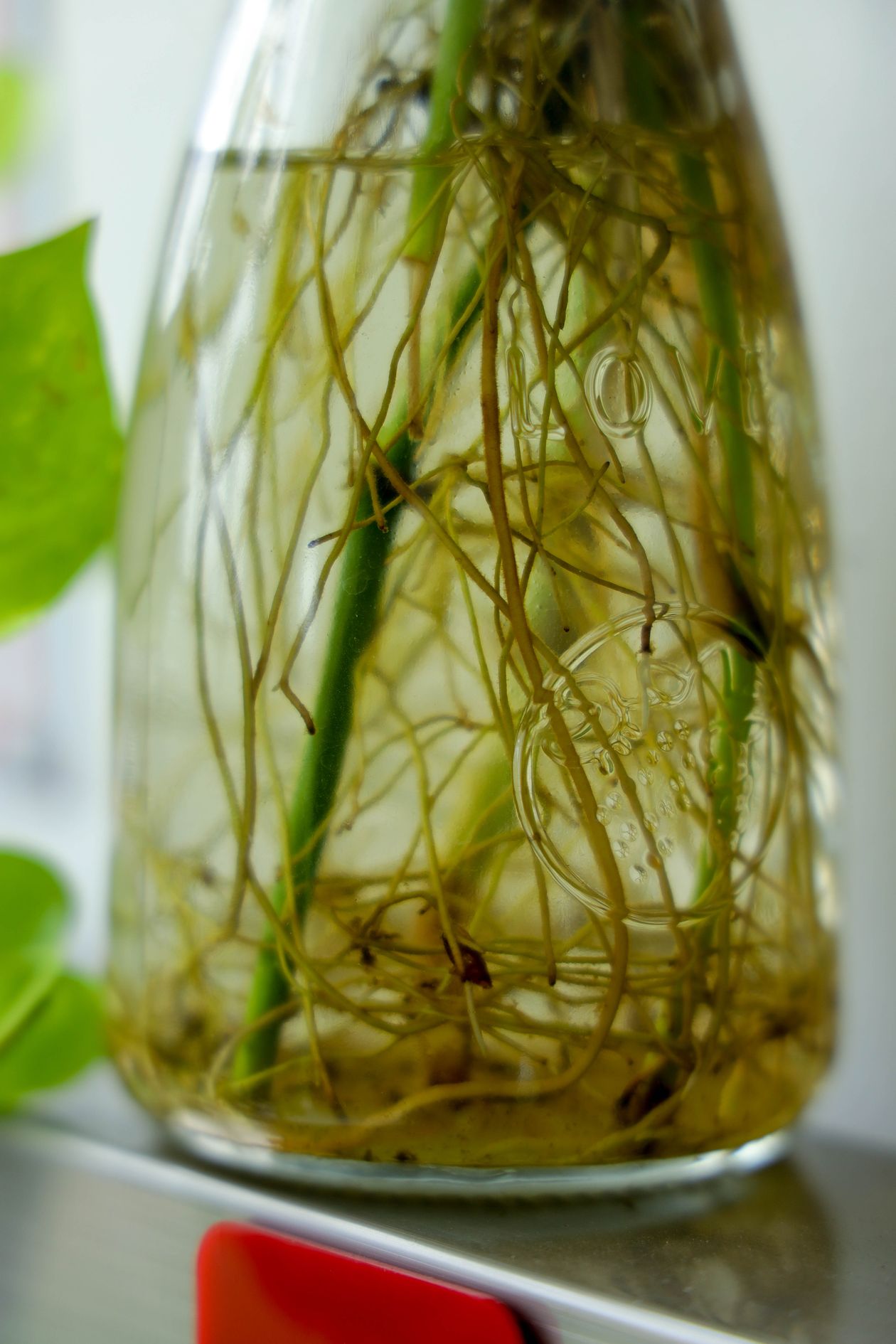
- Healthy roots: white, firm, slightly fuzzy. Root rot: brown or gray-black, slimy, smell like rotten eggs, outer sheath slides off when touched.
- Almost always caused by Pythium, a water mold, not a fungus. Standard fungicides don't work on it (Purdue Extension, BP-181-W).
- Treatment: cool reservoir to 65–68°F → add H2O2 at 2–3 mL/gal → prune dead roots → fresh solution + Bacillus amyloliquefaciens at 2 mL/gal.
- Prevention: keep water below 72°F, maximize dissolved oxygen, block all light from the reservoir.
What does root rot look like?
Check roots, texture, and smell. All three together tell you what stage you’re in and whether it’s still recoverable.
| Stage | What you see on roots | Above the waterline | Still recoverable? |
|---|---|---|---|
| Stage 1 | Tips tan or light brown, slightly soft | Plant looks healthy | Yes, act now for best odds |
| Stage 2 | Full brown/gray-black slime, mat together, fall apart under pressure, foul smell | Leaves yellowing or dull | Yes, but urgent |
| Stage 3 | Root collapse, outer sheath slides off completely | Wilting despite a full reservoir | Rarely: too late for most plants |
A defining sign of oomycete infection: the outer root sheath slides off easily when touched, leaving only a thin white vascular strand underneath. That’s cortical sloughing. If you see it, you have active root rot (Purdue University Extension, BP-181-W).
If roots are still white but the plant is wilting, root rot isn’t the problem. See the plant wilting diagnosis guide for the other three causes: low dissolved oxygen, heat stress, and oxygen gap collapse.
What causes root rot?
Root rot is almost always Pythium, a water mold more closely related to algae than to true fungi. Standard fungicides designed for true fungi don’t work on it (Purdue Extension, BP-181-W). Four conditions activate it:
Warm water and dissolved oxygen
- Warm water above 77°F / 25°C: Pythium aphanidermatum reproduces aggressively at this range. Target below 72°F (22°C) for home setups.
- Low dissolved oxygen: When DO drops, roots leak compounds that act as a chemical beacon for zoospores. Root damage attracts the pathogen (University of Kentucky Extension, E706).
Light and water movement
- Light in the reservoir: Fuels algae, which competes with roots for dissolved oxygen overnight. A light-tight reservoir lid is one of the highest-return preventative steps.
- Stagnant or slow-moving water: Especially in late-stage Kratky, when water level drops and flow is minimal. A small airstone breaks this cycle.
How to treat root rot: the protocol
Act the same day you find it. H2O2 and beneficial bacteria work sequentially: add H2O2 first to clear the active infection, let it fully dissipate, then add bacteria to protect the root zone (e-GRO Alert, E3-01).
Step 1: Drop the reservoir temperature immediately. Target 65–68°F (18–20°C). Use ice packs in a sealed bag, an insulated container, or a water chiller.
Step 2: Add 3% food-grade H2O2 at 2–3 mL per gallon (up to 10 mL/gal for severe Stage 2). Let it circulate for 12–24 hours. H2O2 destroys zoospore cell walls and breaks down into water and oxygen, leaving no harmful residue.
Step 3: Prune and rinse the roots. Cut away all brown, slimy, or structurally compromised tissue with scissors sterilized in 70% isopropyl alcohol. Leave only firm white tissue. Rinse in cool, clean water.
Step 4: Replace the reservoir. Drain completely, rinse, refill with fresh nutrient solution adjusted to pH 5.5–6.5.
Step 5: Add beneficial bacteria. Once peroxide has dissipated (a few hours after refilling), add Bacillus amyloliquefaciens (Hydroguard) at 2 mL/gal. It colonizes root surfaces and blocks Pythium from re-establishing.
Step 6: Block all light. Check every surface and gap. No exceptions.
Sterilizing the scissors matters: contaminated blades reinfect the healthy roots you’re trying to save. This step is often skipped and often causes re-infection.
How to prevent root rot from coming back
Three structural levers suppress Pythium reproduction. Fix all three and root rot becomes rare even across many back-to-back grow cycles (Purdue Extension, BP-181-W).
- Temperature below 72°F (22°C). Check at the same time each day. In warm climates, use an insulated reservoir or run grow lights on a schedule that avoids peak afternoon heat.
- Dissolved oxygen: active bubbling across the water surface. Size your air pump for your reservoir volume. A pump rated 10 gal won’t adequately oxygenate 20 gal. Add airstones or a small powerhead if needed.
- No light in the reservoir, zero gaps. Opaque lids, black paint, reflective tape over any clear surface. Even a small gap starts an algae cycle.
| Task | Frequency | Why |
|---|---|---|
| Beneficial bacteria top-up (B. amyloliquefaciens) | Every 2–4 weeks | Keeps root zone colonized and defended |
| Full system sterilization | Between every crop cycle | Pythium oospores survive in system residue and re-activate next cycle |
| Reservoir temperature check | Daily (same time) | Catches seasonal drift before it reaches the danger zone |
Sterilization protocol: rinse all surfaces with 10% bleach solution (1 part bleach : 9 parts water), let sit 10–30 minutes, then rinse thoroughly before refilling.
Root rot is serious but fixable if you catch it by Stage 2. Three things to take with you:
- Slimy brown roots and a foul smell = act today, not next week
- H2O2 first, Bacillus amyloliquefaciens after (never at the same time)
- Temperature, dissolved oxygen, and light are the three levers. Fix all three.
For the full disease prevention protocol covering every hydroponic problem, see the algae prevention and treatment guide for the next most common issue.
Can a plant recover from root rot?
Yes, if you catch it at Stage 1 or 2. Trim the dead roots, treat with hydrogen peroxide, then add beneficial bacteria. Stage 3 (wilting despite a full reservoir, root collapse) is usually fatal. The earlier you act, the better the odds.
Is hydrogen peroxide safe to use on plant roots?
Yes, at the right dilution. Use 3% hydrogen peroxide at 2–3 mL per gallon (0.5–0.8 mL per liter) of reservoir water. H2O2 breaks down into water and oxygen, leaving no harmful residues. Too high a concentration damages healthy tissue, so don’t exceed 10 mL per gallon even for severe infections.
Does Pythium spread to other plants in the same system?
Yes, and fast. Pythium releases motile zoospores that swim freely through shared reservoir water. In a DWC or NFT system, one infected plant can reach every connected root zone within hours. Isolate affected plants the moment you spot symptoms.
Can root rot happen in a Kratky system?
Yes. Late-stage Kratky is particularly vulnerable when the water level drops, the air gap shrinks, and the reservoir sits warm and still. Low flow combined with rising temperatures creates ideal conditions for Pythium. Check reservoir temperature regularly, and consider a small airstone if you’re in a warm climate.
What beneficial bacteria work against root rot?
Bacillus amyloliquefaciens (sold under brands like Hydroguard) has strong evidence for suppressing Pythium in hydroponic systems. Apply at 2 mL per gallon after the H2O2 has fully dissipated. Add a maintenance dose every 2–4 weeks to keep the root zone colonized and protected.
Sources (4)
- Purdue University Extension, “Pythium Root Rot of Herbaceous Plants,” BP-181-W, retrieved 2026-06-15, https://www.extension.purdue.edu/extmedia/bp/bp-181-w.pdf
- University of Kentucky Cooperative Extension Service, “Root Disease Management in Hydroponic Systems,” E706, retrieved 2026-06-15, https://greenhousehort.mgcafe.uky.edu/sites/greenhousehort.ca.uky.edu/files/E706.pdf
- e-GRO Edible Alert, “Pythium Root Rot on Hydroponically Grown Basil and Spinach,” E3-01, retrieved 2026-06-15, https://e-gro.org/pdf/E301.pdf
- MDPI Horticulturae, “Understanding Root Rot Disease in Agricultural Crops,” Vol. 7, No. 2, 2021, retrieved 2026-06-15, https://www.mdpi.com/2311-7524/7/2/33