How to Regrow Hydroponic Herbs After Harvesting
Hydroponic basil regrows in just 3 to 5 days if you cut it right. Get the exact harvest and regrow method for basil, mint, green onions, cilantro, and rosemary.
Most people harvest their hydroponic herbs once and watch the plant decline. The problem is almost never the system. It is the cut. Where you cut, how much you take, and what you leave behind determines whether your plant regrows in three days or gives up entirely.
This guide covers the regrow method for five of the most common herbs in hydroponics: sweet basil, mint, green onions (scallions), cilantro, and rosemary. All five behave differently after harvest, and each has one step that most guides skip entirely. New to soilless growing? Start with the complete hydroponics beginner guide, or browse the full plant library.
Key Takeaways
- One rule covers every herb: never remove more than a third of the plant in a single cut. The leaves you leave behind are what power the next flush of growth.
- Cut basil ¼ inch above a leaf node and it branches in 3 to 5 days. Expect 4 to 6 quality cuts before the stems turn woody.
- Mint and green onions regrow almost indefinitely. Cilantro runs just 2 to 3 cycles before it bolts, so plant in succession every 2 to 3 weeks.
- Always harvest top down. The lower leaves are the oldest and most productive, so leaving them keeps the plant fueled.
- Most regrow failures trace to pH drift above 6.5 or taking too much at once, not the system itself.
Why Do Hydroponic Herbs Regrow Faster Than Soil?
In soil, a plant burns energy hunting for water and nutrients through root expansion. Hydroponics delivers nutrients straight to the root zone, so after a cut the plant pours that saved energy into new leaves. That is why regrow cycles run faster than in soil.
A basil plant in soil regrows in 7 to 10 days after a cut. The same plant in a hydroponic system at the correct EC and pH regrows usable growth in 3 to 5 days under 16 hours of light. Getting those numbers right starts with pH and nutrients for beginners.
The One Rule That Applies to Every Herb
Never take more than one-third of the plant in a single harvest.
This applies to basil, mint, green onions, cilantro, and rosemary equally. Taking more than a third stalls photosynthesis, slows root activity, and opens the plant to stress-related disease. The remaining leaves are not decoration. They are the energy source that powers the next cycle of growth.
Basil: Ready to Harvest Again in 7 to 10 Days
Basil has the most precise harvest requirement of the five. Cut it correctly and it branches aggressively. Cut it wrong and it bolts within two weeks.
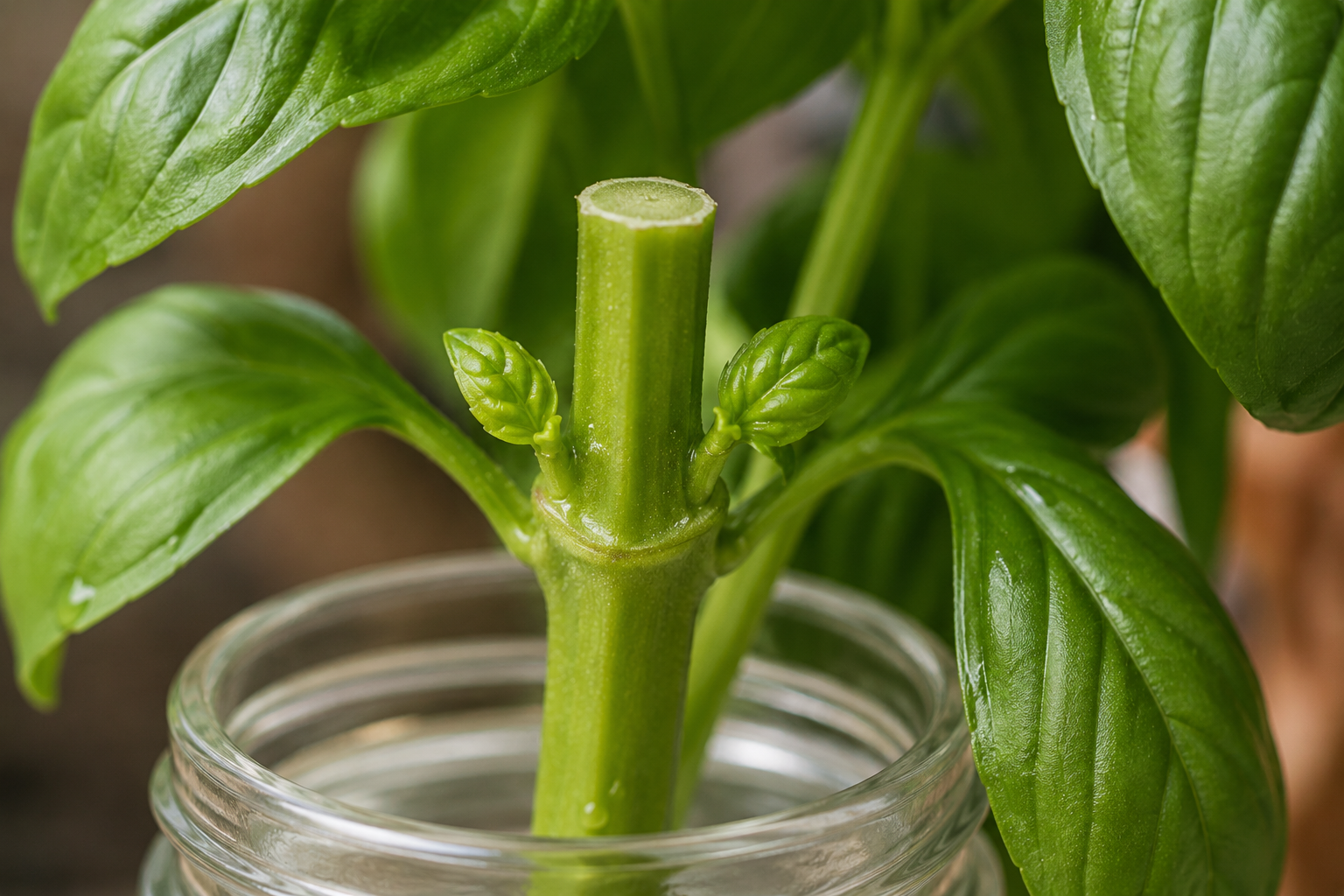
How to cut: Find a stem with at least two sets of healthy leaves. Cut the stem cleanly about ¼ inch above the second leaf node, the point where a pair of leaves meets the stem. Within 48 to 72 hours, two new shoots emerge from the leaf joints just below your cut. Each shoot becomes a new branch, and each branch can be harvested on its own cycle.
Regrow timeline:
- Day 1–2: Cut site heals, no visible growth
- Day 3–5: Two new shoots emerge at the node
- Day 7–10: Shoots reach harvestable size, ready to cut again
When to stop: A basil plant typically gives 4 to 6 quality cuts before the stems turn woody and oil production drops. Signs the cycle is ending: the base thickens and hardens, growth slows between cuts even at correct EC and pH, and buds appear faster than you can pinch them. Replace it rather than fight it.
One thing most guides miss: Pinch flower buds the moment they appear. Once basil commits to flowering, it shifts energy from leaves to seed and the flavor drops for good. You cannot reverse a bolting plant, but consistent pinching delays it by weeks.
Mint: 8 to 12 Days for Full Regrow
Mint is the most forgiving herb for regrow harvesting. It is also the most aggressive. Left uncut, it will fill every inch of available root space and crowd out neighboring plants.
How to cut: Cut mint stems back to about 2 to 3 inches above the base, leaving at least two sets of leaves on each stem. Unlike basil, mint does not require precision node-counting. It regrows from almost any point on the stem as long as some leaf mass remains.
Regrow timeline:
- Day 1–2: No visible change
- Day 4–6: Multiple new shoots emerge along remaining stem
- Day 8–12: Full harvestable growth
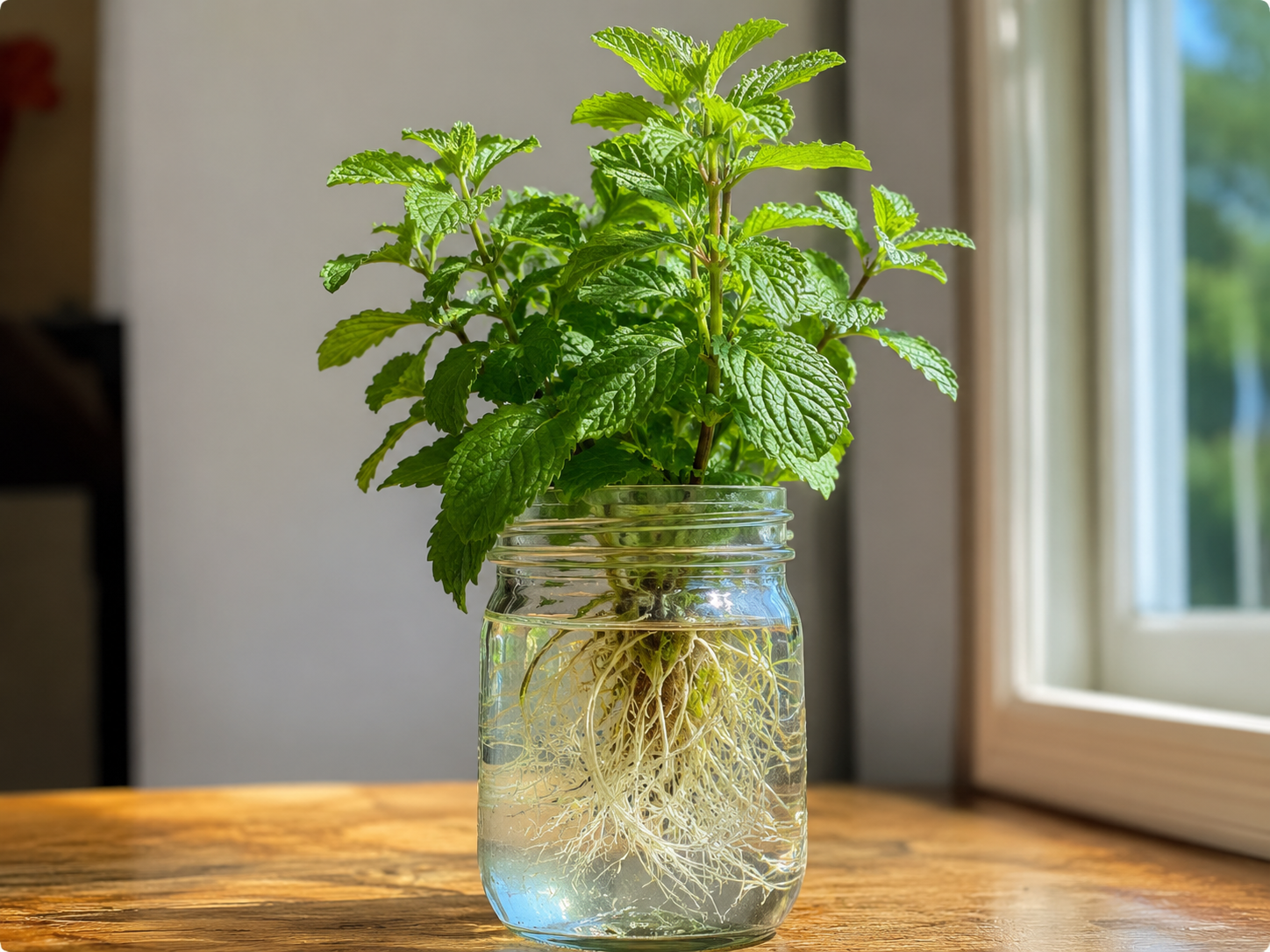
Keep it contained: Mint roots spread sideways and invade neighboring net pots. Give it its own container (a mason jar or dedicated net pot) so it cannot strangle its neighbors.
Flavor note: Mint flavor peaks just before flowering. Harvest regularly to keep it vegetative and the menthol high; let it flower and the leaves turn bitter.
Green Onions (Scallions): 10 to 14 Days to Full Length
Green onions are the simplest of the five to harvest and regrow. They behave more like grass than a branching herb: cut the green tops down and they push straight back up from the white base.
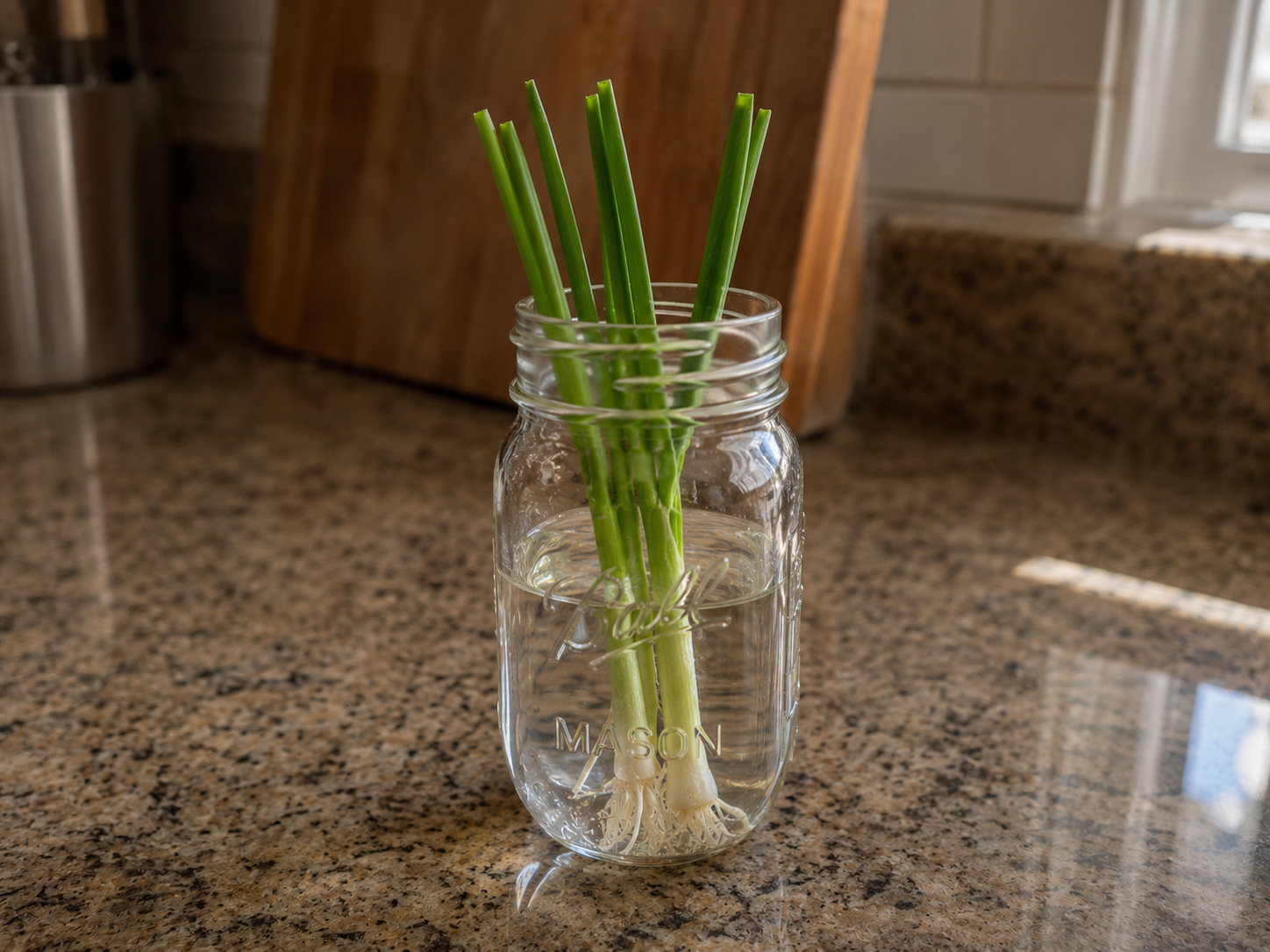
How to cut: Cut all green tops with clean scissors to about 1 to 2 inches above the white base. Do not leave long stubs; they yellow and rot instead of regrowing. Unlike basil, you can cut the whole plant at once.
Regrow timeline:
- Day 1–3: No visible growth
- Day 5–7: New green shoots visible from the base
- Day 10–14: Full harvestable length
One cycle detail most growers miss: After 4 to 5 cycles, green onions sometimes stall for 5 to 7 days before resuming. That is normal: the plant is rebuilding root reserves. Do not push more nutrients, just let it recover.
Cilantro: 12 to 16 Days, Harvest Before It Bolts
Cilantro is the most time-sensitive herb here. It will not give you months of cutting like mint or rosemary; it runs short, fast cycles and bolts once it warms up. Getting multiple harvests is all about when you cut and when you restart.
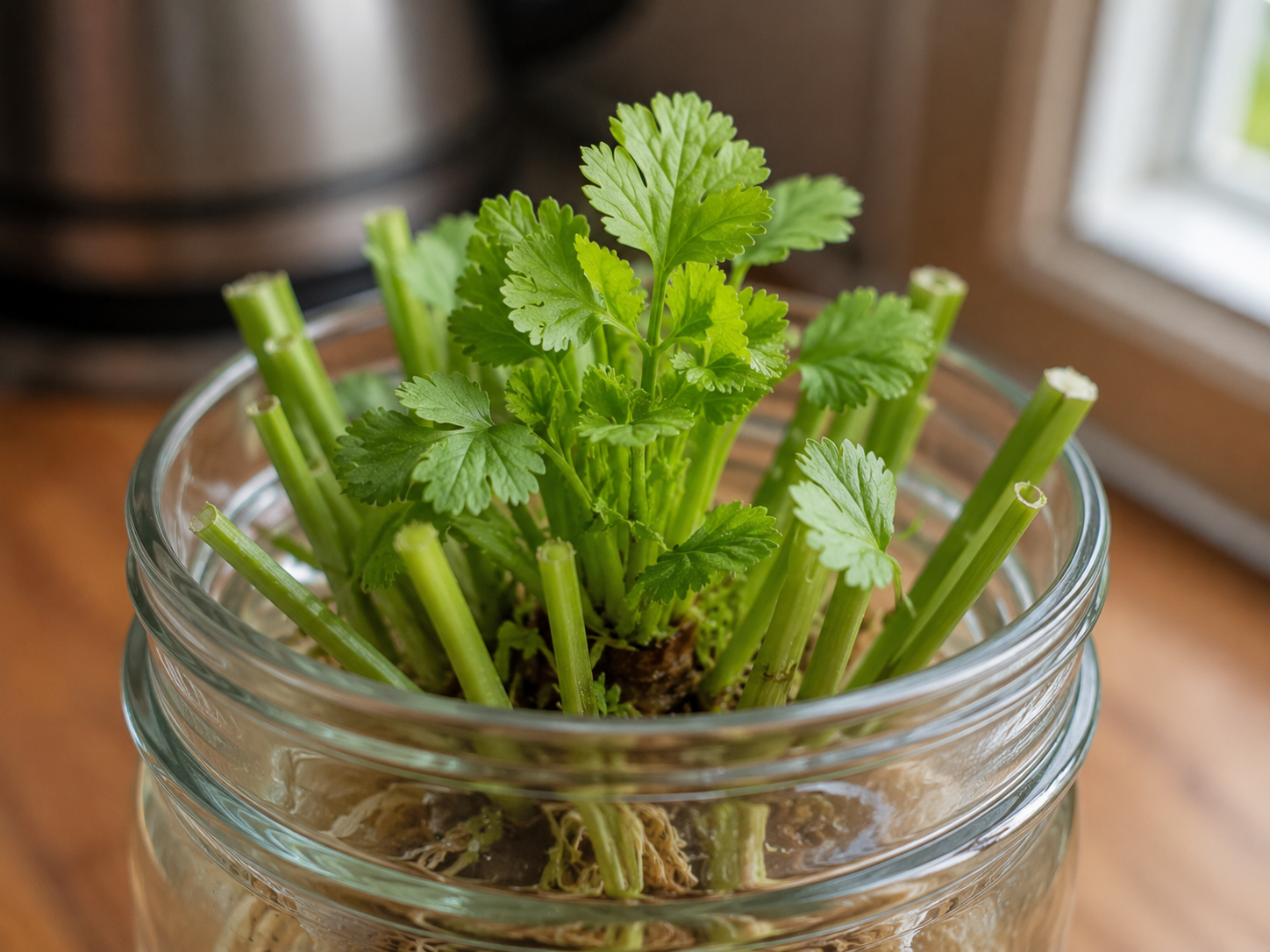
How to cut: Cut outer stems at the base, leaving the inner crown and younger leaves intact. The crown, the dense cluster of small leaves at the center, is the engine of regrowth. As long as it stays undamaged, the plant keeps pushing new stems outward. Never cut the crown itself.
Regrow timeline:
- Day 1–3: No visible change
- Day 7–10: New stems emerge from the crown
- Day 12–16: Harvestable outer stems ready again
Why cilantro is different: Unlike basil (which branches upward) or mint (which spreads laterally), cilantro regrows from the center outward in a rosette. Each cut takes the oldest outer stems and the plant pushes new growth from the middle.
The bolt problem: Cilantro bolts faster than almost any culinary herb. Once reservoir temperature climbs above 75°F or light exceeds 14 hours, it switches from leaves to flowers within days, and bolted cilantro turns lacy and nearly flavorless with no way back. Keep the reservoir below 70°F on a strict 12 to 14 hour light cycle to stretch the window, but still expect only 2 to 3 cycles per planting. Sow a new batch every 2 to 3 weeks for a continuous supply.
One thing most guides miss: The seeds, stems, and roots of bolted cilantro are all edible and flavorful. The seeds are the spice coriander. If your cilantro bolts before you can stop it, let it go to seed and harvest the coriander rather than pulling the whole plant immediately.
Rosemary: 10 to 14 Days, Slow but Steady
Rosemary is the slowest regrower of the five but also the most resilient. A well-established rosemary plant in hydroponics can produce for over a year with minimal intervention. It just requires more patience between cuts than basil or mint.
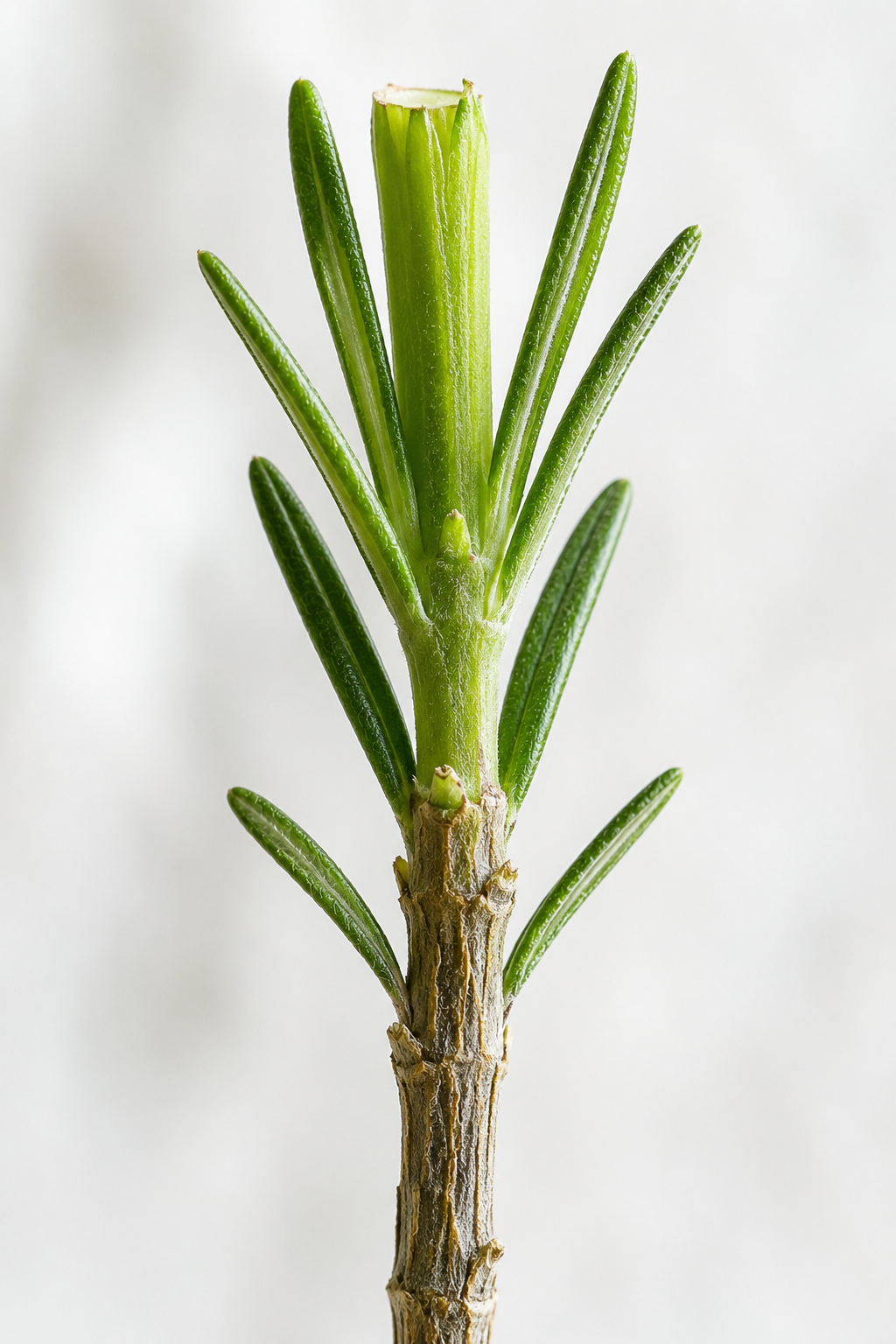
How to cut: Cut soft, green stem tips about 3 to 4 inches long, just above a set of leaves. Never cut back into the woody brown portion of the stem. Woody sections do not regenerate. Only the green, flexible growth at the tips will regrow. Take no more than one-third of the green growth per harvest session.
Regrow timeline:
- Day 1–5: No visible change at cut site
- Day 7–10: Small buds appear along remaining green stem
- Day 10–14: New tip growth visible and harvestable
Why rosemary is slower: Rosemary is a woody Mediterranean shrub, so new growth emerges from dormant buds along the existing stem rather than from a cut node. That is slower than soft-stem herbs, but the plant makes up for it with longevity.
EC note: Rosemary prefers a lower EC than most herbs. Keep it between 0.8 and 1.6 mS/cm. High nutrient concentration makes rosemary spindly and dilutes the aromatic oils that give it flavor. Lean nutrition, bright light, and good airflow produce the most intensely aromatic rosemary.
One thing most guides miss: Rosemary is highly sensitive to waterlogged roots. In a passive Kratky setup, keep a clear air gap between the water surface and the net pot. Roots sitting in solution with no air gap rot faster in rosemary than in almost any other herb. It also greens up slowly, so do not panic if week one shows nothing.
Regrow Comparison at a Glance
Regrow time is the gap between a clean cut and the next harvestable flush. Basil and mint bounce back fastest; cilantro is the slowest and the only one on a hard countdown to bolting.
| Herb | Cut Method | Regrow Time | Cuts Before Replacement |
|---|---|---|---|
| Sweet Basil | Above leaf node, ¼ inch | 7–10 days | 4–6 cuts |
| Mint | 2–3 inches above base | 8–12 days | Indefinite (replace when flavor drops) |
| Green Onions | 1–2 inches above white base | 10–14 days | Indefinite (replace every 6–8 months) |
| Cilantro | Outer stems at base, leave crown | 12–16 days | 2–3 cycles then replant |
| Rosemary | Green tip only, 3–4 inches | 10–14 days | 12+ months with correct care |
What’s the Most Common Regrow Mistake?
Taking the harvest from the bottom of the plant instead of the top.
The lower leaves feel like the obvious pick, especially on basil, because they are easiest to reach. But they are also the oldest and most productive photosynthesis units. Strip them and you cut the energy supply at its source, and the plant stalls. Always harvest top down: take the newest top growth, leave the established base leaves, and the plant keeps climbing.
Why Did Your Herb Stop Regrowing?
Three things cause a hydroponic herb to stall after harvest:
1. pH drift. Above pH 6.5, nutrient uptake slows and the plant cannot fuel new growth (OSU Extension). Check and correct pH after every harvest.
2. Root crowding. Once roots fill the reservoir, uptake gets inefficient. Move the plant to a larger container or replace it.
3. Natural end of cycle. Basil runs roughly 10 to 16 weeks; mint and green onions last longer but lose flavor. Replace any plant that stops recovering between cuts instead of nursing a decliner.
Frequently Asked Questions
How long does it take for hydroponic herbs to regrow after cutting?
It depends on the herb. Basil regrows in 7 to 10 days, green onions in 10 to 14 days, mint in 8 to 12 days, cilantro in 12 to 16 days, and rosemary in 10 to 14 days. Hydroponic systems are consistently faster than soil because nutrients are delivered directly to the root zone with no energy wasted on root expansion.
Can you regrow hydroponic herbs indefinitely?
Mint and green onions can be harvested indefinitely as long as the plant stays healthy and flavor remains strong. Basil has a finite cycle of 4 to 6 quality cuts over 10 to 16 weeks before the stems turn woody. Cilantro runs 2 to 3 cycles before bolting. Rosemary can produce for 12 months or more with correct care.
Why did my basil stop regrowing after I cut it?
The most likely cause is cutting too low or taking too much at once. If you removed more than one-third of the plant, or cut below the lowest healthy leaf set, the plant loses its ability to photosynthesize enough energy for regrowth. Check pH as well. If it has drifted above 6.5, nutrient uptake stalls and new growth stops even if the cut was correct.
Can I regrow store-bought herbs hydroponically?
Yes, for most soft-stem herbs. Basil, mint, and cilantro from the grocery store root easily in water. Trim the bottom leaves, place the stem in pH-adjusted water, and roots typically appear within 5 to 10 days. Green onions from the store regrow directly from the white base, with no rooting period needed. Rosemary from the store takes longer to root but is possible with patient rooting in water before moving to a hydroponic setup.
How do I know when my hydroponic herb needs to be replaced?
Replace when the plant takes significantly longer to recover between cuts, new leaves come in noticeably smaller despite correct EC and pH, or flavor intensity drops noticeably at harvest. For basil, watch for stems hardening at the base and flower buds appearing faster than you can pinch them. For cilantro, replace after 2 to 3 harvest cycles regardless of plant appearance.
The Bottom Line
Hydroponic herbs regrow faster than most people expect, but only if the harvest cut is correct. Cut basil above the node, leave a third of mint and green onions intact, protect the cilantro crown, and never cut rosemary into woody growth. A single planting managed this way gives months of kitchen-ready harvests without replanting.
For the full setup guide covering EC, pH, and light requirements for basil and six more herbs, see how to grow basil hydroponically (plus 6 more herbs). Once your herbs are producing, put the surplus to work in these summer recipes for hydroponic herbs.
Sources (2)
- Johnny’s Selected Seeds, “Hydroponic & Container Basil Guide: Production Advice & Variety Selection,” retrieved 2026-06-25, https://www.johnnyseeds.com/growers-library/herbs/basil/hydroponic-container-basil-guide.html
- Oklahoma State University Extension, “Electrical Conductivity and pH Guide for Hydroponics,” retrieved 2026-06-25, https://extension.okstate.edu/fact-sheets/electrical-conductivity-and-ph-guide-for-hydroponics